
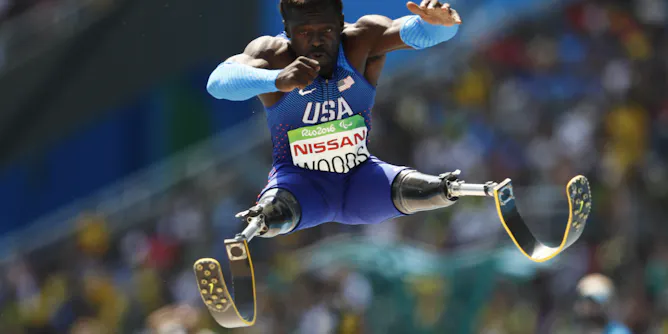
Paralympic sport is meant to be inclusive and fair but athletes don’t face a level playing field. Those from higher income countries can compete more easily.
Articles on Rio Paralympics
Displaying 1 - 20 of 24 articles
The Belgian athlete won silver at the Paralympics – but has signed legal euthanasia papers.

The success of para-athletes at the Paralympics is helping to change perceptions of those with disabilities.

There are significant challenges in making old cities like Rio more accessible, and there are missed opportunities around the Paralympics, but it’s not all bad news.

Can our Paralympians renew our faith in the idea of role models, which is often overburdened by hype, slogans and pampered sports stars?.

Technology has had a particularly visible impact on the Paralympics. But the the most important thing is to let the athlete’s ability come to the fore.
An Access World News database search says everything you need to know: Type in ‘Deflategate’ and you’ll get nearly twice as many hits as ‘Paralympics.’
Australian Paralympic athlete reflects upon how her experience as a student-athlete influenced a pilot program for Para-athletes to combine the pursuit of Paralympic success and study
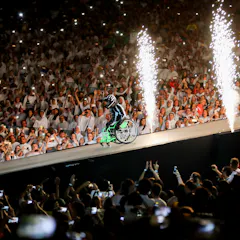
At one point, it looked like the games could be cancelled. But the carnival spirit has prevailed.
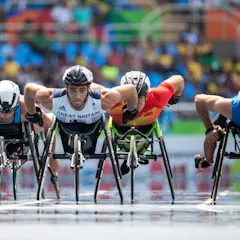
When you find disabled people ‘inspiring’, perhaps that feeling is more about you than them.

From a single volunteer with 8mm film to live broadcast on a commercial TV network, the media coverage of the Paralympic Games has come a long way since its inception.
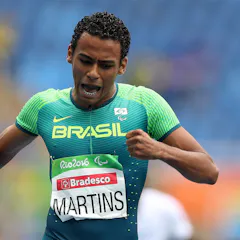
Research into the impact of intellectual disability on sports performance can ensure a level playing field.
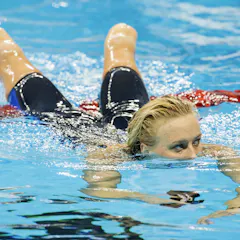
Paralympians are being hailed as inspirational. This doesn’t please everyone.

Richard Nicholson has experienced first hand the evolution of the Paralympics, and with it, the shift in perception of disabilities and para-athletes.
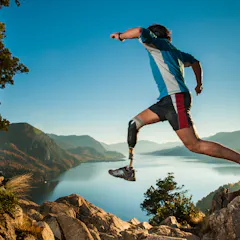
The best prosthetics feel more like the real thing.
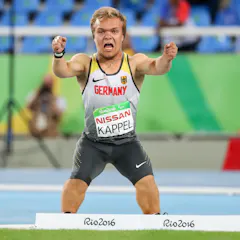
What’s holding disabled athletes back from getting more involved in fighting inequality?
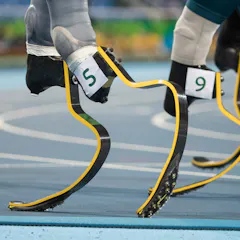
The classification system is what keeps the Paralympics fair. Although it’s not perfect, it’s the best system we have, and it’s continually being improved.
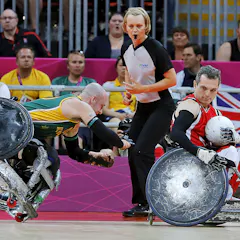
Researchers are finding new ways to keep them cool.
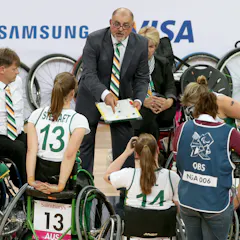
Coaches are sometimes thought of as ‘teachers’ of their sport. So what can coaches learn from the field of education?
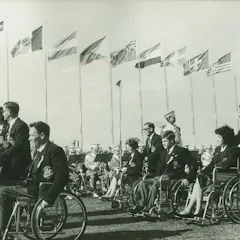
The Paralympic Games started off as a way to motivate and rehabilitate returned servicemen and women after the second world war, and has evolved tremendously since then.
Top contributors
-

PhD Candidate in School of Health and Sport Sciences, University of the Sunshine Coast
-
Professor of Social Inclusion - UTS Business School - Co-Lead UTS Disability Research Network - Australian Centre for Olympic and Sport Studies - Centre for Sport, Business and Society, University of Technology Sydney
-
Facilitator, Australian Paralympic History Project, The University of Queensland
-
Professor, University of Birmingham
-
Professor, Western University
-
Athlete in Residence, University of Canberra
-
Professor of Mathematical Biology and Public Engagement, University of Bath
-
Senior Lecturer Sport Science, School of Biological Sciences, University of Essex
-
Assistant Lecturer, University of Lancashire
-
Professor, Occupational Therapy, University of the Sunshine Coast
-
Professor de Filosofia da Universidade do Estado do Rio de Janeiro (UERJ) e Professor de Filosofia do Direito, Universidade Federal do Rio de Janeiro (UFRJ)
-
Associate professor, The University of Queensland
-
Senior Lecturer in Sport Engineering, Nottingham Trent University
-
Associate Professor, Faculty of Business, Government and Law, University of Canberra
-
Early Career Researcher (Sport Pedagogy), Flinders University