
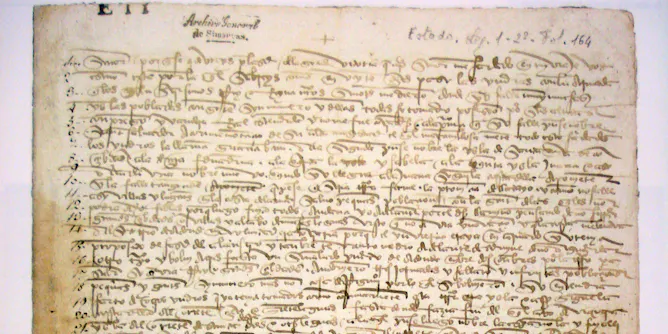
The ‘Book of Prophecies’ shows how Columbus recast brutal colonization as a divine mission.
Articles on European history
Displaying 1 - 20 of 106 articles
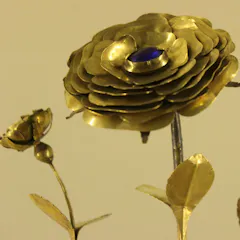
Popes have bestowed golden roses on warriors, rulers, women – and, increasingly in recent decades, shrines.

The forged document was used as leverage to try to expand papal control throughout the Italian peninsula.
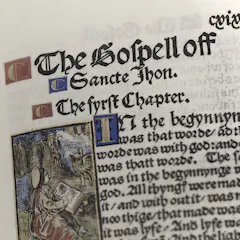
William Tyndale’s translation, published in 1526, was based on a then-radical idea: Anyone should be able to read the Bible in their own language.

The construction of Europe after WWII sought to promote political and economic cooperation among European nations. The Historical Archives of the European Union in Florence are a testimony to this.

The concept of ‘civilisation’ emerged in the 18th century – and it has been cursed from the very start.
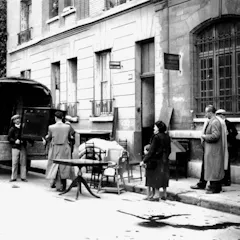
Laws put in place after the war aimed to return stolen belongings and offer war damages to victims. In reality, many Jewish families faced lengthy waits and legal hurdles.

For some Sephardic Jews today, holidays provide a rare opportunity to hear the now-endangered Judeo-Spanish language.

Couples in interfaith marriages came under intense pressure in Nazi Germany. But women’s protests in February 1943 may have helped save their husbands.

In a geopolitical landscape that is more and more fragmented, the European Capitals of Culture initiative and its evolving role in fostering diplomacy and unity are up for debate.
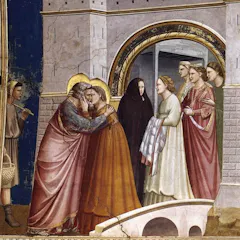
Ever since medieval Christians smooshed their mouths together during worship, the kiss has remained a hot topic.

The Kalevala, a poetic epic filled with myth, reflects the shared roots between Finnish and Karelian cultures.
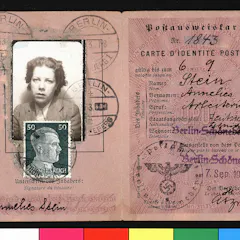
Some women adopted non-Jewish identities to support the resistance. For most, though, it was simply a strategy for survival – one with constant risk of exposure and execution.
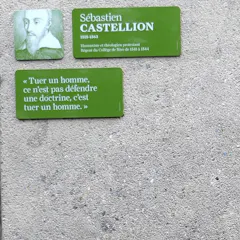
Sebastian Castellio penned one of the first arguments for religious freedom – but it went unheeded for centuries.
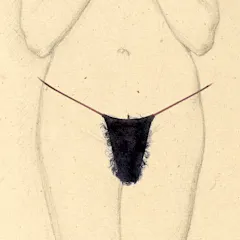
The latest release in Kim Kardashian’s clothing brand is a mini thong adorned with fake pubic hair. Such ‘merkins’ date further back than the Great Plague.

Pointy shoes have been all the rage across cultures for centuries, and their role as status symbols continue today.

The series may not be accurate in detail, but it is valuable in spirit – and hilariously opens a window onto a forgotten corner of European history.
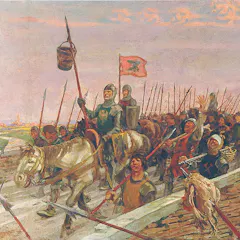
History and myth are different narrative techniques, and both can be used to stimulate national pride and cohesion and to celebrate events that defined a people.
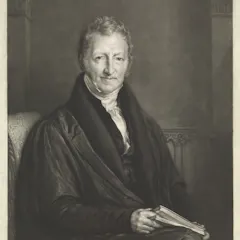
The English cleric and economist’s name is used to malign critics of progress. But historical context sheds a different light on Malthus’ ideas, a scholar argues.

Who bears responsibility when false information leads to real harm?
Top contributors
-

Professor of History, Missouri University of Science and Technology
-
Hansen Professor in History, The University of Melbourne
-
Mathematician and Ancient DNA Researcher, Adelaide University
-
Associate Professor of History, Auburn University
-
Professor of History, Australian Catholic University
-
Professor Emerita of Medieval History, University of Rhode Island
-
Associate Professor of Medieval History, University of Oxford
-
Director, Gender and Women's History Research Centre, Australian Catholic University
-
Adjunct Professor of History, University of Richmond
-
Professor of Literature and Director of Irish and Irish American Studies, College of Charleston
-
Professor of Russian Studies, Tufts University
-
Curator of Caribbean Archaeology, University of Florida
-
Assistant researcher, University of Sydney
-
Associate Professor in Modern European History, University of Leicester
-
Professor of History, University of Washington