

East Germans feel alienated and powerless. They see themselves as second-class citizens, while outsiders live high on what is rightfully theirs.
Articles on Alternative for Germany (AfD)
Displaying 41 - 56 of 56 articles

Germany’s Green Party were the big story on the night of the European elections. Their strategy has been to expand beyond climate policies to become a true alternative to establishment parties.
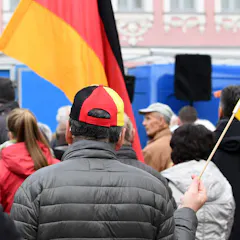
Nationalism seems to be on the rise in Europe, with many parties hostile to immigration. But what role does immigration itself have their support? Research shows some unexpected impacts.

Does an “European culture” or a “European identity” actually exist?

The political power of Germany’s Russian community is significant, and it’s helped fuel the rise of the right-wing, anti-immigration Alternative for Germany party known as the AfD.
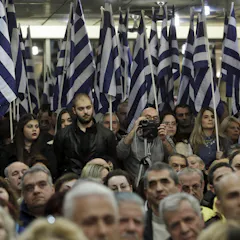
From welfare chauvinism to value-based nationalism – a breakdown of what constitutes a ‘far right’ group.

While often lumped with other European populist parties, Beppe Grillo’s M5S is a movement of activist fans mobilized by the messages of his “celebrity brand”.

Over three months since Germans voted in national elections, preliminary talks are due to start Jan. 7 on forming a coalition government. What has taken so long?

The issue of whether to allow refugees to bring their close family to Germany has been a sticking point in coalition negotiations.
The parliamentary arithmetic suggests Merkel would actually be in quite a stable position if she goes it alone, without calling fresh elections.
Generations of Germans have worked to create a positive national identity based on difficult self-reckoning with the Nazi era. The recent election attacks that progress.
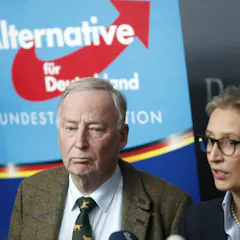
Angela Merkel must continue to resist the temptation to cede political ground to the populists.

After taking more than 13% of the vote, this young party is entering parliament for the first time. And a lot of people are upset about it.

The chancellor wins again, but the rise of the populists will probably force the next administration to the right.
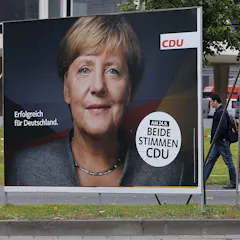
German elections are typically tame. Jockeying for power takes place later, in negotiations for a coalition government. Could the xenophobic Alternative for Germany form the opposition?
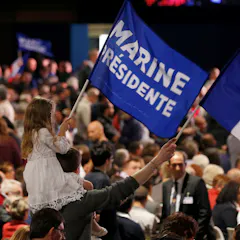
Populist parties like France’s Front National typically stress traditional family values. So is it possible for them to appeal to traditional leftist voters like single women and the queer community?
Top contributors
-

Reader in Politics, Co-Director, Aston Centre for Europe, Aston University
-
Professor in International History, Flinders University
-
Managing Director Research, Institute for Research on Far-Right Extremism (IRex), University of Tübingen
-
Jean Monnet Professor for Comparative Politics & European Integration, University of Tübingen
-
Professor of German Studies / Chair, Department of Germanic and Slavic Studies / Director, Waterloo Centre for German Studies, University of Waterloo
-
Professeur Associé de marketing, Kedge Business School
-
Professor of Anthropology, Director of the Institute on Globalization and the Human Condition, McMaster University
-
Research Fellow (Henry Jackson Society - Centre on Radicalisation & Terrorism), Royal Holloway, University of London
-
Full professor, IÉSEG School of Management
-
Reader in European Politics, University of Westminster
-
Senior Lecturer, Department of Government, University of Essex
-
Professor of Politics, University of Sussex
-
Lecturer in Modern and Contemporary History, Bangor University
-
Professor of Economics, University of California, Davis
-
Lecturer in the Department for Political Studies, Bar-Ilan University