
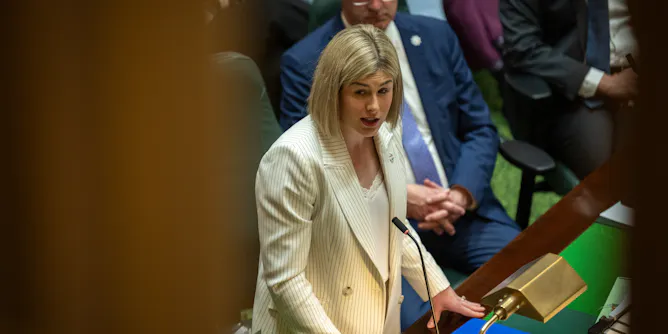
With the Victorian state election two months away, the Labor government has improved in the polls, but remain behind the Coalition.
Articles on German politics
Displaying 1 - 20 of 50 articles

Can the two leaders achieve the sort of rapport that helped Ronald Reagan and Mikhail Gorbachev face the threat of nuclear proliferation in the 1980s.

Fresh from its loss in Saxony-Anhalt, Friedrich Merz’s CDU party has fallen to heavy defeats in Berlin and Mecklenburg-Western Pomerania.

In a national YouGov poll, the Pauline Hanson-led party is four points ahead of the Labor government in primary votes – a record high in this poll.
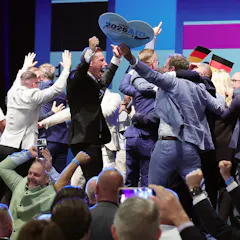
The AfD received by far the most amount of votes in Saxony-Anhalt, falling marginally short of an absolute majority.
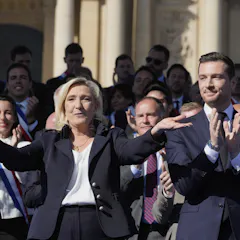
There are long-term questions regarding support for Ukraine if far-right populists win more power in the EU’s most powerful states.

Merz immediately headed out to meet other European leaders once confirmed as chancellor.
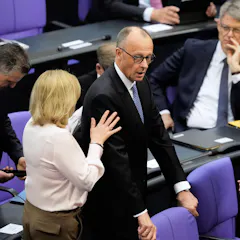
Merz won confirmation of MPs in a second round of voting after becoming the first ever chancellor candidate to lose in the first round.
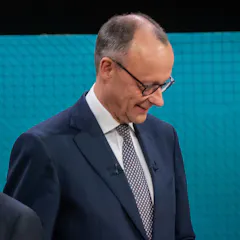
At the centre of the immigration debate is the notion of “welfare magnetism”: the idea that migrants are drawn to Germany by its generous welfare system.
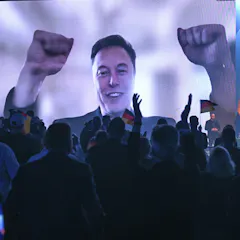
Elon Musk is by no means the cause of the AfD’s popularity, but his embrace of the extremist party has given it a global profile and new credibility in German politics.
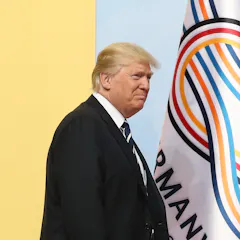
Trump’s incoming administration could create certain risks for Germany, including putting more pressure on its weak economy.

The transition to net zero emissions is under grave threat if governments do not do more to address the potential unfairness of some climate policies.
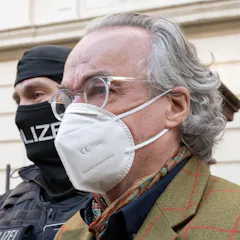
A group touting revisionist visions of German history wanted to install minor aristocrat Heinrich XIII as German leader.

Plus, the health benefits of saunas and hot baths, particularly after exercise. Listen to The Conversation Weekly podcast.

Following the German election, all of the country’s major party leaders agreed that Germany needs to move forward. But if the electorate had had its way, it would have re-elected Angela Merkel.
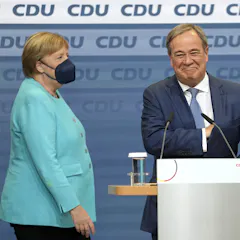
With a very close result as counting continues, it could be weeks or even months before a government is formed. But Sunday’s election has already delivered some significant results.

After a prolonged campaign, Germany’s biggest coalition has chosen the man who will lead it into September’s general election.
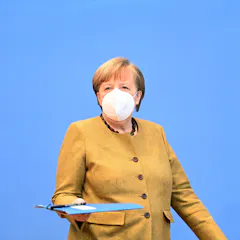
As her 16-year reign as German Chancellor comes to an end, Merkel will be remembered for her staunch centrism and her willingness to wait to sense the political mood - sometimes then changing course.
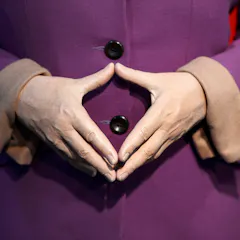
She won’t stand again in 2021 – and it’s unlikely she’ll last until then either.
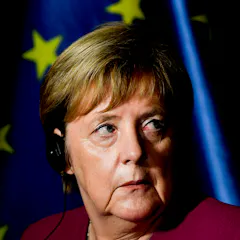
German politics is experiencing a major shift. Merkel knows her time is up.
Top contributors
-

Reader in European Politics, University of Westminster
-
Professor of Politics, University of Sussex
-
Reader in Politics, Co-Director, Aston Centre for Europe, Aston University
-
Assistant Professor of German and Global Studies, Michigan State University
-
Professor in International History, Flinders University
-
Election Analyst (Psephologist) at The Conversation; and Honorary Associate, School of Mathematics and Statistics, The University of Melbourne
-
Senior Lecturer, Department of Modern Languages, University of Birmingham
-
Senior Lecturer, Department of Government, University of Essex
-
Associate professor in human geography, University of Oxford
-
Principal and Vice Chancellor, University of Glasgow
-
Lecturer in German and European Politics and Society, Deputy Director of the Institute for German Studies, University of Birmingham
-
Professor of German Studies / Chair, Department of Germanic and Slavic Studies / Director, Waterloo Centre for German Studies, University of Waterloo
-
Associate professor of Government at Wesleyan University, Wesleyan University
-
Associate Professor and Fellow in Politics, University of Oxford
-
Professor in Political Science, Arnold Bergstraesser Institute