

South Africa wants to introduce an excise tax on alcohol to make sure no alcoholic drink can be sold below a certain price.
Articles on Alcohol policy
Displaying 1 - 20 of 41 articles

While a lot of profit stands to be made from alcohol and liquor licensing fees, we can’t ignore the harm it poses to young people.

Ireland recently passed legislation to introduce clearer alcohol labels to warn about the risks of liver disease and fatal cancers from drinking alcohol. Australia should do the same.

For remote Indigenous communities, reductions in alcohol use are linked with the strength of culture, empowerment and community.
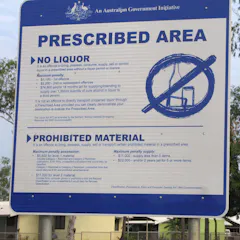
Restricting access to alcohol has proven successful, but it’s only part of the solution. There are other strategies that can lead to a longer-term, more sustainable approach.

Fetal alcohol spectrum disorder can cause problems with movement, behaviour or learning or a mix of these. In communities where alcohol use is high, a focus on FASD is warranted.
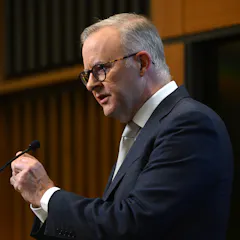
The measures follow Albanese’s recent visit to Alice Springs

Loneliness and social isolation are some of the strongest predictors of poor health. But many studies informing Canada’s new alcohol guidelines don’t consider social connection at all.

Many of our interviewees didn’t see alcohol as only a bad thing and had complex reasons for their relationships with alcohol.

Amid the controversy over Sydney’s lockout laws, a program that looked out for people at risk of harm in the city’s nightlife precincts more than proved its worth.

Not just individuals, but the government’s too.

The number of older people who drink heavily is increasing. Here’s why that’s a problem.
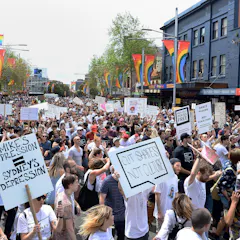
The collection and analysis of data used for making policy should be independent and open to ensure public trust in decision-making. The debate over alcohol licensing shows why this matters.

The steady flow of politicians and government staffers switching sides to lobby for powerful food, alcohol and gambling companies is a threat to public health.

Front line professionals need more support and time.

The good news is that the growth of live music continued under Queensland’s liquor licensing reforms. The bad news is that venues rely on late-night alcohol sales to cover costs.

Rates of unwelcome advances haven’t changed under Queensland’s ‘Tackling Alcohol-Fuelled Violence’ policies. In one entertainment district, it happened to 26% of women the night they were interviewed.

Even after ‘Tackling Alcohol-Fuelled Violence’ policies took effect in 2016, Queenslanders still drink more heavily on nights out. Reported levels of aggression are higher than in other states too.

A comprehensive two-year evaluation of statewide measures introduced in 2016 has shown it’s possible to reduce alcohol-related violence while also producing economic benefits.

The NT has become the first jurisdiction in Australia to introduce a minimum price for alcohol.
Top contributors
-

Professor of Violence Prevention and Addiction Studies, Deakin University
-
Professor, Director of Research and Statistical Support Service and Program Leader for Substance Use and Mental Health, Centre for Health Services Research, The University of Queensland
-
UQ Amplify Senior Research Fellow, School of Public Health, The University of Queensland
-
Associate Professor, National Drug Research Institute, Curtin University
-
Professor, Centre for Alcohol Policy Research, La Trobe University
-
Senior Lecturer in Criminology, UNSW
-
Emeritus Consultant, St Vincent's Hospital, Darlinghurst
-
Research Fellow, Deakin University
-
Professor and Senior Brawn Research Fellow, University of Newcastle
-
Associate Professor, Social Science, The University of Queensland
-
Senior Lecturer in Medical Ethics and Law, St George's, University of London
-
Lecturer, School of Policy Studies, Kwansei Gakuin University
-
Professor of Sociology, University of Bristol
-
Professor, National Drug Research Institute, Curtin University
-
Adjunct Professor of Primary Health & Research Fellow at Menzies School of Health Research, Charles Darwin University