
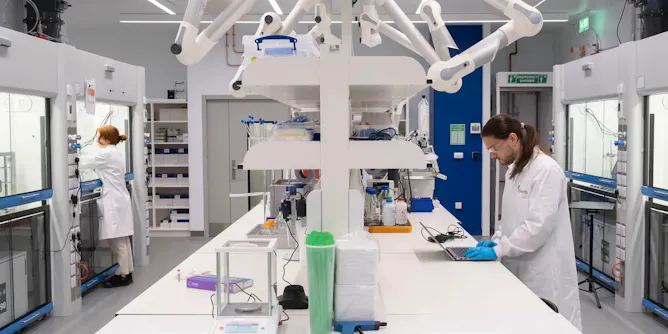
Chemistry is often presented as one of the most advanced sciences, yet its day-to-day practice remains surprisingly manual.
Articles on Alan Turing
Displaying 1 - 20 of 40 articles
If a machine creates a video or a song that brings a person to tears, does it matter that the machine felt nothing?
The Turing test has been popularised as the ultimate indicator of machine intelligence. But the truth is more complicated.
Computing pioneer Alan Turing suggested training machines with rewards and punishments. Two computer scientists put the idea into practice in the 1980s and set the stage for the likes of ChatGPT.
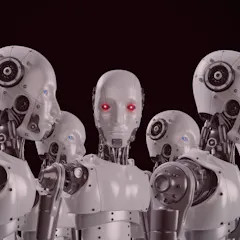
How might a super-intelligent machine take control? And what can be done to stop it happening?
AI safety has taken a back seat in the competition for ever more powerful large language models.
AI will not become sentient and decide to kill us all. But our own conscious or unconscious beliefs about AI can potentially increase the likelihood of any outcome, including catastrophic ones.

The Turing test, first proposed in 1950 by Alan Turing, was framed as a test that could supposedly tell us whether an AI system could ‘think’ like a human.
Of the risks posed by AI, overtaking human intelligence isn’t an immediate concern.

In the age of AI, people might wonder if there’s anything computers can’t do. The answer is yes. In fact, there are numerous problems that are beyond the reach of even the most powerful computers.

Expanding the disregarding and pardoning scheme for historic homosexual offences should prompt further reflection on the law.
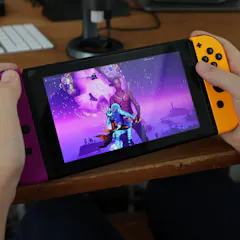
Video games are everywhere. So who was the first person to come up with the idea of playing a game on a computer screen?

It’s time we embrace the true meaning of the word ‘reparations'—this isn’t just about giving people money, it’s about offering apologies and taking account for previous mistakes.
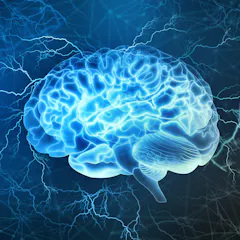
Brain functions integrate and compress multiple components of an experience, including sight and smell – which simply can’t be handled in the way computers sense, process and store data.
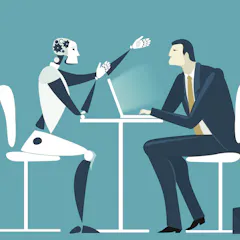
Some people claim it’s already been passed. But Alan Turing’s test of whether artificial intelligence can act like a human remains an important benchmark for our species.

Alan Turing’s last published paper revealed the mathematics behind the beautiful patterns that adorn the natural world.

Teaching robots to care for us in old age will be child’s play.
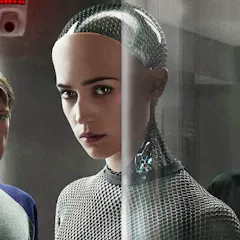
In the future, consciously aware robots could be part of our everyday world, deserving of moral respect and consideration.

Several outstanding women were nominated, but Rainbow Murray, an adviser to the series, says the public vote showed how we’re still more inclined to recognise male achievement.
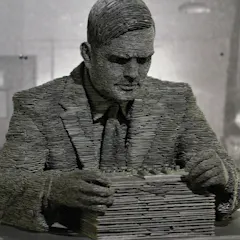
The man who conceived the computer and helped crack the Nazi Enigma code deserves national recognition.
Top contributors
-

Professor of Mathematical Biology and Public Engagement, University of Bath
-
Professor of Mathematics, University of Leeds
-
Professor, Faculty of IT, Monash University
-
Royal Society Research Fellow and Senior Birmingham Fellow, University of Birmingham
-
Professor & Director, Hub for Apple Platform Innovation (HAPI), School of Computing Technologies, RMIT University
-
PhD; Lawrence Berkeley Laboratory (retired) and Research Fellow, University of California, Davis
-
Laureate Professor of Mathematics, University of Newcastle
-
Head of the School of Electrical Engineering and Computer Science, Queensland University of Technology
-
Senior Lecturer in Applied Mathematics, Cardiff University
-
Head, The Cyber Academy, Edinburgh Napier University
-
James Martin Research Fellow, Future of Humanity Institute & Oxford Martin School, University of Oxford
-
Lecturer in Sports and Exercise Science, Swansea University
-
Senior Lecturer in Philosophy and Education; Curriculum Director, UQ Critical Thinking Project, The University of Queensland
-
Professor of Cognitive Neuroscience and Director of the Sheffield Robotics Institute, University of Sheffield
-
Professor of Philosophy, University of Hertfordshire