
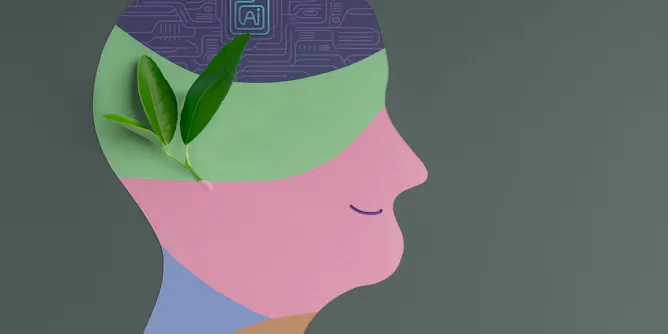
A philosopher on how and whether we’ll ever decide if AI has sentience.
Articles on Turing test
Displaying all articles
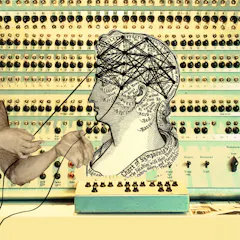
The Turing test has been popularised as the ultimate indicator of machine intelligence. But the truth is more complicated.

I’m hunting for the woman whose use of an early chatbot turned the inventor against his creation.

The Turing test, first proposed in 1950 by Alan Turing, was framed as a test that could supposedly tell us whether an AI system could ‘think’ like a human.

The science of human consciousness offers new ways of gauging machine minds – and suggests there’s no obvious reason computers can’t develop awareness.
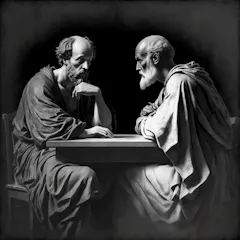
The rise of AI chatbots provides an opportunity to expand the ways we do philosophy and research, and how we engage in intellectual discourse.

Endearing and amusing, AI’s faltering attempts at flirting show how far computer-generated language has come.
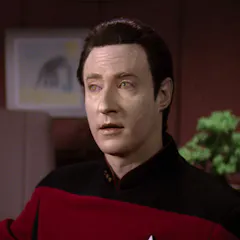
Philosophers say now is the time to mull over what qualities should grant an artificially intelligent machine moral standing.
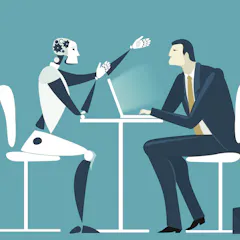
Some people claim it’s already been passed. But Alan Turing’s test of whether artificial intelligence can act like a human remains an important benchmark for our species.

Alan Turing devised a way to test if AI is functionally the same as a human – we’ve done the same for androids.
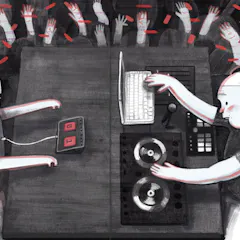
Testing whether machines are capable of generating sonnets, short stories or dance music that is indistinguishable from human-generated works.
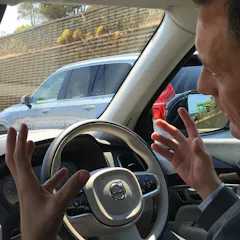
Can software really be considered the “driver” of an autonomous vehicle? This is one question that needs to be resolved before driveless cars can hit the roads.
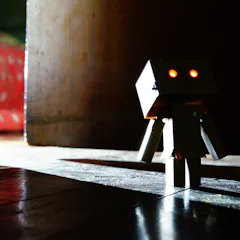
As machines get ever more complex as we strive to make them complete more complex tasks, it’s time to ask again: will they ever be able to think? But what is thinking anyway?
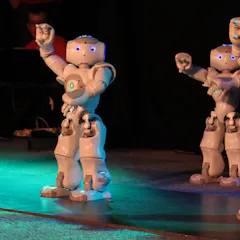
If we can make artificial intelligent machines that act more human it raises the question of what sort of emotions we’d like them to express.

Computers try to predict our behaviour and anticipate our needs, but sadly they often get things dreadfully wrong.
Top contributors
-

William H. Neukom 1964 Distinguished Professor of Computational Science, Associate Dean for the Sciences, Dartmouth College, Dartmouth College
-
Professor of Transport Technology and Sustainability, Swinburne University of Technology
-
Professor & Director, Hub for Apple Platform Innovation (HAPI), School of Computing Technologies, RMIT University
-
Senior Lecturer in Philosophy and Education; Curriculum Director, UQ Critical Thinking Project, The University of Queensland
-
Head of the School of Electrical Engineering and Computer Science, Queensland University of Technology
-
James Wright Professor of Music, Professor of Computer Science, Dartmouth College
-
Senior Lecturer in Contemporary Literature, University of Birmingham
-
Assistant Professor of Philosophy, Rutgers University
-
Associate Professor of Philosophy, San José State University
-
Professor, School of Philosophy, Australian National University
-
Professor of Philosophy and Digital Humanities, University of Alberta
-
Postdoctoral Research Associate, Centre for the Humanities and Social Change, University of Cambridge
-
Associate Professor, Dianoia Institute of Philosophy, Australian Catholic University, Australian Catholic University
-
PhD Candidate, University of Staffordshire
-
Professor of Social Science, Cardiff University