

One area of burgeoning employment is in people cleaning up ‘workslop’.
Articles on AI slop
Displaying 1 - 20 of 25 articles

The party’s Please Explain cartoon series has ignited a political firestorm, but behind the punchlines and backlash is an insidious way to spread propaganda.

‘Pics or it didn’t happen’ is no longer a reliable test for what’s real.

As schools consider AI guidelines, educators are also thinking about how they can adjust their assignments to accurately measure what students are actually learning.
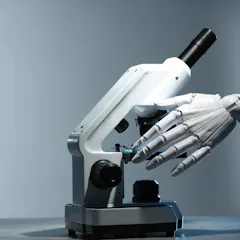
Several scientific fields rely on visual evidence to illustrate their claims. Inaccurate AI-generated images put the credibility of science at risk.

Fact-checking can take hours or days while fakes can be created in seconds. So, what do we do?

AI infractions could result in a year-long ban from the arXiv system, which is an essential communication channel in many fields of research.

People value human-created art not just for its quality, but because it represents effort, intention and lived experience.

AI’s apparent inability to generate interesting and unique images and videos is becoming harder to ignore.

With AI slop and misinformation on the rise, research suggests New Zealanders may be turning back to mainstream news for reliability and accountability.

Even obviously fake propaganda videos can influence viewers – and erode their trust in all kinds of information.

Months out from the next general election, political “AI slop” is spilling over social media feeds. Lessons from overseas could help electoral laws catch up.

Colleges and universities are taking on different approaches to how their students are using AI – but with a shared recognition that they cannot prevent it altogether.
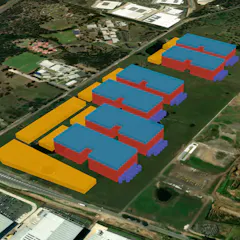
Even if we can pull of the logistical feat, given the social and environmental impact, the question remains: should we?
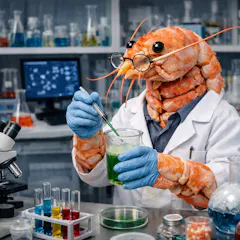
A new study shows AI writing is turning traditional measures of research quality upside down.

Significant time is spent on tracking the usage of words throughout the year before making decisions on contenders.

From AI slop to rage bait, to the cryptic ‘6-7,’ this year’s slate captures a growing sense that online life is flooded with fakery, frustration and meaninglessness.
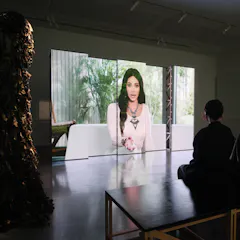
Data Dreams: Art and AI is at the Museum of Contemporary Art brings together artists who make visible the tensions of ever-present AI.
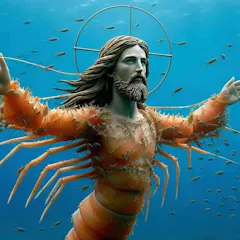
AI slop was the clear winner with honourable mentions including another AI-related word: clanker. But where are the colourful expressions of previous years?
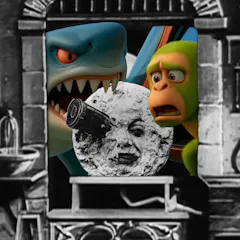
Just as the gimmicky first films evolved into a sophisticated medium, will we look back on today’s AI-generated video as the beginnings of a new art form?
Top contributors
-

Professor and Associate Director of the Centre for Change and Complexity in Learning (C3L), Education Futures, Adelaide University
-
Associate Professor of Visual Communication & Digital Media, RMIT University
-
Lecturer and researcher, linguistics, University of Limerick
-
Professor of Computational Communication, Queensland University of Technology
-
The Conversation
-
Lecturer, Transdisciplinary School, University of Technology Sydney
-
Professor of Biology, University of Richmond
-
Associate Professor of Journalism, DePaul University
-
Professor of Economics and Management, Albion College
-
Assistant Professor, Oregon State University
-
Senior Lecturer in Artificial Intelligence, Te Herenga Waka — Victoria University of Wellington
-
Professor of Law, University of Otago
-
PhD Candidate, Cambridge Social Decision-Making Lab, University of Cambridge
-
Professor of Social Psychology in Society, University of Cambridge
-
PhD candidate, Digital Media Research Centre, Queensland University of Technology