

A growing number of people (mostly men) find AI relationship apps addictive and alluring. So what are the likely effects of this technology on us as human beings?
Articles on AI chatbots
Displaying 41 - 60 of 71 articles

A risk-based approach to regulating AI can help minimise the dangers of the new technology

Google’s recent ad controversy brings up key questions about the preservation of human skills, and the ethical and social implications of integrating generative AI tools into everyday tasks.
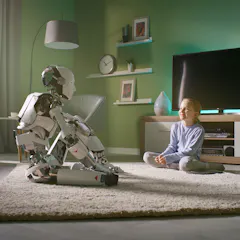
People are beginning to blur the lines when it comes to their understanding – and usage – of AI technology. New research shows just how much social robots are changing how we interact with them.

Caryn Marjorie made $70,000 a week from her AI doppelgänger – until things got weird

AI chatbots can quickly explain complicated legal information in a straightforward, conversational style, but they are not always accurate.
People participate in online communities to share experiences and sympathy. AI chatbots that join the conversation can only pretend to offer either.

AI chatbots offer unconditional support, but this could lead users to develop an inflated self image – and impede their chances of positive social interactions with real people.

The upgraded AI systems may even be able to undertake a form of reasoning.

AI chatbot makers’ restrictive use policies hinder people’s access to information.

I’m hunting for the woman whose use of an early chatbot turned the inventor against his creation.
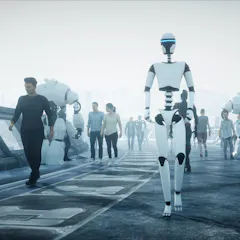
Artificial intelligence is everywhere, and the tech industry is racing along to develop ever more powerful AIs. Three scholars look ahead to the next chapter in this technological revolution.

Common misperceptions about AI chatbots are that they know something about the world, can make decisions, are a replacement for search engines and operate independent of humans.

Before AI becomes widespread in health care, we need to ask what matters to consumers.

Students often use generative AI tools for engaged learning. They have a critical and nuanced understanding of these tools.

Training AI systems with more focused data sets can target them to a specific use.

Scholars differ over whether having students use AI in their assignments will help or hurt their careers after graduation.

The merging of technology and faith is sparking a transformative shift in redefining spirituality and religious practices.
It’s difficult to see how artificial intelligence systems work, and to see whose interests they work for. Regulation could make AI more trustworthy. Until then, user beware.
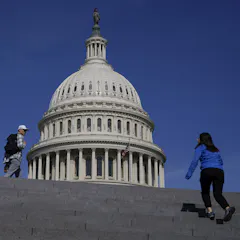
Public comment could soon swamp government officials and representatives, thanks to AI, but AI could also help spot compelling stories from constituents.
Top contributors
-

Adjunct Lecturer in Public Policy, Harvard Kennedy School; University of Toronto
-
Affiliate, Berkman Klein Center for Internet & Society, Harvard University
-
Research Assistant Professor of Industrial & Systems Engineering, University of Southern California
-
Associate Professor of Information Science, University of Colorado Boulder
-
Research fellow, University of Oxford
-
PhD Candidate, Faculty of Engineering and Design, University of Auckland, Waipapa Taumata Rau
-
Lecturer in Strategy, Cambridge Judge Business School
-
PhD candidate in psychology, Université du Québec à Montréal (UQAM)
-
Senior Lecturer in Contemporary Literature, University of Birmingham
-
Research Professor of Political Science and Executive Director of The Future of Free Speech, Vanderbilt University
-
Professor of Electrical and Computer and Software Engineering, University of Auckland, Waipapa Taumata Rau
-
Professor of Psychiatry, University of Auckland, Waipapa Taumata Rau
-
Professor in Information and Communication Technology Policy, Concordia University
-
Research Fellow, Australian Centre for Health Engagement, Evidence and Values, University of Wollongong
-
Senior Lecturer in Software Engineering, University of Auckland, Waipapa Taumata Rau