

Stay in work or retire? There are many reasons to do both, but in order to retain workers, employers need to be aware of these factors.
Articles on Ageing workforce
Displaying 1 - 20 of 29 articles

The ‘grey digital divide’ is artificial – created because designers of tech products are overwhelmingly young.

Immigrant care workers are having to work into retirement age to make ends meet. The Canadian government must do more to support them.

Kenya faces the dilemma of an ageing workforce. The problem can be addressed by developing a strategic workforce plan for employees.

Doctors will have to justify prescribing the antipsychotic drug risperidone for longer than 12 weeks. But that won’t fix the problem of using drugs to manage aged care residents’ behaviour.
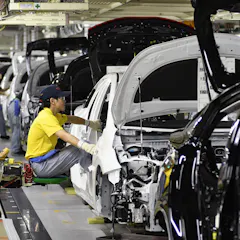
Like Japan, the UK is facing an ageing population that is compounding other problems putting pressure on the labour market.

An ageing population doesn’t have to be an economic burden.

Workforce participation rates for older women have increased greatly, but most workplaces have yet to realise the benefits of helping them to manage the impacts of menopause.

A two-year study finds dissatisfaction with current arrangements, but also identifies small changes that can make a big difference in helping to find suitable jobs for older workers.

Mandatory retirement ages are mostly a thing of the past in Australia. Removing the last vestiges of this practice is one way to address the problem of Australia’s ageing workforce.

Australians are living longer, and digital technologies could help them take control of retirement.

Older workers are feeling discriminated against in the search for work, in their jobs and even in retirement, a new survey shows.
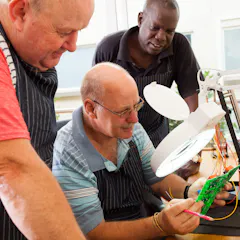
Business Briefing: Simon McKeon on removing the retirement label
The Conversation16.3 MB (download)
If we're all living longer, why shouldn't we be allowed to work longer? That's what Monash Chancellor Simon McKeon is arguing.

Our mixed feelings about ageing are clearly revealed in the language we use to talk about it.

Health and local employment prospects both play a part in whether older workers stop working.

Turning 65 in 2016 doesn’t mean the same thing as hitting 65 in 1916. So why are we still using a population aging measure that was developed a century ago?

Many hidden obstacles confront Australia’s older workers, so what workplace changes can be made to maximise the benefits and reduce the problems of an ageing population?

A discussion about what superannuation will look like in the future is essentially from the Intergenerational Report.
The way many organisations construe old age is likely to be very different to its definition in the soon-to-be-released Intergenerational Report.

It’s no secret that the global population is ageing. We’re living longer than ever and are healthier until much later in life. But we’re still struggling to adapt to this changing demographic – and some…
Top contributors
-

Senior Research Associate, International Centre for Future Health Systems, UNSW, UNSW
-
Professor in Organisational Behaviour & Human Resources, University of Hull
-
Freelance research consultant, University of Sydney
-
Professor, University of Sydney Business School, University of Sydney
-
Honorary Senior Research Fellow at the University of Sydney, Honorary Adjunct Research Fellow, Western Sydney University
-
Professor of Economics, emeritus, Stony Brook University (The State University of New York)
-
Professor of Linguistics, Monash University
-
Principal Research Scientist, CSIRO
-
Director of the International Laboratory of Demography and Human Capital, Russian Presidential Academy of National Economy and Public Administration
-
Professor of Marketing & Entrepreneurship, Unizik Business School, Nnamdi Azikiwe University
-
Research Fellow, Centre for Rural Policy Research, University of Exeter
-
Associate Professor, Centre for Research on Ageing, Health and Wellbeing, Australian National University
-
NHMRC Reserach Fellow, Centre for Research on Ageing, Health and Wellbeing, Australian National University
-
Chancellor, Monash University
-
Senior Research Fellow, Department of Epidemiology & Public Health, UCL