

Stay in work or retire? There are many reasons to do both, but in order to retain workers, employers need to be aware of these factors.
Articles on Older workers
Displaying 1 - 20 of 24 articles
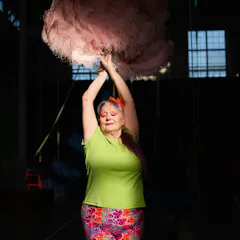
Perhaps it’s time we stopped treating midlife as a countdown and started recognising it as a peak.
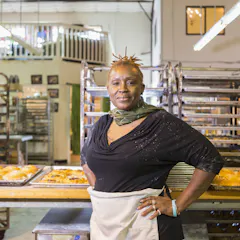
The Senior Community Service Employment Program helps older Americans balance their checkbooks, enjoy better health and engage more with their own communities.

If you have decades of work experience, your skills may be exactly what’s needed to harness AI’s power, without falling into its traps.

Our research explains which groups are still working beyond retirement age, and why.

The imperative for employers to accommodate people with disabilities is partly driven by the need to keep older workers on the job as the population ages.

Research shows that companies led by CEOs over 65 tend to underperform in the stock market.

Older workers can struggle as much with work-life balance as their younger counterparts. But employers need to avoid treating them as a single group – their needs are surprisingly diverse.

A combination of a decline in workers under 35 and an ageing workforce is leading to labour shortages in many regions.

A study of medical costs and income losses found that those who can least afford to pay for health care and miss out on their paychecks rack up the biggest bills.

Britain is now desperately short of workers in some sectors. Yet our interviews with 100 women aged 50 and over show how hard it is for them to find secure employment

The silver lining to recent tech giant job cuts could be more skilled labour for Irish tech and better options for women and older workers.
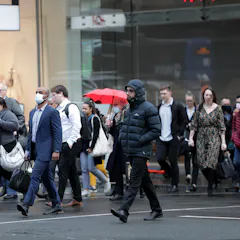
An ageing labour force and ongoing border closures will put severe pressure on
New Zealand’s economic reliance on immigration.
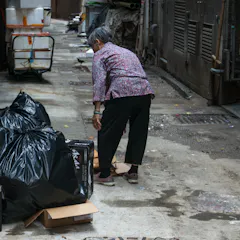
The proportion of 65-year-olds in work is up by about ten percentage points since 2018.

These two groups bounced back more quickly in the jobs market than certain other groups, although they may still experience lasting consequences.

While it is well known that under-25s are most likely to bear the brunt of job losses when furlough ends, older workers are vulnerable too.

Young and successful entrepreneurs get the attention, but they are the exception, not the norm.
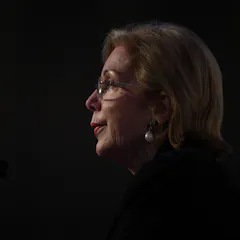
Ita Buttrose may be right. The evidence does suggest younger workers are less resilient. But we shouldn’t make too much of it.
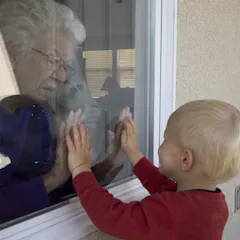
What’s in a word? Plenty, when it comes to the choices we use to describe people over 60. Stigma against older people that has been evident during the COVID-19 pandemic shows why it’s time to change.

The federal government wants more older people to keep working. Our research suggests this requires dramatically reconfiguring work options.
Top contributors
-

Honorary Principal Fellow, School of Social and Political Sciences, The University of Melbourne
-
Assistant Professor of Management and Organizations, Stern School of Business, New York University
-
Professor, Australian Studies Institute, Australian National University
-
Instructional Associate Professor of Gerontology , University of Southern California
-
Professor, Business and Management, Queensland University of Technology
-
Professor of Labour Economics, Utrecht University
-
Associate Director, Institute for Fiscal Studies
-
Professor of Finance, Mississippi State University
-
Assistant professor of Decent Work & Human Resource Management, University of Galway
-
Senior Research Fellow and Lecturer of Gerontology, UMass Boston
-
Senior Lecturer, Manchester Metropolitan University
-
Professor of Management, Auckland University of Technology
-
Senior Lecturer in Law, University of Manchester
-
Professeure à l'Université TELUQ, Université du Québec, directrice de l'ARUC sur la gestion des âges et des temps sociaux et de la Chaire de recherche du Canada sur l'économie du savoir, Université TÉLUQ
-
Senior Lecturer in Social Policy & Undergraduate Programme Lead for Criminology, Sociology and Social Policy Programmes, Loughborough University