

Traditional report cards sent home every few months are fine for most students. But for kids with behavioral issues, a daily report card can be a better option.
Articles on ADHD
Displaying 101 - 120 of 220 articles

The COVID-19 pandemic may have played a considerable role in the uptick of adults being treated for ADHD. But more data is needed to determine whether the trends will continue.

Just having hyperactive, impulsive, and inattentive symptoms is not sufficient to qualify for a diagnosis of ADHD. Symptoms need to have a negative effect.

Queer disabled people struggle to be seen in queer spaces that often do not accommodate them.

For some people, successful treatment of co-existing ADHD may be the best way of getting relief from chronic anxiety.

It is becoming increasingly clear that ADHD comes with self-control problems, suggesting therapy should be offered alongside drugs.
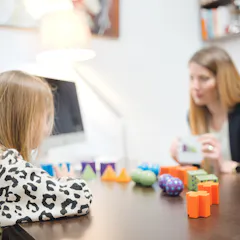
Our study shows when children first present for neurodevelopmental assessment they are also likely to have mental health concerns.

Some services require a formal diagnosis of autism or ADHD – but there is much parents and carers can do to support their child and their own wellbeing.
The largest review of evidence on brain training for ADHD suggests it might be time to try a different approach.

For those who need it, Adderall and other stimulants can be game-changing medications that help restore the chemical imbalances underlying ADHD. But for those who don’t, these drugs can be harmful.

Parents and carers might be worried a child is slow to talk or can’t seem to maintain attention. But getting a proper assessment can take years and connecting to support, even longer.

New study reveals that ADHD personality traits are closely linked to common mental health problems, even more so than autism.

One way to prevent mental health challenges in children: Recognize and treat the mental health issues of their parents.

Masking or camouflaging is where people conceal certain traits and replace them with neurotypical ones to avoid being recognised as visibly neurodiverse.

Getting a good night’s sleep is essential for the whole family. Here are some tips to try if your child struggles with poor sleep.

Better screening when young people enter the youth justice system would help identify those who are neurodivergent.

In her new memoir A Kind of Magic, Anna Spargo-Ryan writes of her fragile mental health with humour and courage.

Anxiety is the most common mental health issue facing children and adolescents. But research shows that early screening – including in school settings – can identify children who are at risk.

The risk of experiencing harm online is real, especially for children – but decades of research don’t support the alarmist tropes used in these conversations.

You can go to a psychologist for ADHD coaching or to an ‘ADHD coach’. Whichever option you choose, this should be just one aspect of your care.
Top contributors
-

Senior Lecturer, Brain Mind Centre Nepean, University of Sydney
-
Professor and Clinical Psychologist, Michael Crouch Chair in Child and Youth Mental Health, University of Sydney
-
Senior Research Fellow in Child Neurodevelopment, Brain and Mind Centre, University of Sydney
-
Financial Markets Foundation Chair of Developmental Mental Health, The University of Melbourne
-
Psychologist and Research Associate in the Department of Paediatrics, Monash University
-
Deputy Director, The Kids Research Institute Australia, Professor of Autism Research, The University of Western Australia
-
Associate Professor, Department of Paediatrics, The University of Melbourne
-
Partner, Government & Public Sector, Providence / Honorary Fellow, Australian National University
-
Professor in Cognitive Neuroscience, Director of Research, Turner Institute for Brain and Mental Health, Monash University
-
Professor of Psychology, University of Richmond
-
Professor of Psychology, Florida International University
-
Professor of Clinical Neuropsychology, University of Cambridge
-
Professor in Health History, University of Strathclyde
-
Associate Professor, School of Psychology, Deakin University
-
Neurodevelopmental Paediatrician and Associate Professor, University of Sydney