

Four in five children with ADHD are prescribed medication. The most common side-effect is lack of appetite and weight loss. Here’s how parents can manage this.
Articles on ADHD
Displaying 61 - 80 of 220 articles

Some people embrace this new word but others reject it.

Rates of ADHD diagnosis are rocketing in developed countries. A professor of child and adult psychiatry explains why.

The world’s largest genetic study on the size of specific brain parts has revealed hundreds of clues about how some health conditions develop.

Executive function delays affect skills such as as paying attention, switching attention, controlling impulses and problem-solving. They’re common in a range of conditions but are treated as separate.

ADHD is the most diagnosed childhood neurological disorder, but there have been inconsistencies around who is diagnosed and prescribed medication. New prescribing guidelines aim to change this.

More than 1.1 million Australians are estimated to be living with an eating disorder. Around a third of these people are also neurodivergent.

In a sample of people who regularly use ecstasy and other illicit stimulants, 54% reported using pharmaceutical stimulants without a prescription in the previous six months.

The best way to learn about neurodivergence is by listening to neurodivergent people themselves.
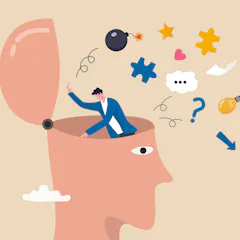
Navigating life with ADHD or as a parent of a child with ADHD can be stressful. But as researchers learn more about the uniqueness of brains with ADHD, they are also gleaning insight into treatments.

Autism and ADHD frequently overlap and the combination can create internal conflict and unmet needs.

Cognitive disengagement syndrome may be as common as ADHD, but it is vastly under-recognised.

Meals can be a recipe for distress when children find recognising feelings of hunger and thirst, completing tasks, processing sensory input or social interactions challenging.

Children can have big emotions and sometimes struggle to process them. Here’s what it means for a child to be ‘dysregulated’.

Although the link between sugar and hyperactivity is murky, there is a proven link between the neurotransmitter dopamine and increased activity.

Rather than trying to ‘fix’ or change neurodivergent people, neuroaffirming care aims to empower and support unique needs and strengths.

New research shows the massive gap between those with ADHD and the number of people who are prescribed the medicine that can help.

Pathological demand avoidance isn’t listed in the diagnostic manuals clinicians use. But that doesn’t make it less distressing for children or families. What can help?

One in 20 Australians has ADHD. But some people call the condition ADD. What’s the difference?

Sleep habits can be improved by making shifts in both daytime and evening routines.
Top contributors
-

Senior Lecturer, Brain Mind Centre Nepean, University of Sydney
-
Professor and Clinical Psychologist, Michael Crouch Chair in Child and Youth Mental Health, University of Sydney
-
Senior Research Fellow in Child Neurodevelopment, Brain and Mind Centre, University of Sydney
-
Financial Markets Foundation Chair of Developmental Mental Health, The University of Melbourne
-
Psychologist and Research Associate in the Department of Paediatrics, Monash University
-
Deputy Director, The Kids Research Institute Australia, Professor of Autism Research, The University of Western Australia
-
Associate Professor, Department of Paediatrics, The University of Melbourne
-
Partner, Government & Public Sector, Providence / Honorary Fellow, Australian National University
-
Professor in Cognitive Neuroscience, Director of Research, Turner Institute for Brain and Mental Health, Monash University
-
Professor of Psychology, University of Richmond
-
Professor of Psychology, Florida International University
-
Professor of Clinical Neuropsychology, University of Cambridge
-
Professor in Health History, University of Strathclyde
-
Associate Professor, School of Psychology, Deakin University
-
Neurodevelopmental Paediatrician and Associate Professor, University of Sydney