

Our research suggests these tombs were designed and constructed not simply to house the dead, but to affect the living.
Articles on Acoustics
Displaying 1 - 20 of 27 articles
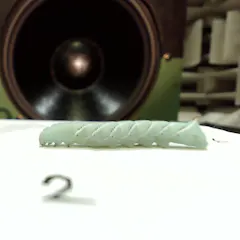
Scientists give caterpillars haircuts and put them in a room isolated from sound to figure out how they’re able to hear without ears.

With the help of AI, doctors might be able to detect heart disease before it becomes audible to the human ear.

Ultrasound is perhaps best known as an imaging technique to monitor pregnancy or disease. When these sound waves are highly concentrated, however, they can be used to treat a host of diseases.

Is it possible to interpret babies’ cries in order to understand their needs accurately?

By combining ultrasound with a concept called nonlinear acoustics, you can create sound that stays silent until it reaches a specific location.

The Kurukop echo amplifies a mythological story from the Nama Karoo region.

By listening to the “heartbeat” or soundscape of soil, we can learn more about its condition. Think of poor soil as a lifeless party. Healthy soil is where you’ll find the good vibes and chatter.
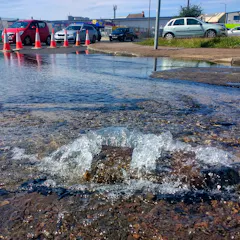
Why the UK still loses 3 billion litres of water a day through leaks.
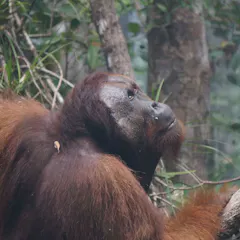
Orangutans are vocal animals, so analyzing their calls during events like wildfires can indicate how smoke is affecting their health.

In the early decades of the 20th century, people grappled with the sounds modernity wrought. Some heard only noise. Others found great beauty.

Seashells don’t make the noise of the ocean. Here’s what’s really going on.
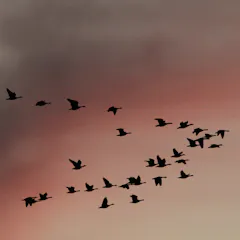
Satellite telemetry, tiny geolocation tags and passive acoustic recording are providing new insights into bird migration and vital data for conservation.

Brown noise sounds like the ocean and some people say it helps them sleep. Here’s what the science actually says.
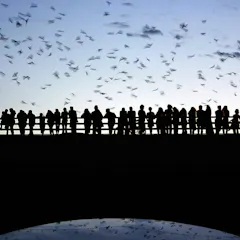
Bats roost under bridges and culverts across North America, so highway departments have to check for them before repairing bridges. A new AI tool makes those inspections faster and more accurate.

Commercial and recreational drones are taking to the air. They’re very noisy, and neighborhoods everywhere could become awfully loud.

From bird songs to wind patterns, sound is a key but often underappreciated element of natural places. Learning how to listen to nature can alert us to changes in the environment before we see them.
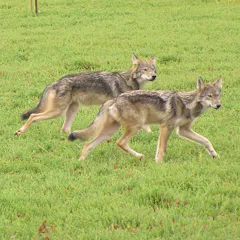
Tracking wild animals can provide lots of valuable data. New research suggests audio recordings of wild wolves can replace the typical radio collars, which can be expensive and intrusive.

Humpback whales are deterred from their migration routes by the noise of air guns used to survey the ocean floor for oil and gas deposits, a new study has found.

We tend to think of archaeological sites as dead silent – empty ruins left by past cultures. But this isn’t how the people who lived in and used these sites would have experienced them.
Top contributors
-

Professor of Digital Sound and Interactive Media, Arizona State University
-
Senior Researcher at the CIB based in the Department of Botany and Zoology, Stellenbosch University
-
Associate Dean Education, Professor of Biomedical Acoustic Engineering, University of Southampton
-
Professor of Acoustic Engineering, University of Salford
-
Professor of Ultrasonics, University of Bristol
-
Senior Lecturer in Physiology, The University of Queensland
-
Postdoctoral Research Fellow in Marine Ecology, UNSW
-
Senior lecturer in Audio Technology, University of Salford
-
Registered Professional Archaeologist, PhD Candidate, University at Albany, State University of New York
-
Associate Professor, The University of Queensland
-
Professor Evolution & Ecology, UNSW
-
Professor of Planetary and Space Sciences, The Open University
-
Research Associate, University at Buffalo
-
Postdoctoral Research Fellow, Colorado State University
-
Assistant Professor of Biology, Carthage College