
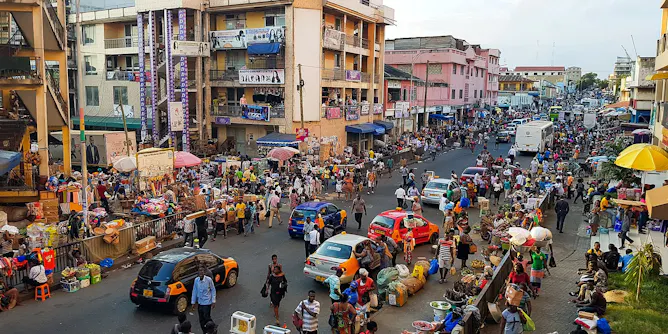
Accra could keep its political role while some of its other functions are distributed around the country.
Articles on Accra
Displaying 21 - 40 of 53 articles
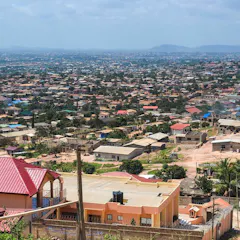
Ghanaian urban and development planners need to move away from looking up to examples of innovations from the global north.
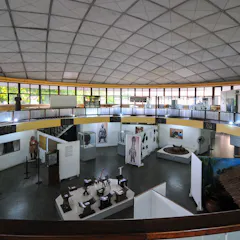
Ghana’s national museum has been reopened after being closed for seven years.

West African governments need to be clearer about the similarities and differences of violent extremist groups.
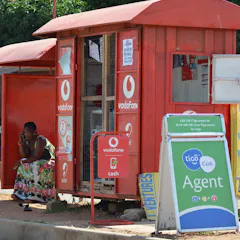
The tax on electronic transactions has not generated as much revenue as the government of Ghana expected.

Community plays have become a way for the stories and experiences of slavery survivors to be told and understood in Jamestown, Accra.
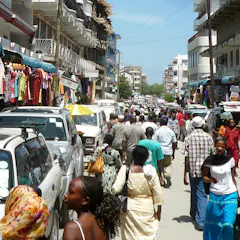
Informal workers are victims of the smart city drive in Africa.

Ghanaian authorities could elicit more cooperation from citizens in governing the cities by creating conditions that give the majority a chance at a decent life
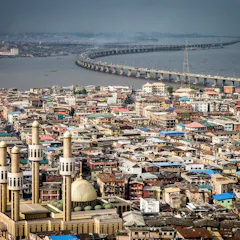
All too often, urban reforms are led by technical and infrastructural change, rather than by engaging people.
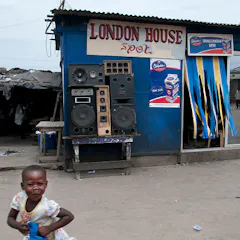
Ghanaian city authorities are focused on addressing problems of poverty, education and health rather than managing green spaces in slums
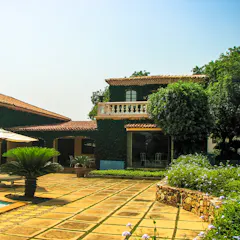
In the formal real estate industry, there is an emerging narrative that affordable housing deficits in African cities represent a vast untapped market

The inability to curb road accidents in Ghana is tied to colonial and neocolonial legacies.
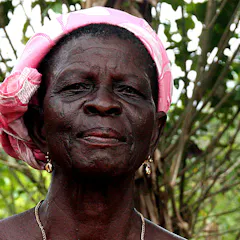
Families in Ghana are struggling to manage the long-term care of ageing relatives.

Ghana has a long institutional history that’s shaped the practices which create dangerous buildings.
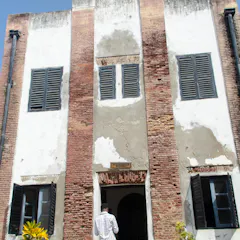
Ghana’s museums can improve visitor numbers by paying attention to customer satisfaction.
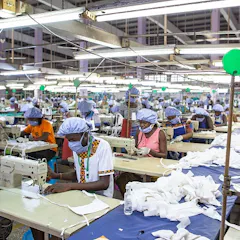
The government touted a response based on science and data but a surge is showing otherwise
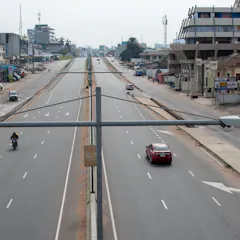
A lockdown by itself is not a magic wand for fighting coronavirus.

Governments must take note of specific geographic contexts and local attributes that drive water insecurity.

It’s essential to consider the food industry’s role when it comes to food environments that offer unhealthy, cheap and enticing options.
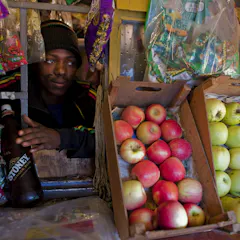
By better understanding the politics and governance of African cities and variations across cities, we can identify feasible opportunities to improve informal traders’ livelihoods.
Top contributors
-

Teaching Assistant Professor, University of Pittsburg and Visiting Associate Professor, The University of Osaka, University of Pittsburgh
-
Research Active Lecturer, Discipline of Psychology, Charles Darwin University, Charles Darwin University
-
Senior Lecturer, University of Environment and Sustainable Development
-
Senior Research Associate, University of Oxford
-
Senior Lecturer, Department of Planning, Kwame Nkrumah University of Science and Technology (KNUST)
-
Senior Lecturer, Department of Planning, Kwame Nkrumah University of Science and Technology (KNUST)
-
PhD Candidate, University of Memphis
-
Assistant professor, University of San Francisco
-
Assistant Professor, University of Memphis
-
Associate professor, UCL
-
Research Fellow, New York University
-
Senior Research Fellow, Centre for Climate Change and Sustainability Studies,, University of Ghana
-
Casual Academic, School of Architecture and Built Environment, University of Newcastle
-
Research Scholar, Center for Sustainable Urban Development, Climate School, Columbia University
-
Extraordinary Professor, Department of Political Sciences, University of Pretoria