
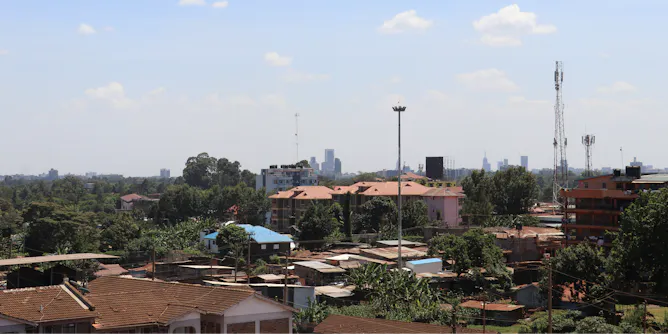
Urbanisation is experienced through growing tensions within families over precious yet meagre plots of land.
Articles on Nairobi
Displaying 1 - 20 of 96 articles
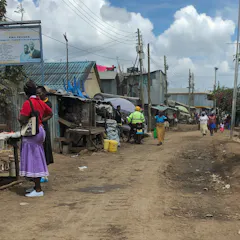
A study of 701 households in Nairobi found that rising food and fuel prices after Russia’s invasion of Ukraine forced many families to eat and cook less.

Chinese-funded infrastructure projects in African cities are driven by the national elites and therefore do not necessarily lead to community-level improvements.

The film suggests that building a library is not merely about a building or books; it is about dialogue and citizenship.

Night running is seen as a form of spiritual possession in the communities where it’s common.

Men and women experience and try to cope with stress in diverse ways.

African governments and other local actors have a crucial role to play in shaping the activities of Chinese firms.

An assessment of a learning intervention showed that the impact differed between groups of pupils.

There’s an opportunity for Africa’s cities to learn from the successes and challenges faced by cities in other parts of the world.

In the Absence is a meditative exhibition of large-scale installations created by the Wajukuu Art Project.
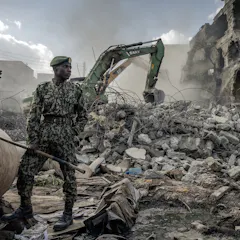
In response to flooding that destroyed homes and displaced thousands in Nairobi’s informal settlements, the government has been evicting people living in riparian areas.
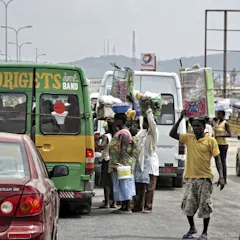
Walking is a common way of getting around in most African cities

There’s been an increase in the amount of runoff generated from rainfall as land is altered by settlement and deforestation.

The winds passing over Kenya flow in waves and periodically bring hot weather, the kind that has prevailed recently across east Africa.

Adolescent girls are more at risk during childbirth. Stigma and abuse by healthcare workers makes them less likely to seek medical care, putting their lives further in danger.
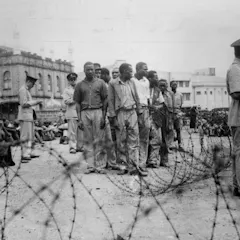
Thousands of Kenyans were held in detention camps, and the British imperialist government tried to cover up brutal violations that occurred there.

Kenya’s experienced fast population growth and urbanisation - this has brought about some big challenges.

The naming of streets, places and landmarks in colonial Nairobi was used to show the political, ideological and ethnic dominance of the British.

Aquifers are highly prevalent across Africa – but they’re not always going to be usable.

Alternatives to violent policing already exist in the daily practices of Nairobi residents who don’t depend on the police for safety.
Top contributors
-

Lecturer, Technical University of Kenya
-
Associate professor, University of Delhi
-
Research Scholar, Center for Sustainable Urban Development, Climate School, Columbia University
-
Lecturer, Kenyatta University
-
Postdoctoral fellow, Georg-August-Universität Göttingen
-
Research Scientist, African Population and Health Research Center
-
Professor of Research, Foundations & Higher Education, Northern Arizona University
-
Associate Research Scientist, Texas A&M University
-
Consultant in Hydrology and Water Resources, Kenya citizen, Visiting Research Fellow, King's College London
-
Assistant professor, University of San Francisco
-
Guest Lecturer, Climate Change Economics, University of Oxford & Director, Climate and Sustainability Programme, ODI Global
-
Policy Outreach Manager , African Population and Health Research Center
-
Postdoctoral fellow, Rutgers University
-
Research Professor ISGlobal Barcelona and Professorial Fellow, ACU Melbourne, Australian Catholic University
-
Research Officer, African Population and Health Research Center