

Proposed solutions focused too much on reducing the cost and complexity of civil court procedures, rather than improving legal literacy.
Articles on Access to justice
Displaying 1 - 20 of 25 articles

Pesutto is on the hook for legal costs after being found to have defamed Deeming. Now she’s intending to sue Pesutto’s backers, including key Liberal Party figures.

The first-ever national census of legal aid private practitioners reveals lawyers are bearing the costs of the government-funded system.
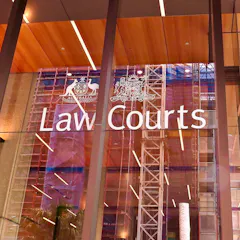
Australia’s patchwork of criminal appeal laws creates an uneven playing field. Here’s what they are and how the system can be made more equitable.

There’s a widespread belief that people who breach their bail conditions do so deliberately, but the real causes are often much more benign.

While it’s easy to demonise environmentalists for using the courts to further their causes, a fundamental part of any democracy is access to the legal system.

Ghana’s judiciary has a public relations problem that requires an urgent fix.

Numbers obtained through a freedom of information request reveal the dire state of the legal aid sector in England and Wales.

As the Law Society recently reported, legal aid in New Zealand is ‘on life support’. Urgent action is required to avoid the justice gap becoming a chasm.

Seventy years after it was first launched, legal aid’s principles of equality are a shadow of what they once were.

Forensic linguistics can play a valuable role in interpreting evidence.

South Africa is seeing a growing body of class action.

Automated tools could help encourage access to justice in areas such as divorce, owners corporation disputes and small value contracts.

A year since its royal commission reported, Victoria continues to lead the nation in how to respond to, and prevent, family violence.

The failure to regulate litigation funders is becoming more problematic. This is because more funders, particularly from overseas, are entering the Australian market.

Access to immigration and asylum tribunals is about to get a lot more costly.

Legal aid cuts have made people going to court turn for help elsewhere.
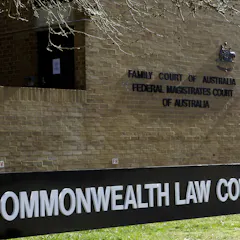
Merging the back-end operations of Australia’s federal courts could have significant implications for the way in which resources are allocated to meet the needs of family courts and their clients.

The demand for government-funded legal services is large and growing. Simply “not cutting” these services does the community a grave disservice.

The Productivity Commission raised a few eyebrows when it called for an additional A$200 million for legal assistance services to disadvantaged Australians, who are “more susceptible to, and less equipped…
Top contributors
-

Adjunct Associate Professor, University of New England
-
Professor of Law, UNSW
-
Lecturer in law, University of Sussex
-
Adjunct Professor, Australian Catholic University
-
Lecturer in Law, Adelaide University
-
Associate professor, Northumbria University, Newcastle
-
Professor in Legal Studies, Swansea University
-
Eleanor Rathbone Chair of Sociology, University of Liverpool
-
Professor of African Language Studies, University of the Western Cape
-
Professor, Centre for Women's Studies & Gender Research, Sociology, Monash University
-
Emeritus Professor Monash University, Monash University
-
Professor (Practice), Faculty of Business and Economics, Monash University
-
Postdoctoral research fellow (Forensic Linguistics/ Language and Law), University of the Western Cape
-
Associate Professor in Law, Australian National University
-
Senior Lecturer in Media and Communication, University of Tasmania