
In England and Wales, members of the public can request a sentence review.
Articles on UK courts
Displaying 1 - 20 of 37 articles

Neuroscience provides plenty of evidence for raising the age from ten.
Proposed solutions focused too much on reducing the cost and complexity of civil court procedures, rather than improving legal literacy.
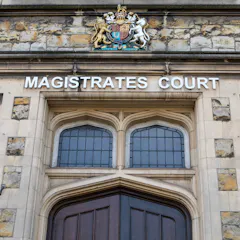
In 2025, English and Welsh magistrates courts received almost 1.5 million cases.
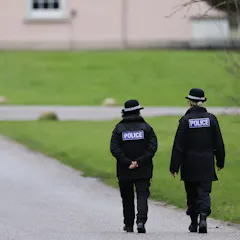
The offence Mountbatten-Windsor is being investigated for – misconduct in public office – is famously vague and complex.
The MoJ has publicly disclosed for the first time that trial records will now be kept at least as long as the prison sentence – and possibly indefinitely.
If a judge makes a decision on their own, only their own biases will influence the verdict. In a jury, consensus needs to be reached.

The right to jury trial is a symbolic cornerstone of justice in England and Wales.
Brian Leveson has recommended more judge-alone trials to address the backlog of nearly 80,000 cases.
Economist Diane Coyle explains how backlogs and underfunding in tribunals and civil courts causes problems for business.

The civil procedure rules on settlement are preventing true access to justice.

You be the judge: just how wacky can jury decisions be?

In March jury trials in England and Wales were suspended in response to COVID-19. Here’s how remote criminal trial might work – and what might not.

If existing trials are halted, it may not be as simple as picking up where they left off.

We can’t just blame falling rape prosecutions on a lack of resources.

Lifelong anonymity orders are a rare and exceptional interference with freedom of expression.

Seventy years after it was first launched, legal aid’s principles of equality are a shadow of what they once were.

The scheme has many critics, but the numbers show that it’s working well.

New research found a disparity between the sentences women and men are given for offence when alcohol is an aggravating factor.
The principle argument as to why women should remove the niqab in court seems compelling, but it is based on flawed assumptions.
Top contributors
-

Lecturer in Constitutional and Administrative Law, and Public Procurement, Bangor University
-
Associate Professor in Law, Australian National University
-
Assistant Lecturer Forensic Psychology/PhD Candidate, Birmingham City University
-
Professor in Legal Studies, Swansea University
-
Lecturer in Psychology, University of Salford
-
Senior Lecturer Faculty of Business and Law, De Montfort University
-
Associate Professor of Law (Health Law), Deakin University
-
Professor of Law, University of Essex
-
Senior lecturer, Department of Sociology, University of Essex
-
Reader in Digital Society and Justice, University of Sussex
-
Professor of Law, University of Essex
-
Registered Forensic Psychologist, Institute of Psychology, Health and Society, University of Liverpool
-
Senior Lecturer in Criminology & Criminal Justice, Brunel University of London
-
Lecturer, RMIT University
-
Professor of Politics, University of Buckingham