

People seeking asylum navigate one of the most complex areas of law, often not in their first language
Articles on Legal aid
Displaying 1 - 20 of 38 articles

Researchers found more than 80 cases of generative AI use in Australian courts so far – mostly by people representing themselves. That comes with serious risks.

In one case, legal advice made the difference between no compensation and £295,000.

The first-ever national census of legal aid private practitioners reveals lawyers are bearing the costs of the government-funded system.

The ‘small claims’ court process is supposed to help workers pursue unpaid wages and entitlements without needing a lawyer. But the system isn’t working for migrants.

Gender violence has captured the attention of policy makers and the public. There’s many things that can be done, both in the short and long term.

The right to a fair trial means cutting the funding of cultural reports will simply shift the burden. Lawyers will find other ways to put the same information before a judge.

Numbers obtained through a freedom of information request reveal the dire state of the legal aid sector in England and Wales.
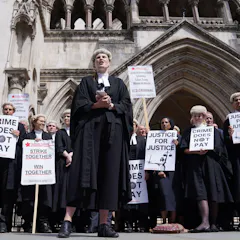
Ongoing strike action by criminal barristers could disrupt trials until demands for better pay are met.

As the Law Society recently reported, legal aid in New Zealand is ‘on life support’. Urgent action is required to avoid the justice gap becoming a chasm.

Young people often swallow any drugs they have on them when they encounter police, risking overdose to avoid a drug possession charge.

Seventy years after it was first launched, legal aid’s principles of equality are a shadow of what they once were.

A year ago, Doug Ford’s election was seen as a harbinger of a populist realignment in Ontario and Canadian politics. Now polls suggest Ford has abysmally low personal approval ratings.

There’s an apparent emerging Doug Ford doctrine in Ontario of short-term gain for long-term pain. It threatens to embed long-term structural costs for the province and its taxpayers.

The recent decision by the Ontario government to drastically cut funds for legal aid will cause hardship for many low-income residents of Ontario and for refugees claimants.

An evidence-based measure of minimum income has been widely adopted – and could now change the rules around legal aid.

Cuts to legal aid could see paralegals taking on more case work.

Inconsistencies in how judges handle appeal cases and different levels of legal provision around the country can leave asylum seekers facing a lottery.

It is becoming harder and harder to access legal aid for immigration cases.

Many who represent themselves in court fail to make it through the process, have their case dismissed or lose what otherwise would have been a winning case.
Top contributors
-

Senior Lecturer in Law, Cardiff University
-
Adjunct Associate Professor, University of New England
-
Lecturer in law, University of Sussex
-
Professor, Environmental and Urban Change, York University, Canada
-
Professor of Law, Auckland University of Technology
-
Adjunct Professor, Australian Catholic University
-
Research Fellow, Social Anthropology, University of Edinburgh
-
Postgraduate Student and Researcher in Migration and Refugee Studies, University of Oxford
-
Head of Law and Criminology Department, University of East London
-
Professor of Law, University of Strathclyde
-
Professor in Legal Studies, Swansea University
-
Visiting Professor, UCL
-
Professor of Social Policy, Loughborough University
-
Professor of International Human Rights Law, Queen Mary University of London
-
Senior Lecturer in Law, University of Brighton