

Ribose molecules came to Earth in meteorites and eventually became key parts of RNA. But how they survived in between has been a mystery.
Articles on Abiogenesis
Displaying all articles
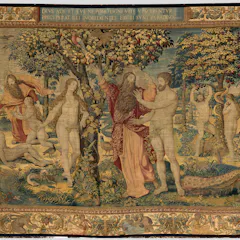
Over centuries, artists and censors have employed the humble fig leaf to cover the penis – including on Michelangelo’s ‘unmistakably male’ David.
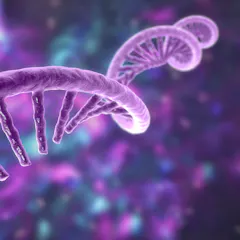
Scientists have known about the ‘formose reaction’ for 160 years. New research shows how it could have played a key role in the creation of life.
The question of how difficult it is for life to emerge is interesting – not least because it can shed some light on the likelihood of finding life on other planets.
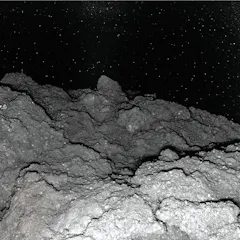
The discovery of a key component of RNA in samples from asteroid Ryugu adds weight to the theory that basic organic molecules may have arrived on Earth from outer space.

Fossil evidence of how the earliest life on Earth came to be is hard to come by. But scientists have come up with a few theories based on the microbes, viruses and prions existing today.

Ancient rocks from Western Australia may not contain the world’s oldest fossils – but they do preserve organic compounds that may have formed the raw materials for the first living cells.
Top contributors
-

PhD Candidate in Prebiotic Chemistry, UNSW
-
Adjunct Professor, The University of Western Australia
-
Professor Emeritus of Microbiology, University of Connecticut
-
Adjunct Research Fellow, Earth Sciences, The University of Western Australia
-
Senior lecturer, School of Biological Sciences, University of Bristol, University of Bristol
-
Professor, School of the Environment, The University of Queensland
-
Professor of History, Australian Catholic University
-
Associate Professor, School of Chemistry, UNSW
-
Professor and Director of the Australian Centre for Astrobiology, UNSW
-
Associate Researcher, Australian Centre for Astrobiology, UNSW