
Expecting the rest of the world to adopt expensive, centralized sewage treatments systems common in the U.S. is not realistic.
Articles on 2016 Rio Olympics
Displaying 61 - 80 of 159 articles
Unravelling the common assumption that runners from Kenya, Ethiopia and Somalia have a natural advantage.
… and how wind played its part.
Imagine cities competed to eliminate hunger, poverty, unemployment, crime and greenhouse emissions, and to offer housing and transport for all. Don’t scoff – urban planning was once an Olympic event.
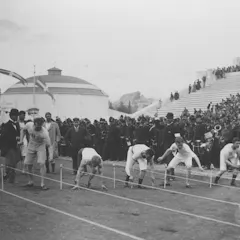
As the track and field events are about to start in Rio, we look at how some athletic events have changed since the first Olympics in 1896.
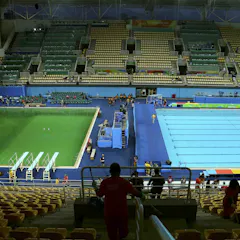
The possible culprits are: a sudden algae bloom; a change in pool alkalinity; or a chemical reaction in the water. How do these cause a change in the colour of the water?
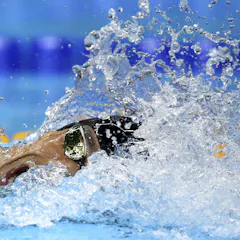
Races at the international level are often decided by as little as 0.01 of a second.
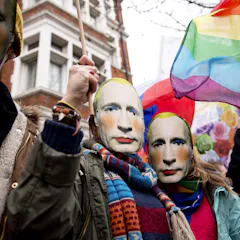
Sport remains “one of the last bastions of cultural and institutional homophobia” in Western societies. But there is progress.
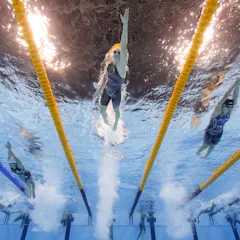
Women’s football was introduced in the Olympics a staggering 96 years after the men’s event – and some sports still struggle with gender inequalities.

They’re a global phenomenon – but gangs are so varied that they barely merit the same name.
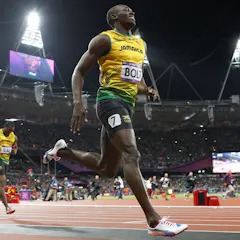
In order to become a better runner, you need to consider these factors first.
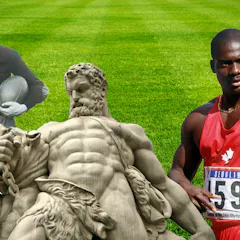
In sports, what’s considered fair play has changed throughout history. At one point, even looking ‘too poor’ was grounds for exclusion.
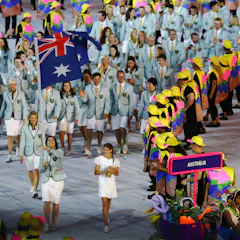
Australia has had a good start to the Rio Olympics. But does that mean that the strategy created in response to Australia’s poor Olympic performance in 2012 is working?
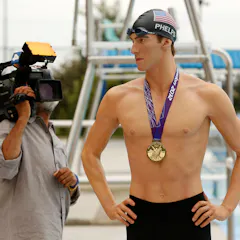
Business Briefing: the big bucks of broadcasting the Olympics
The Conversation16 MB (download)
The amount broadcasters will pay for the rights to the Olympics keeps going up, but is the value of the rights changing?
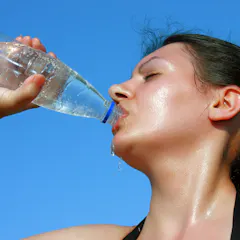
Sprinters may be able to power through, but endurance athletes could suffer from hyperthermia and dehydration.
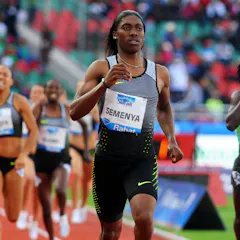
After much suspicion and derision, women with hyperandrogenism can compete in international events.
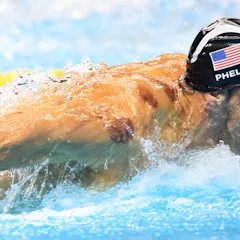
They look sore but it’s fairly harmless – and the effect may really be a placebo.
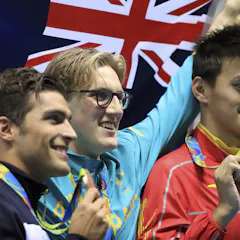
Rarely do we see such unscripted individual honesty on difficult topics such as doping, right in the middle of arguably the biggest international sporting stage.
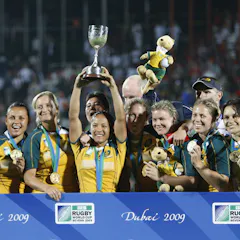
The gold medal-winning Australian women’s rugby Sevens team is a shining example of talent transfer from other sports.
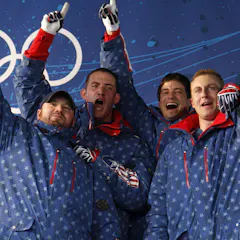
A former Olympic gold medalist reflects on his own financial struggles as he trained and competed for the 1984 Games. Decades later, not much has changed for many Olympians.
Top contributors
-

Associate Professor of Sport Management, University of Technology Sydney
-
Associate Professor of Sport Management, Bond Business School, Bond University
-
Professor of Sport Management, Sheffield Hallam University
-
Professeur des universités, Université Paris 1 Panthéon-Sorbonne
-
Lecturer in Event Management, University of the West of Scotland
-
Chair in Science Communication & Future Media, University of Salford
-
Senior Lecturer, Faculty of Health Sciences and Sport, University of Stirling
-
Associate Research Fellow, Coventry University
-
Reader in Exercise and Health Physiology, University of Hertfordshire
-
Associate Professor of Screen Media, Victoria University
-
Director, Cities of Culture Research Observatory, University of Liverpool
-
Professor of Sport Management, University of Stirling
-
Professor and Chair of Allied Health Studies, Stephen F. Austin State University
-
Assistant Professor, School of Kinesiology and Health Science, York University, Canada
-
Professor of Health Sciences, Adelaide University