
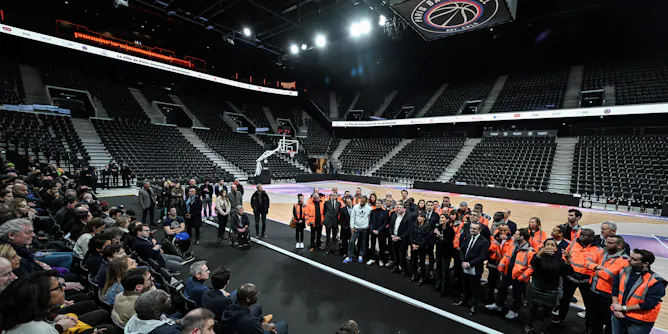
Do big sporting events such as the Olympics help boost tourist numbers in the long run? It all depends on where they take place, according to research.
Articles on 2012 London Olympics
Displaying 1 - 20 of 113 articles
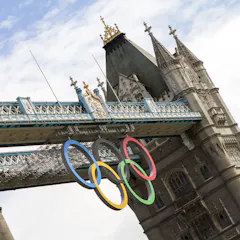
Today’s mega-events are often greener because of what was pioneered in 2012.
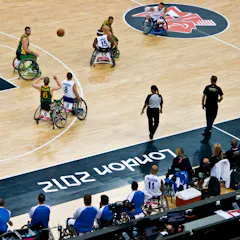
Mega-events like the Olympics have the potential to start important conversations around societal change. But improving the lives of disabled people takes much more than that.
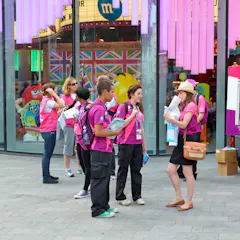
Being a Games Maker at the London Olympics meant a free ticket, good memories and a great line on your CV. But capitalising on all that good will for the community takes government investment.

Research shows that hosting the Olympic Games rarely results in the legacy politicians aim for when selling the idea to the public.

The giant head spotted hovering over the Tokyo skyline in recent weeks is the latest in a long line of Olympic art moments. Debate and controversy are never far behind.
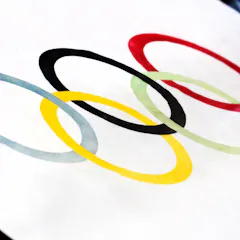
A logo must artfully evoke the spirit of the Olympics as well as represent the host nation and it’s not an easy feat.
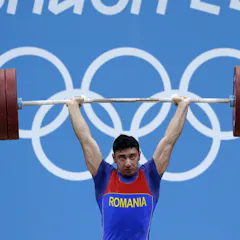
Anti-doping efforts are not stopping cheating in sport. Unless there’s a game changer in technology, we might just have to live with a certain amount of doping in the Olympics.
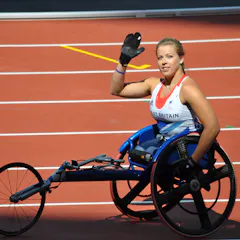
Every Paralympics there’s a sense that they will inspire more disabled people’s sport participation. However, eight years since London 2012 and very little has changed
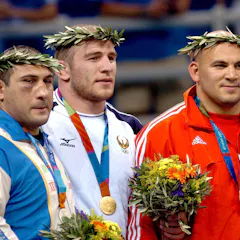
Retrospective drug testing is meant to help deter doping in sport, but will the public become indifferent to drug taking as more and more cheaters are caught?
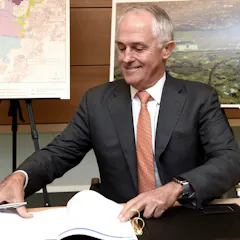
With one of the world’s largest infrastructure pipelines, Australian governments could leverage their procurement spending power to benefit the communities where the work is done.
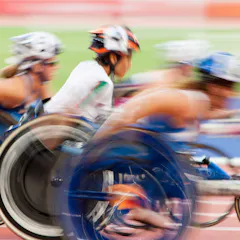
In some distance events, disabled athletes already outcompete their able-bodied counterparts.
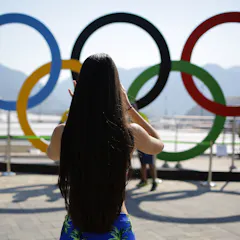
The commonly believed mechanism for increasing sport participation assumes that elite sport performances result in a greater number of people taking up sport.
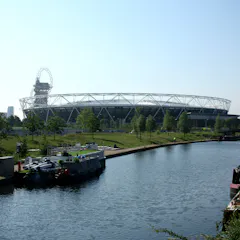
Looking back on the legacy of London 2012, it’s clear the local artistic community has lost out.
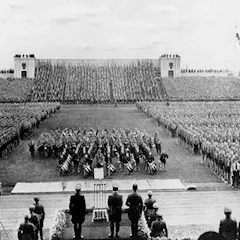
Imagine cities competed to eliminate hunger, poverty, unemployment, crime and greenhouse emissions, and to offer housing and transport for all. Don’t scoff – urban planning was once an Olympic event.
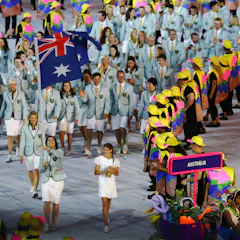
Australia has had a good start to the Rio Olympics. But does that mean that the strategy created in response to Australia’s poor Olympic performance in 2012 is working?
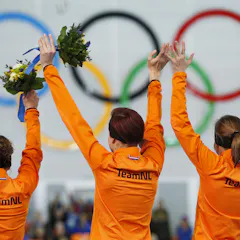
Medal counts for individual countries from the Sydney 2000 to London 2012 Olympics have been predicted relatively accurately, using just a small number of demographic and economic characteristics.
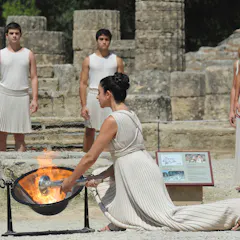
In a time when war and sports are the primary means of competition, Olympic gold has never been so valuable – or expensive.
Results from the games can tell us a lot about how different nations approach elite women and disabled athletes.

Only a better understanding of what drives doping can improve enforcement. To do so, we must break with the perception of doping as an individual or moral problem.
Top contributors
-

NHMRC Career Development Fellow, The University of Melbourne
-
Adjunct Professor of Sport Studies, UC-RISE, University of Canberra
-
Senior Lecturer of Pedagogy and Sports Studies, University of Sydney
-
Senior Lecturer in Democracy Studies, University of Canberra
-
Professeur des universités, Université Paris 1 Panthéon-Sorbonne
-
Senior Lecturer, University of Technology Sydney
-
Professor and Dean School of Management, RMIT University
-
Chair in Global Islamic Politics, Alfred Deakin Institute for Citizenship and Globalisation, Deakin University
-
Distinguished Fellow, Australia-India Institute, The University of Melbourne
-
Research Leader, Sport, Institute of Sport, Exercise and Active Living, Victoria University
-
Lecturer, Department for Health, University of Bath
-
Visiting Fellow, La Trobe University
-
Emeritus Professor, Centre of Policy Studies, Victoria University
-
Researcher at Microsoft Research, Cambridge UK. Previously, The University of Queensland
-
Vice-Chancellor Independent Research Fellow, Sport, Business and Society Research Group, Loughborough University