

The exoplanet LHS 1140b may have a temperature that could allow for liquid water on its surface. Just possibly, it could support the existence of life.
University of Victoria

The University of Victoria is one of Canada’s top research universities. It’s renowned for research impact and dynamic learning opportunities. UVic is located in Victoria, British Columbia, on the edge of Canada’s spectacular west coast - a gateway to the Pacific Rim.
It is consistently ranked North America’s top university for published research based on international collaboration. It’s also home to the world-leading Ocean Networks Canada, Pacific Institute for Climate Solutions, Institute for Integrated Energy Systems, and the world’s only joint Indigenous law program.
Strong partnerships connect UVic to communities at home and around the world. It’s frequently honoured for its comprehensive academic programming. It is also known as Canada’s best comprehensive university for preparing students for the global workplace.
UVic is committed to global connections. Its faculty, staff and students partner with over 300 institutions in 70 countries.
Links
Articles
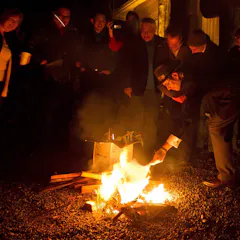
Section 141 of the act was used to surveil and intimidate Indigenous leaders and weaken Indigenous political organizing.

Unwanted, intrusive thoughts about infant harm are a normal, common feature of new parenthood, not necessarily a sign that a parent poses a danger to their child.

Playing out year over year, the chaotic cycle of drought crises has become a familiar experience for British Columbians.

Renaming Ottawa’s Trump Avenue is part of a long history of cities engaging in “toponymic diplomacy.”

Tim Curry built a career out of charismatic villains and unforgettable characters. His greatest talent, though, may have been making himself disappear inside them.

When the skills of new immigrants exceed the demands of their jobs, organizations may risk losing valued employees.

As long as women and other equity-seeking groups are underrepresented, Canada’s clean energy workforce remains inequitable.
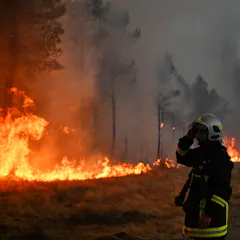
Wildfire smoke does not carry a passport. Canada cannot thin, log, rake or prescribe-burn its way out of a planetary crisis.
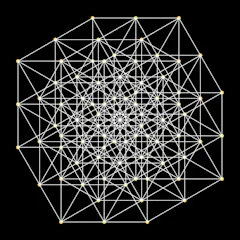
As AI climbs on the shoulders of many mathematicians before it, humans are also able to reach further due to advances by AI.

Listen to the The Conversation’s Curious Kids podcast to hear anthropologist April Nowell explain the origins of language.
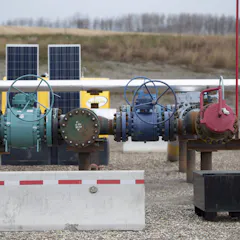
Setback regulations remain the only lever that affords some protection to those bearing the greatest health risks of shale gas development in their neighbourhoods.
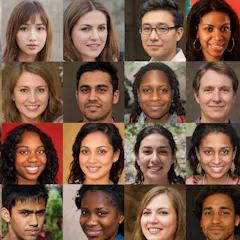
AI-generated faces don’t look weird anymore – they’re ‘hyperaverage’, which is a giveaway to the trained eye.
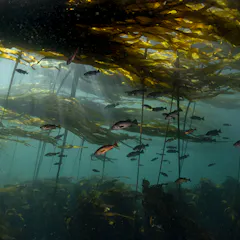
On savait que certains poissons émettent des sons. Aujourd’hui, grâce à des techniques acoustiques sous-marines spéciales, on a pu identifier les sons émis par huit espèces différentes.
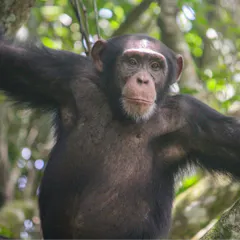
Pour étudier le lancer de pierres en groupe chez les chimpanzés sauvages, les chercheurs se sont rendus au cœur d’une savane boisée, menacée par l’exploitation minière industrielle.
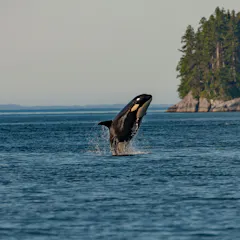
Impact assessments prevent harm before it occurs. Circumventing the process before we understand the risks is misguided and a gamble with our collective future.
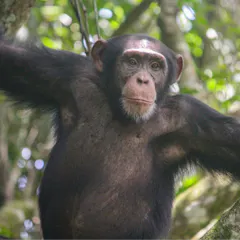
To study accumulative stone throwing among wild chimpanzees, researchers hike deep into the savanna-woodland of Boé — a habitat increasingly threatened by industrial mining.

Les soins de longue durée sont sous pression, à la fois en raison du vieillissement de la population et du manque de main-d’œuvre. Il faut revoir leurs conditions de travail.

The explosive political climate Danielle Smith is stoking in Alberta could lead to Constitutional unravelling, further harm to treaty rights and violence against those she suggests a threat to her agenda.

Wars release massive emissions, and they are being generated with no formal mechanism to record them, and no accountability for the climate costs that affect people in conflict zones and far beyond.
Authors
-

PHD Student in Art History & Visual Studies, University of Victoria
-
Professor, School of Earth and Ocean Sciences, University of Victoria
-
Canada Research Chair in Urban Planning for Climate Change, Associate Professor of Geography and Civil Engineering, University of Victoria
-
Assistant Professor, School of Nursing, University of Victoria
-
Teaching Professor, Geography, University of Victoria
-
Senior Indigenous Advisor with the Indigenous Watersheds Initiative, Practitioner Avisor to the POLIS Water Sustainability Project, University of Victoria
-
Associate Professor, Physics and Astronomy, University of Victoria
-
Lecturer in Political Science, University of Victoria
-
PhD Candidate, Social Psychology, University of Victoria
-
Co-Director; Associate Director of Strategic Partnerships and Public Policy of the POLIS Project; Centre for Global Studies, University of Victoria
-
Rebecca Black is a Friend of The Conversation.
Community Researcher, Geography & Civil Engineering, University of Victoria
-
Professor of Geography, University of Victoria
-
Director of Place-Based Projects, POLIS Water Sustainability Project, University of Victoria
-
Associate Professor of International Business, University of Victoria
-
Associate Teaching Professor, Mathematics, University of Victoria