

Un estudio basado en datos de Euclid cuestiona la división entre galaxias “azules” y “rojas” y muestra que la mayoría envejece de forma gradual. Solo una minoría parece haber sufrido un frenazo reciente en la formación de estrellas.
University of Groningen

The University of Groningen has a rich academic tradition dating back to 1614. Out of this tradition rose the first female student and the first female lecturer in the Netherlands, the first Dutch astronaut and the first president of the European Central Bank. Geographically, the University is rooted in the North of the Netherlands, a region very close to its heart.
The University provides high quality research and teaching in a broad and varied range of fields of study. It is distinguished by the close link the University of Groningen has forged between research and teaching, a bond that does justice to their interdependence.
As an institution facilitating academic research and teaching, the University works at the forefront in its respective fields. The University undertakes its cooperative relationships on the basis of openness and equality. In these relationships, the University is socially involved, purposeful and creative. The University stimulates current debate on scientific, social and cultural issues and is clear and convincing in such debates.
Research and teaching at the University of Groningen is internationally oriented. Students from every continent can prepare themselves in Groningen for their international career paths. Researchers operating within an extensive network of cooperation contacts work at the forefront of knowledge, affirming the University’s worldwide reputation.
Links
Articles

Os dilemas morais de guiar turistas por uma paisagem intocada

L’Antarctique attire chaque année davantage de touristes. Mais pour certains guides, voir les glaciers fondre et les colonies de manchots se remplir de visiteurs est devenu moralement insupportable. Ils racontent pourquoi ils ont décidé de partir.

The moral struggles of guiding tourists through a pristine landscape.

Africans are often sold as physically strong with raw talent, but lacking in discipline and technical refinement.
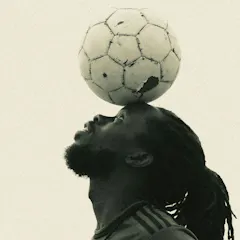
La Coupe du monde présente le football comme un sport inclusif et diversifié. Ce n'est pas le cas pour les joueurs africains qui partent jouer à l'étranger.
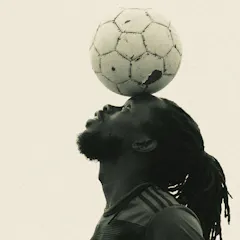
The World Cup is selling football as inclusive and diverse. It’s not so for the African players migrating to play overseas.

Polling in Russia suggests strong support for President Vladimir Putin. Yet below the surface, popular sentiment is more mixed.
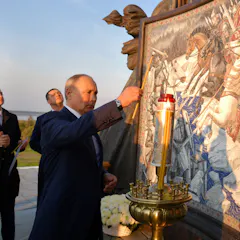
Moscow’s framing of its enemies as ‘Anglo-Saxon’ follows a strategy of misusing history to justify the invasion of Ukraine.
Generative AI changes how we see – and how we decide what’s real.
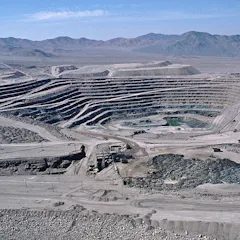
Zimbabwe has large lithium deposits but most is extracted by multinational companies and exported raw. The country doesn’t benefit from lithium battery sales.

A expansão do Universo está acelerando, não desacelerando, e com isso nossa compreensão de como o Universo funciona pode precisar de uma atualização.
La expansión del universo se acelera, pero quizá no lo hace de manera constante. Nuestra comprensión de cómo funciona el cosmos puede necesitar una actualización.
The universe’s expansion is accelerating, not decelerating. Our understanding of how the universe works may need an update.
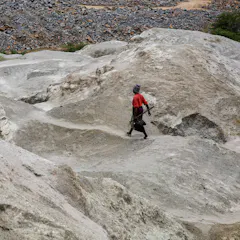
In Zimbabwe it was believed that if a woman went underground the gold seam would vanish, but above ground women held spiritual power over mines.
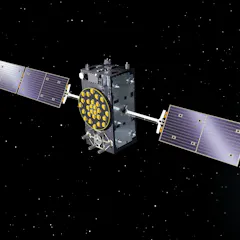
The Galileo satellite project brought major players in the European space industry into “coopetitive” relationships. Effective governance is key to managing the tensions inherent in such undertakings.

Trump’s ‘dark play’ energises his voter base, but it also dangerously blurs the line between joke and reality.

Everyone — from academics to policymakers to the public — needs to think about how we can address toxic beliefs to create long-lasting change and foster safer online communities.

Les médias africains ont conservé un grand nombre des normes préjudiciables qui régissent la manière dont les médias occidentaux rendent compte de la situation sur le continent.
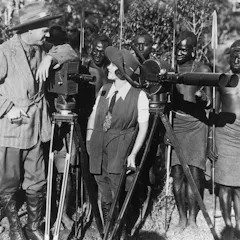
African news media have continued many of the damaging norms of how western media report on the continent. It’s time for a rethink.
Authors
-

PhD student, University of Groningen
-
Emeritus Professor, University of Groningen
-
Assistant Professor, Economics, University of Groningen
-
Assistant Professor of Journalism and Media Studies, University of Groningen
-
Professor of Digital Marketing, University of Groningen
-
Postdoctoral Researcher, Arctic Centre, University of Groningen
-
Assistant Professor of Russian Discourse and Politics, University of Groningen
-
Assistant Professor in Media and Digital Cultures, University of Groningen
-
Associate Professor of Innovation & Strategy, University of Groningen; European Academy of Management (EURAM)
-
Postdoctoral researcher, University of Groningen
-
University of Groningen
-
Assistant Professor in Digital and Multimodal Communication / Humane AI, University of Groningen
-
Postdoctoral researcher, University of Groningen
-
Postdoctoral fellow, University of Groningen
-
Postdoctoral Researcher, Arctic Centre, University of Groningen