

Angine de Poitrine occupies a different part of the prog rock musical spectrum than Rush, who emerged from the classic prog rock era.
Home – Articles, Analysis, Comment
Displaying 26 - 50 of 10505 articles

The U.S. Supreme Court’s decision on glyphosate relieves the sellers of hundreds of pesticides from obligations to warn customers about potential dangers.

Recep Tayyip Erdoğan doesn’t want others defining Turkey’s choices. He’s seeking a better position within an existing world order and recognition that Turkey is entitled to forge its own path.

The team printed a honeycomb and a Canadian maple leaf, both roughly the size of a single grain of sand.

Most people are likely unaware of how the sounds of brand names affect them.

Leg pain can be a symptom of peripheral artery disease, a condition that is part of the same disease process that causes heart attacks and many strokes.

Bill C-39 makes it easier for Ottawa to intervene when collective bargaining produces the very conflict that it is designed to manage.

Governments must stop treating climate action as merely an aspirational goal. It is an absolute imperative.

Unwanted, intrusive thoughts about infant harm are a normal, common feature of new parenthood, not necessarily a sign that a parent poses a danger to their child.

As Mark Carney raises the possibility of Canada joining the European Union’s Erasmus+ education program, it’s important to figure out what form Canadian participation would take.

There is a persistent gap between institutional commitments to equity and diversity and the realities students encounter in Canadian higher education.

Psilocybin could be an unexpected avenue for treating an injury that currently has few options beyond rest and symptom management.

Kids need frequent opportunities to encounter numbers, quantities, shapes, patterns, measurement and spatial relationships.

Popular hockey shows are imagining a more inclusive sport. But recent controversies show how difficult it is to change hockey culture.

The federal government says new labour rules will reduce intervention in strikes, but they could weaken workers’ bargaining power.

When deciding whether and how to respond to residential schools denialism, teachers should consider the type of denialism, the students involved and their school and community context.
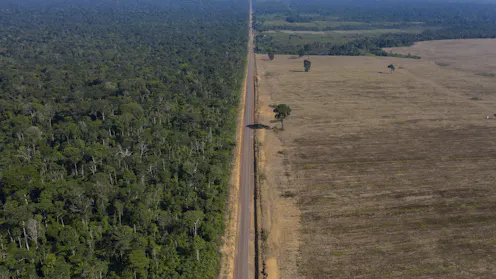
Sustaining Brazil’s recent deforestation gains will require stronger environmental enforcement beyond the rainforest and resistance to political efforts that could weaken it.

Canadians are turning to AI mental health chatbots for support. But what if the bot agrees with the beliefs that are keeping you unwell?

Families are still expected to navigate disconnected health and community services on their own. A new report sets out what governments can do to change that.

Donald Trump has given France and Canada another reason to close ranks. For Saint-Pierre-et-Miquelon, the test is whether it will produce lasting investment and development opportunities.

By amending its Education Act to remove the language of ‘diversity’ and ‘belonging’ and restricting flags that can fly, Alberta is enacting a quiet curriculum of silence.

New research shows supportive supervisors may help protect employees’ psychological well-being, but meaningful support requires workplaces that can adapt to changing needs.

Playing out year over year, the chaotic cycle of drought crises has become a familiar experience for British Columbians.
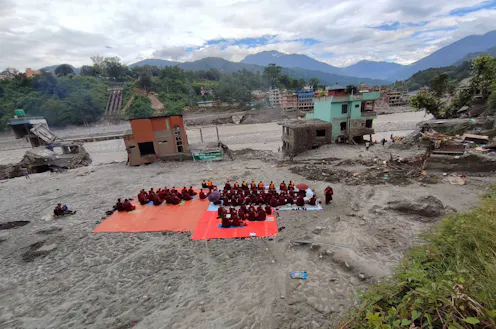
Development in known hazard zones is creating untenable risks for communities around the world. Here’s how Nepal and the global community can build back differently.

There is a great need for ongoing authentic Métis voice, representation and expression of our unique cultural identity, and a Métis studies conference convenes people this September.