

Rumble is a Canadian video-streaming platform that presents itself as an alternative to YouTube. Because Rumble does not censor content, right wing conspiracy theories have proliferated on the site.
Articles on YouTube
Displaying 101 - 120 of 215 articles
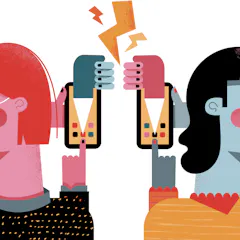
How social media services work – the nuts and bolts of interacting with others online – has the power to shape and improve online arguments. Here’s how.

Powers in Bill C-10 will force YouTube and TikTok to make CanCon more discoverable, skewing our searches and streams — but it’s unconstitutional.

Social media algorithms are akin to a licence to promote junk food or tobacco to children.

Poverty aside, cultural factors like the influence of hip hop songs may also play a role in making a life of cybercrime attractive to young people.

A significant portion of teenagers’ social development happens online. The risks are well known, but the benefits of peer support are often overlooked.
Leftwing YouTubers are aiming to get their videos in front of viewers who typically watch far-right content, by mimicking their keywords and hoping the site’s algorithms will do the rest.
A new analysis finds that Fox was relatively forthright about the legitimacy of the election results.

Encrypted messaging services like Telegram provide virtual dark corners where far-right extremists can recruit, organize and plan unhindered.

An analysis of social media commentary about socialism versus capitalism shows that people are talking past each other, but some are engaging in more nuanced discussions as well.
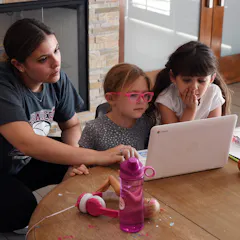
YouTube may have more potential to encourage children to learn than you’d think.

Like Pata-Pata, Homeless and Mbube, the song Jerusalema is elevated by a historical moment in time and has the power to cross over to different audiences.

Google pays Apple to make its search engine the default on its devices, but the iPhone maker actually has more market power in the relationship.

Using machine learning to study over 85 million YouTube comments, a research team has, for the first time, identified linguistic differences among cable news viewers.
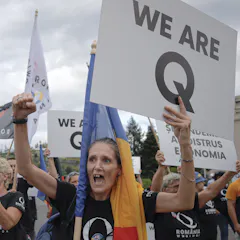
Facebook and YouTube have brought in measures to stop the spread of dangerous QAnon conspiracies, but members of the Q community have found new ways to promote false theories on social media.

An app that young people use to share videos of themselves dancing might seem like a silly diversion, but it’s become a powerhouse social media platform.

Facebook, Twitter, YouTube and other social networks say they are targeting hate, but they’re overlooking a major source of hateful content: gun talk.

Just because YouTube recommends a video doesn’t mean it has medically valid information.

Much like what everyone in showbiz from Lady Gaga to Lang Lang seems to be doing, school-age music students are using apps and software to play instruments and sing together.

Now that we know what essential work is, it seems the perfect time to reflect upon the not-so-essential work of celebrities.
Top contributors
-

Associate Professor of Screen Media, Victoria University
-
Distinguished Professor of Media and Communication, Queensland University of Technology
-
Professor of Internet Studies, Curtin University
-
Associate Professor in Media, RMIT University
-
Lecturer, Learning & Teaching Innovation, Flinders University
-
Professor of Internet Studies & Director of Influencer Ethnography Research Lab, Curtin University
-
Clinical Professor of Communication, USC Annenberg School for Communication and Journalism
-
Reader in Marketing, Cardiff University
-
Associate Professor of Public Policy, Communication, and Information, UMass Amherst
-
Director of the Brechner Center for Freedom of Information, University of Florida
-
Professor of Marketing, Cardiff University
-
Associate Professor of Communication and Media Studies, Pace University
-
PhD Candidate, Department of Kinesiology; Epidemiogist at Henry Ford Health, University of Windsor
-
University Professor of Economics and Public Policy, Carnegie Mellon University
-
PhD Candidate, Arts Technology and Innovation, University of East London