

The jobless rate hasn’t been this high since November 2021. But this is why it’s unlikely to stop the Reserve Bank from lifting interest rates next Tuesday.
Articles on Youth unemployment
Displaying 1 - 20 of 192 articles

Youth employment programmes need to be built around real jobs, capable institutions and the young people they are meant to serve.

In Mozambique growth and employment are becoming disconnected, and so are skills and opportunity.

Economist Rosa Abraham talks to The Conversation Weekly podcast about a new youth protest movement whose symbol is a cockroach.

Youth unemployment is rising in New Zealand as junior roles increasingly disappear from the labour market. But the picture is more complex than AI eliminating jobs.

With 1 million unemployed young people across the UK, school culture may have impacted their success rate

Here’s how to outsmart a system that seems to have forgotten the people part of hiring.

A lack of political will is one factor preventing youth work from becoming a formal profession.

There’s logic to the government’s plans for youth placements – but will they lead to long-term jobs and growth?

For young people living in seaside towns year-round, there’s little to do – and youth services are crumbling.
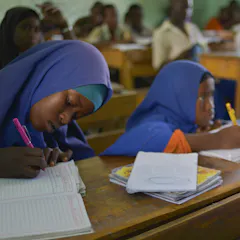
Somalia ranks poorly in key dimensions of human development, and urgently needs developmental leadership to reverse the situation.

The richest 1% of Africans received 27% of the total revenue from growth on the continent. This is one of the inequalities that needs to change.

Youth unemployment and corruption have helped drive youth dissatisfaction on the continent, with major implications for governments and democratic strength.
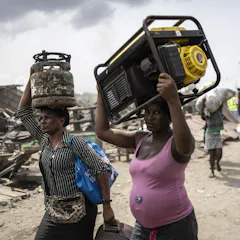
Nigeria needs a broad-based coalition of developmentalist elites.

What are the prospects for young South Africans once they’ve left school?
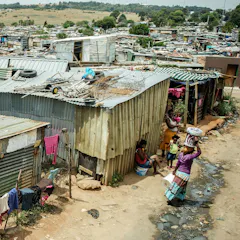
Rejecting precarious work signals dissatisfaction with a labour market where wage employment rarely offers security or social mobility.
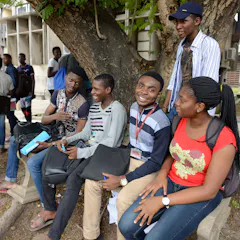
An entrepreneurship course in Nigerian universities initially sparked students’ interest, but its impact has faded.

Teachers play a pivotal role in turning curriculum ideas into practical learning experiences for learners.

While the experience of transitioning from higher education to entrepreneurship was challenging, participants were able to draw heavily from informal networks to build and grow.

What outsiders might view as wasted time (betting on sports) is actually being used productively to prepare for the future.
Top contributors
-

DSTI/NRF Research Chair in Welfare and Social Development, University of Johannesburg
-
Professor of Economics & Business, Allegheny College
-
Professor of Education Policy and Practice, Youth Studies, Monash University
-
Professor of Social Development Studies, University of Johannesburg
-
Research Associate, School of Social Sciences, Monash University
-
Professor of Economics, The University of Melbourne
-
Research Fellow, The University of Melbourne
-
Researcher, Centro Brasileiro de Análise e Planejamento (CEBRAP); University of Johannesburg
-
Deputy Vice-Chancellor (International) and Senior Vice-President, Monash University
-
Professorial Fellow, University of Canberra
-
Professorial Fellow at the Centre for Education and Industry, University of Warwick
-
Professor and Director of the Centre for Inclusive Education, Queensland University of Technology
-
Adjunct Associate Professor, University of Tasmania
-
Director, Centre for Western Sydney, Western Sydney University
-
ARC Senior Research Fellow and Senior Lecturer in Sociology, The University of Melbourne