
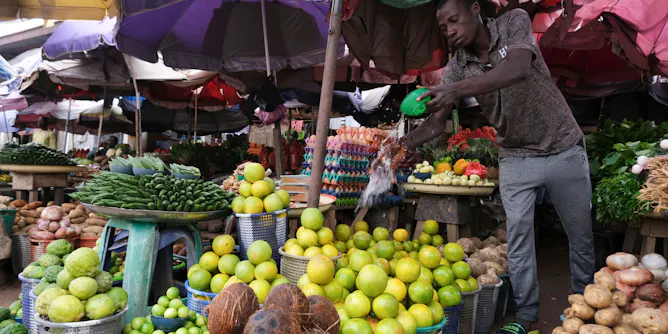
Sometimes the street trader, roadside mechanic or food vendor is the best person to teach students about entrepreneurship.
Articles on Youth unemployment
Displaying 41 - 60 of 192 articles

Experts explain why there might not be much to celebrate and proffer solutions.

Scapegoating immigrants will not result in significantly improved healthcare service provision, reduced crime or less unemployment.
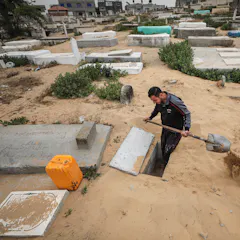
Political and economic forces across the Middle East and North Africa combine to mean well-educated young people spend years looking for work, which delays their independence and adulthood.

It is hard to fathom how Nigeria’s Central Bank interest rate increase would benefit most Nigerians.
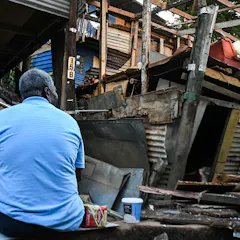
Structural reforms to South Africa’s economy need to be accelerated.

Nigerian youth have increasingly been resisting and expressing their dissatisfaction with toxic workplaces.
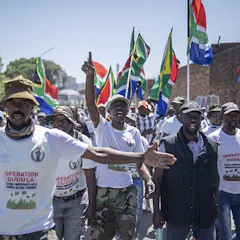
Ending violence against foreigners can only happen by first recognising – and addressing – the hazards of South Africa’s crumbling system of indirect rule.
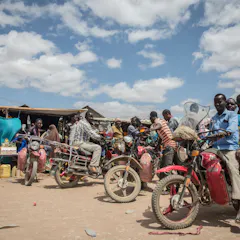
The entire transport sector in Kenya is extremely chaotic and in need of urgent policy and legal interventions.

There’s a crucial need to connect the most vulnerable people with public services in order to tackle systemic poverty and disadvantage. An integrated approach is key.

Nigeria’s post COVID-19 economic recovery plan has resulted in only marginal improvements in economic growth, manufacturing and foreign direct investment.

Findings show that in the face of marginalisation and social exclusion, youth in gangs think that they have no options except violence to prove that they are ‘real’ men in their communities.
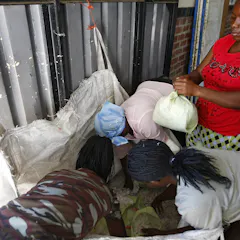
Racial and gender disparities in access to work are entrenched features of the South African labour market.
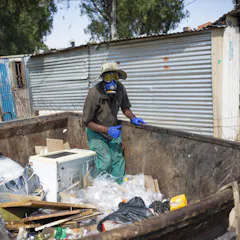
Basic income must be embedded within a broader strategy of economic reform, aimed at increasing the social wage and improving working conditions.

Universities shouldn’t only attend to the knowledge and skills graduates need for work but also the factors that give graduates a better chance of earning a living and participating in society.

South Africa can’t possibly remain the same country in the aftermath of this mayhem. There are just too many storms ahead to simply continue unchanged.
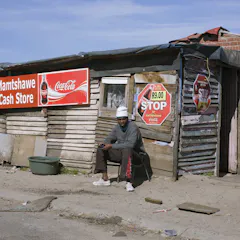
Many unemployed young people are engaged in a variety of economic activities. These may not necessarily be recognised as a form of self employment or informal employment.
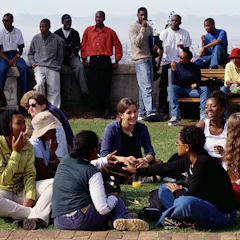
Promoting entrepreneurship will help reduce unemployment in South Africa. But the government has to step up its game.

Two social impact bonds that have concluded in South Africa showed that they got innovation going where it was desperately needed.

Relying solely on job placement as an indicator of successful intervention misses out on outcomes that are equally important, or more so, amid high structural unemployment.
Top contributors
-

DSTI/NRF Research Chair in Welfare and Social Development, University of Johannesburg
-
Professor of Economics & Business, Allegheny College
-
Professor of Education Policy and Practice, Youth Studies, Monash University
-
Professor of Social Development Studies, University of Johannesburg
-
Research Associate, School of Social Sciences, Monash University
-
Professor of Economics, The University of Melbourne
-
Research Fellow, The University of Melbourne
-
Researcher, Centro Brasileiro de Análise e Planejamento (CEBRAP); University of Johannesburg
-
Deputy Vice-Chancellor (International) and Senior Vice-President, Monash University
-
Professorial Fellow, University of Canberra
-
Professorial Fellow at the Centre for Education and Industry, University of Warwick
-
Professor and Director of the Centre for Inclusive Education, Queensland University of Technology
-
Adjunct Associate Professor, University of Tasmania
-
Director, Centre for Western Sydney, Western Sydney University
-
ARC Senior Research Fellow and Senior Lecturer in Sociology, The University of Melbourne