
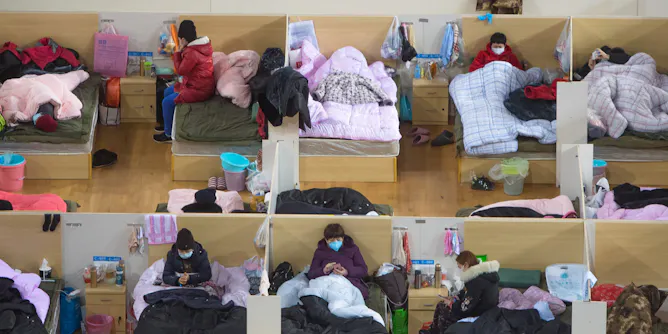
Viruses are basically parasites and, as such, can wreak havoc – but not always. Viruses are within you right now. Viruses cause the most damage when they jump from a familiar host to a new host.
Articles on Wuhan
Displaying 41 - 60 of 61 articles
While identifying a new disease by its place of origin seems intuitive, history shows that doing so can have serious consequences for the people that live there.

Poor communication and misinformation is yet another way an epidemic can cause harm. So it’s important health authorities get their messaging right.
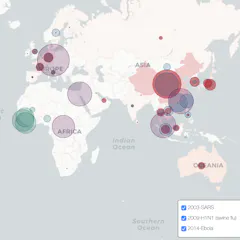
A new tool has been developed to track the history of the novel coronavirus and other recent outbreaks.
To mitigate the dissemination of medical hoaxes, Southeast asian governments have taken various approaches.
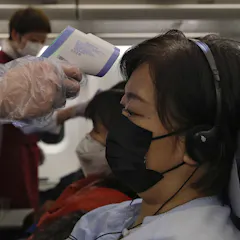
The World Health Organization has said the coronavirus is not yet a pandemic. That raises a question: just what is a pandemic? An expert explains.

The economic impacts of the new coronavirus on the travel and tourism industry will be felt in every corner of the world and almost every sector of the economy.

Wuhan, China, the epicentre of the 2019-nCoV outbreak, is now under lockdown. What does that mean for its 11 million citizens, and for the rest of the world?
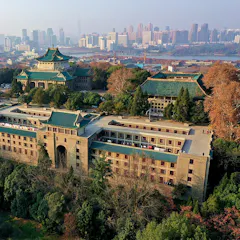
The strong crisis management in Wuhan will probe the capacity of the Chinese government to prepare adequately for pandemic and may test Xi’s rule.

The declaration does not mean the risk to Canadians has changed, but it does mean Canada must step up to help those countries with weaker heath-care systems.
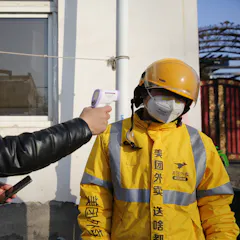
The novel coronavirus is officially a global health emergency. Other countries should not adopt China’s approach to containing the disease.

An ancient practice to prevent the spread of infectious disease looks likely to make a comeback in modern-day Australia. Here’s the rationale behind quarantining Australians returning from Wuhan.

During a crisis, communities seek to come together. But quarantined residents of Wuhan at the epicentre of the coronavirus epidemic have had to show their encouragement in a different way.
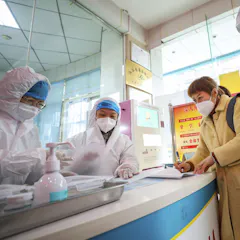
Social media has allowed researchers around the world to collaborate and co-ordinate their efforts to fight the outbreak and contain its spread.

Scientists do not yet know the severity of the current coronavirus. A biologist who worked on the 2009 flu pandemic offers insights on that outbreak as well as the SARS outbreak.
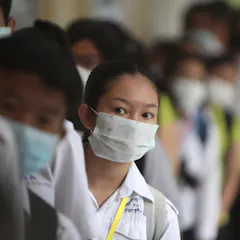
With coronavirus continuing to spread, you may wonder: How do I know if I might have it? An infectious disease expert explains.
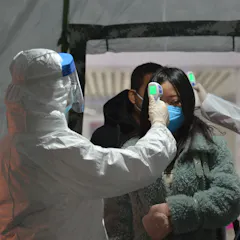
China’s strategy to contain the coronavirus just might work because of the way cities and infrastructure have been developed.
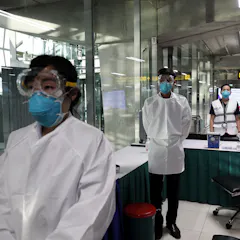
The preliminary evidence suggests the Wuhan coronavirus is less deadly than SARS. But with social media, panic can now spread more rapidly and further.
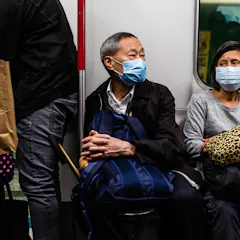
Two coronaviruses were identified in the 1960s, and five since SARS in 2003. It is the seventh that is now making headlines.
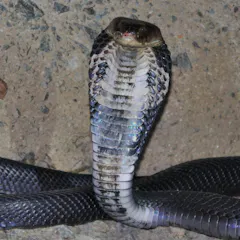
A new coronavirus related to SARS and MERS has now traveled from China to the United States. A genetic analysis reveals that this deadly pathogen may have originated in snakes.
Top contributors
-

Public Health Pathology, NSW Health Pathology, Westmead Hospital and University of Sydney, University of Sydney
-
Assistant Professor of Epidemiology and Biostatistics, University of Nevada, Las Vegas
-
Assistant Professor of History, University of Pittsburgh
-
Veterinarian epidemiologist, Cirad
-
Directeur régional Asie du Sud-Est, vétérinaire et épidémiologiste, Cirad
-
Professor of Plant Pathology and Environmental Microbiology, Penn State
-
Directeur de recherche en virologie, Aix-Marseille Université (AMU)
-
Professor, Intelligence and Security Studies, Charles Sturt University
-
Honorary Fellow, Asia Institute, The University of Melbourne
-
Professor of Economics, University of Birmingham
-
Assistant Professor & Co-Director, Health Ethics, Law, & Policy (HELP) Lab, Western University
-
Professor in Marketing, ESCP Business School
-
Directeur de Recherche, Institut de recherche pour le développement (IRD)
-
Infectious diseases epidemiologist, Soulsby Fellow and One Health Postdoc, University of Liverpool
-
Professor of Agricultural Economics, Huazhong Agricultural University