

A growing body of research shows electronic monitoring rarely improves performance and reliably increases employee stress and distrust.
Articles on Workplace surveillance
Displaying all articles

People are increasingly using AI chatbots for emotional and psychological support. Now, companies are using it to support employees – raising a host of issues.
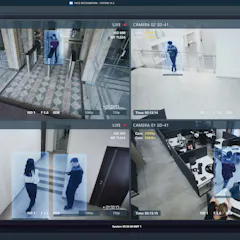
Developments in technology mean there are more ways for workplaces to be monitored, and not always with the knowledge of workers.

Emotion recognition technologies endanger fundamental rights without proper justification.

Loss of privacy is just the beginning. Workers are worried about biased AI and the need to perform the ‘right’ expressions and body language for the algorithms.

Companies are using myriad ways to check up on employees at home, from keylogger software to webcam monitoring.

Tilting toilets are the latest suggestion to limit time spent on the loo at work.

From wearables with monitoring chips to face scanners that assess your contentment, workplace surveillance seems to be going in one direction.

Government agencies and contractors are now less trusting of their workers, and keeping a much closer eye on them, both on and off the job.

The use of surveillance cameras raises difficult issues for the law in balancing privacy with exposure that is in the public interest – and perhaps it’s time that balance was reviewed.

The UK government’s move to electronically track criminals on parole shows how wearable technology can become a virtual prison.

Workplace surveillance is creating a culture of suspicion that harms employers and their staff.
Top contributors
-

Professor of Information Technology Management, University at Albany, State University of New York
-
Emeritus Professor in Law and Criminal Justice, Adelaide University
-
Professor and Ken Croft Chair in Management, Haskayne School of Business, University of Calgary
-
Professor of Contemporary Philosophy and Literature, Brunel University of London
-
Associate Professor of Organizational Behaviour and Human Resources, University of Calgary
-
Professor and Director, Communication and Media Research Institute, University of Westminster
-
Tutor in Philosophy and Political Economy, University of Oxford
-
Head of Inclusive Innovation, Nesta
-
Assistant Professor at the Centre for Business in Society, Coventry University
-
Assistant Professor of Information, University of Michigan
-
McKenzie Postdoctoral Fellow, The University of Melbourne
-
Associate Professor, Melbourne Law School, The University of Melbourne
-
Professor, Melbourne Law School, The University of Melbourne
-
Professor in Law, The University of Melbourne
-
Distinguished Professor of Technology Management, University of California, Santa Barbara