

Nearly 80% of New Zealand’s vital community care providers experience workplace violence. But like the workers themselves, the problem remains largely invisible.
Articles on Workplace bullying
Displaying 1 - 20 of 50 articles

Recent research has looked at the effect of bullying on the ‘big five’ personality traits.

New research looks at why bystanders so often fail to act when they witness mistreatment at work.

When ‘yes men’ rise to the top, poor decision-making follows.

Workers talking about the boss can be dismissed as gossip. But managers talking about staff are just doing their job. Welcome to the gossip paradox.

New Zealand’s health and safety law covers mental health. But new research shows how little it is understood by those in management positions – leaving workers vulnerable.

New allegations of corruption and misconduct in parts of the CFMEU have raised the question of whether unions are being properly regulated.

Lack of engagement and high stress levels are placing a big financial toll on Australian businesses.

You’d call the police if a stranger in public did what many bullies at work get away with. 2 researchers who study workplace violence describe the widespread phenomenon.

The essence of bystander intervention is not just about stopping a negative act, but also about fostering an environment where respect, growth and collaboration thrive.

Confronting a bully isn’t the only way to call out toxic behaviour at work.

Companies can curb bullying bosses and support victims, but will yours?

Expecting workers to commit to long hours undermines gender equality in the workplace and the home.

Report found deputy PM to have been abrasive and intimidating to civil servants who have waited months for action to be taken.

The deputy prime minister insists he just has high expectations of his staff but that is not what ‘professionalism’ really means.
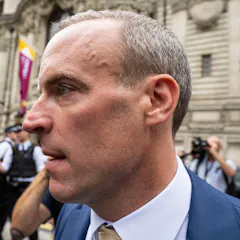
RIshi Sunak has said he won’t suspend the deputy prime minister while dozens of accusations about his conduct are investigated.

A pervasive history of bullying and sexual misconduct plagues law enforcement agencies and illustrates the failure of police forces to police themselves.

Millions of British people believe in at least one conspiracy theory, but research shows how to tackle them.

People who experience mansplaining suffer lower organizational commitment and job satisfaction, and higher turnover intention, emotional exhaustion and psychological distress.

A new report on workplace culture in parliament is due before the end of the year. Will it address the systemic and structural factors that make parliament so prone to bullying?
Top contributors
-

Program Director & Associate Professor Master of Psychology Health and Wellness & Master of Industrial-Organizational Psychology, Adler University
-
Senior Lecturer, Population Medicine and Sub-dean Student Support, Sydney Medical School, University of Sydney
-
Senior Lecturer, School of Aviation, UNSW
-
Associate Dean and Future Fund Professor in Equity, Diversity and Inclusion, University of Calgary
-
Senior Lecturer in Work Psychology, University of Sheffield
-
Assistant Professor, Beedie School of Business, Simon Fraser University
-
Albert E. Kent Professor of Psychiatry, Yale University
-
Relationships Expert & Psychology Educator at the Queensland Centre for Domestic and Family Violence Research, CQUniversity Australia
-
Senior Lecturer, School of Management, Te Kunenga ki Pūrehuroa – Massey University
-
Assistant Professor of Psychology and Human Resource Development, Villanova University
-
Director, Postgraduate and Continuing Education (Criminology), Griffith University
-
Director of the McCabe Centre for Law and Cancer; Senior Fellow of the Melbourne Law School, The University of Melbourne
-
Lecturer in Management (Business Ethics, Professional Ethics, and Corporate Social Responsibility), University of New England
-
Reader in Sport Psychology, School of Sport, Exercise and Health Sciences, Loughborough University., Loughborough University
-
Associate Professor, Sydney Medical School, University of Sydney