

The essence of bystander intervention is not just about stopping a negative act, but also about fostering an environment where respect, growth and collaboration thrive.
Articles on workplace behaviour
Displaying all articles

Workers are increasingly making short videos of themselves on the job and posting them to TikTok, creating a new challenge for employers trying to police their behavior.

Coronavirus may be delaying Alex Salmond’s reckoning, but both the Scottish government and the SNP as a party have some difficult times ahead.

Growing alarms over a ‘rudeness epidemic’ make it seem like incivility in the workplace is on the rise. The data suggest otherwise.

Open plan offices can suck the life out of workplaces. But it doesn’t have to be this way.

Generations Y and Z want interesting and novel work, but they lack the skills and confidence required to manage uncertainty when it occurs.
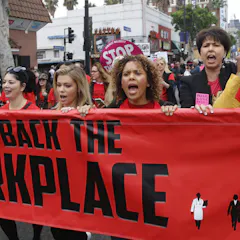
While the #MeToo movement has been revolutionary, some workplaces will be slow to change. Here are seven things we can all do to help stop toxic work environments.

Many companies now encourage certain spiritual practices to improve well-being and productivity, yet religion at work is a growing source of conflict. A paradox?

Sexism has long been an unfortunate feature of the workplace, but is male privilege still a problem when the gig economy makes most of our office interactions virtual?

Dealing with a co-worker or manager who says demonstrably false things can be a challenge, particularly at holiday office parties. Here’s a guide to handle a colleague in denial.

Effective organisations encourage self-control, good process, proper discussion and are more driven by growth mindsets than unrealistic performance metrics.

Business Briefing: are our standards dropping in the workplace?
The Conversation22.9 MB (download)
Our workplaces are becoming less formal. But there were some advantages to the old formality.

Some research suggests the state of your desk may influence your demeanour, but there’s more to office politics than that.

New research used a method that predicts divorce to pick up the signs that an employee will stay or leave their job.

What happens when you ‘brown-nose’ your boss is more complicated than you think – and can change how she’s perceived by colleagues.

There is very little empirical evidence to substantiate most claims about generational differences.
Top contributors
-

Associate Professor of Organisational Behaviour, Bond Business School, Bond University
-
Doctoral Student, University of Florida
-
Professor of Information Technology and Organisation, University of Sydney
-
Postdoctoral Research Fellow in Management, UNSW
-
Professor of Management, University of the Sunshine Coast
-
Senior Lecturer, University of Sydney
-
Professeur des Universités, IAE de Brest, Université de Bretagne Occidentale, LEGO, IAE Brest
-
Lecturer in Organisational Psychology, Griffith University
-
Assistant Professor of History of Behavioral Science, The Ohio State University
-
Director of Sydney Executive Plus, Business School, University of Sydney
-
Lecturer in Management (Business Ethics, Professional Ethics, and Corporate Social Responsibility), University of New England
-
Associate Professor of Communication, USC Annenberg School for Communication and Journalism
-
Chair in Trust, Professor of Management, The University of Melbourne; Melbourne Business School
-
Professor of Sociology, University of Toronto
-
Professor of Business Psychology, UNSW