

A new study of heterosexual couples in Australia and Germany reveals the economic costs to women when their partners work long hours.
Articles on Women's pay
Displaying 1 - 20 of 31 articles

A big part of the explanation for why women are paid less than men is the companies they work for.

Unpaid caring roles, lack of workplace flexibility and so-called female jobs contribute to women retiring with less money than men.

Mothers are more likely to work poor quality jobs, with limited control over their work and flexibility.

My research suggests City firms’ efforts to deliver more equal representation at the top have not worked because they were never meant to.

Even when they offer similar listings, female hosts tend to charge less than their male counterparts.
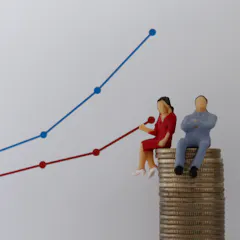
Equity-based awards can form a large part of an employee’s overall pay. A new report shines a light on how women are being left behind when it comes to stocks and options.
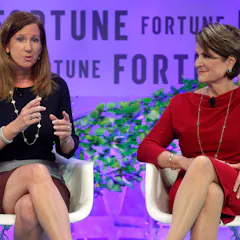
Women occupy just 5% of the top jobs at companies in the S&P 500. Research shows the problem to be even worse.

Women make about 81 cents for every dollar a man earns, little changed in recent years. Could more pay transparency change that?

There is a wide problem with the way society talks about gender equality.

More and more countries are relying on the approach of transparency rather than regulation. Depending on local specificities, the results to date remain mixed.

With most new jobs going to women, their workforce participation rate is growing at nine times the rate for men. But, while participation is on track for parity in a decade, pay is another matter.

Mexico gives poor, jobless moms up to $147 a month to feed and educate their kids. But money with strings attached may actually overburden women while freeing up their husbands’ time and money.

By showing us a world from which mothers are largely absent, Mary Shelley reminds us that the genius of motherhood lies less in biological reproduction than in the capacity to love.
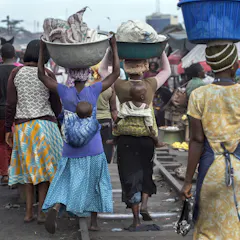
Adequate and quality childcare determines women’s participation in the labour force and the type of work they can take on.

With many men ‘missing’ from the population in the aftermath of the 1918 flu, women stepped into public roles that hadn’t previously been open to them.

Large companies have a big role to play in ensuring women’s rights are protected in industries such as horticulture.
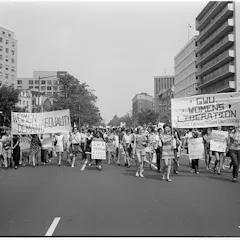
In the 1970s thousands of women in media took their employers to court over pay inequality. While many were successful, similar cases today show the fight for equality has a long way to go.

Urban planning is not gender neutral. Women deserve to live in cities that treat them equally, respond to their needs and reduce opportunities of violence.
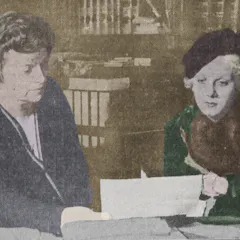
Dame Roma Mitchell is remembered as Australia’s first female judge. But Queenslander May Lahey beat her to the punch when she became a judge in Los Angeles in 1928. Her lack of recognition is symptomatic of how Australia remembers expats, particularly women.
Top contributors
-

Professor of Law, University of Baltimore
-
Research Fellow, American University School of Public Affairs
-
Research Associate in Business and Human Rights, University of Manchester
-
Senior Lecturer, Creative Writing, University of the Sunshine Coast
-
Chancellor's Professor of Medicine, Liberal Arts, and Philanthropy, Indiana University
-
Associate Professor of Law, L’Université d’Ottawa/University of Ottawa
-
Associate Professor in Humanities, Griffith University
-
Lecturer in Social Statistics and Demography, University of Southampton
-
Research Assistant, University of Sydney
-
Associate Professor, Centre for Health Equity, School of Population and Global Health, University of Melbourne, The University of Melbourne
-
Professor of Law, University of York
-
Associate Professor of Law, L’Université d’Ottawa/University of Ottawa
-
Professor, Curtin School of Allied Health, Curtin University
-
Senior Lecturer in History, La Trobe University
-
Jim Moran Professor of Strategic Management, Florida State University