
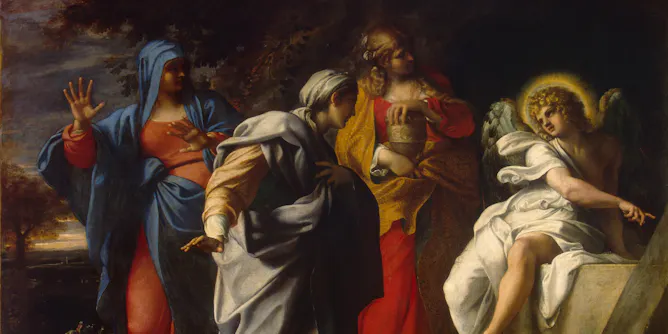
Women’s preaching is controversial in some Christian denominations – but key to the biblical story of Jesus’ resurrection.
Articles on Women's leadership
Displaying all articles
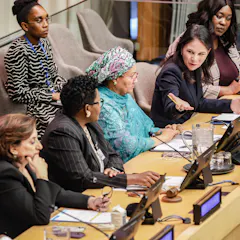
A comprehensive study of recent civil wars highlights the role women can play in sustainable peace processes.

Women’s emotions are celebrated when it comes to the spiritual battlefield – but these expressions aren’t welcomed in leadership.
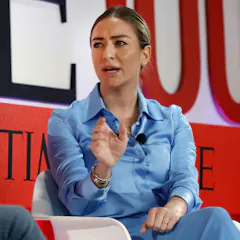
Two women ruled the dating app tech industry last year. How they were portrayed by mainstream media versus how they portrayed themselves in social media says a lot about how women leaders are viewed.

A survey on stereotypes and discrimination in the business world reveals major disparities between men and women.
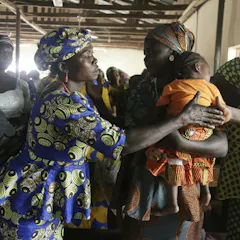
Women’s contributions to global Christianity are immense, but scholars’ understanding is hampered by limited data.
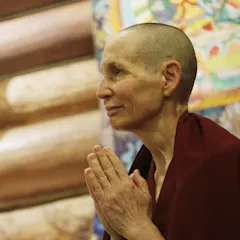
Three female academics discuss how women are forging new pathways in faith leadership throughout religions that traditionally have been patriarchal.
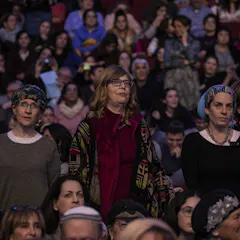
Religious leadership roles for Orthodox Jewish women are expanding, including community scholars and guides on Jewish law.

LDS leaders still stress that men should ‘preside’ over their families. But in recent years, messages about marriage have stressed more equal partnership.
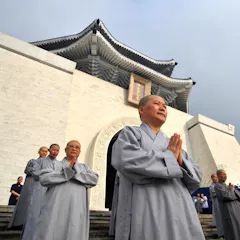
Traditionally, Buddhism has been opposed to women taking on leadership roles. However, nuns in many Buddhist-majority countries are challenging the patriarchal rules.
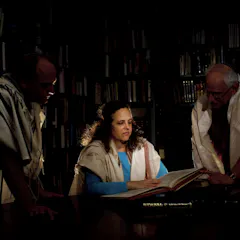
A scholar of gender and US religious history explains how women are trying to make religious communities more inclusive. Women’s ordination is only one piece of this ongoing work.

A Catholic historian writes about nuns who protested against nuclear weapons. Even when convicted of sabotage, they used prison time to serve fellow inmates and push for justice.

A new study finds egalitarian nations have had fewer COVID-19 deaths than individualistic ones like the US, a new study finds. But women’s leadership may have something to do with their success, too.

Recognizing the influence of evolution on behavior and gender norms suggests ways to reduce gender inequality in leadership in the real world.

Researchers pay scant attention to women principals’ identities as leaders in relation to race, culture, ethnicity, religion, class, and sexuality.
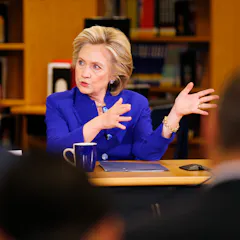
Studies can’t predict an individual’s behavior. But meta-analyses of social science research turn up differences in men’s versus women’s leadership styles, on average.
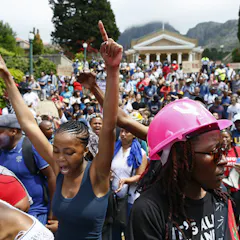
Women students have not been afraid to embrace the label of feminist, leading a wave of university protests in South Africa during 2015 and 2016.
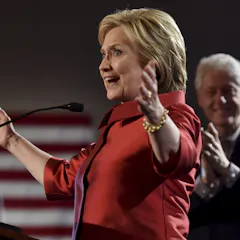
Are Americans ready to elect a woman as president? A SUNY professor take a global perspective on what it would mean for women’s rights.
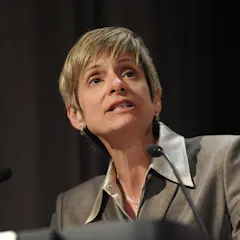
Half of the schools in the eight-member Ivy League now have female presidents. What about colleges and universities outside the Ivy League?
Top contributors
-

Assistant Professor of Religious Studies, Case Western Reserve University
-
Professor of Political Science and Chair of the South African Research Initiative in Gender Politics, Stellenbosch University
-
Chancellor, University of Wisconsin Colleges and the University of Wisconsin-Extension
-
Associate Research Professor, Binghamton University, State University of New York
-
Professor of Psychology; Faculty Fellow Institute for Policy Research; Professor of Management and Organizations, Northwestern University
-
Associate Professor of Religious Studies, University of Colorado Boulder
-
Associate Professor, School of Health Studies, Western University
-
Assistant Director of the Center for Global Mormon Studies, Claremont Graduate University
-
Dean of Vanderbilt Divinity School, Distinguished Professor of Womanist Ethics and Society, Vanderbilt University
-
Distinguished President’s Fellow for Global Development, Purdue University
-
Research Assistant Professor, University of Memphis
-
Dean, John Molson School of Business, Concordia University
-
Cadre en exercice, John Molson School of Business, Concordia University
-
Carole Sargent is a Friend of The Conversation.
Literary Historian, Georgetown University
-
Associate Professor of Digital Rhetoric and Writing Studies, University of Washington