

Queen Bona Sforza transformed royal finances and expanded a dynasty’s wealth, becoming one of the most powerful women in early modern eastern Europe.
Articles on Women leaders
Displaying all articles
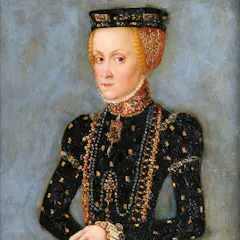
Anna Jagiellon’s story, set over four centuries ago, shows a woman could secure power through a vote, even in an era when female rulers were nearly unheard of.

Although women have long been stereotyped as being “too emotional” for leadership roles, new research suggests it’s actually men who are more likely to let emotions drive their behaviour.

The presence of at least three women on a board of directors improves the financial performance of organizations. The effect is similar to the impact of “critical mass” in physics.

While other countries have had female leaders in office, these women tend to have family connections or hold roles that are less powerful than that of the US president.

The government at national and state levels as well as private proprietors should appoint women as universities’ vice-chancellors.

After decades of efforts to increase female representation in corporate decision-making bodies, few women are managing to take the reins of power.

Far from progressing, the position of women in management in companies is regressing. Several post-pandemic factors are at work, but both men and women are losing out.

After 24 years of democracy, women still struggle for political relevance in Nigeria - limited by poverty, corruption and other factors.

Labels that reflect our gender, racial or age-specific biases can often undermine others.

Two women ruled the dating app tech industry last year. How they were portrayed by mainstream media versus how they portrayed themselves in social media says a lot about how women leaders are viewed.

A survey on stereotypes and discrimination in the business world reveals major disparities between men and women.

The pioneering role she played, and the sacrifices she made, extended well beyond the famous 1956 Women’s March.

Four different female presidents led three Asian nations in recent decades. What does their legislative record tell us about the impact women leaders can have on women’s lives?

A very low percentage of women are leaders in the field of finance. Gender equity will benefit both scholarship and Australia’s third-largest economic sector.

A new study finds egalitarian nations have had fewer COVID-19 deaths than individualistic ones like the US, a new study finds. But women’s leadership may have something to do with their success, too.

Gender parity leads to collaboration and a blending of visions, and paves the way for the adoption of more comprehensive and inclusive solutions than if they’re conceived from only one perspective.
Top contributors
-

Dean, John Molson School of Business, Concordia University
-
Cadre en exercice, John Molson School of Business, Concordia University
-
Professor of History, Australian Catholic University
-
Research Assistant Professor, University of Memphis
-
Professor of Finance, University of Oxford
-
Senior research fellow, University of Ibadan
-
Associate Professor, School of Health Studies, Western University
-
President, Nigerian Academy of Science
-
Associate Professor of Digital Rhetoric and Writing Studies, University of Washington
-
Professor, Faculty of Law, University of Technology Sydney
-
Senior Lecturer in Media Studies, University of Cape Town
-
Professor of Political Science; Associate Dean of the College of Liberal Arts and Human Sciences, Virginia Tech
-
Assistant Professor of Organizational Behavior, Amsterdam Business School, University of Amsterdam
-
Professor of Organisation Studies, University of Oxford; York University, Canada
-
Associate Professor of Organization Studies, York University, Canada