

Two security scares in the past 24 hours should prompt you to make sure your software is up-to-date. But what are the risks?
Articles on WhatsApp
Displaying 61 - 80 of 95 articles

India’s parliamentary elections, now underway, will show how social media is affecting Indian society and government.

Listen to academics from around the world in this seven-part podcast series on India ahead of the 2019 Indian elections.

CC BY-ND27.7 MB (download)
India Tomorrow part 1 explores how fake news and the battle for information shapes Indian society.

No longer do we need to talk with shop assistants, receptionists, bus drivers or even coworkers, we simply engage with a screen to communicate whatever it is we want to say.

What can social media platforms do after terrorist attacks?

Facebook seems to be shifting its focus more towards privacy. But this might have some unexpected repercussions, as highlighted by recent research on the encrypted messaging service WhatsApp.

India has more WhatsApp users than any other democracy – and a worrying history of ‘fake news’.

The government can access your phone metadata, drivers licence photo and much more. And new research shows Australians are OK about it. But that might change.

WhatsApp has become a haven of misinformation in developing countries.

Facebook retired its ‘Move fast and break things’ slogan – perhaps because, as new research from Brazil confirms, democracy is among the things left broken by online misinformation and fake news.
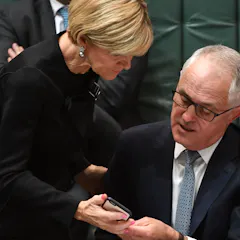
There is a strong case to be made that WhatsApp messages are subject to the Freedom of Information Act in the same way as email and others forms of text messages.

With technology women are able to become agents of their own change.

Zimbabwe’s upcoming elections potentially marks the start of a new order in the country, where the stakes are extremely high.

Twitter posts and messages on WhatsApp can come back to haunt you, even years later.

The silver lining to the Cambridge Analytica case is that more people are recognising that we pay for online services with not only our own privacy, but that of our friends, family and colleagues.

Seven rules for break up in the digital age.

Kenya has published hate speech guidelines that target WhatsApp groups administrators, holding them responsible for offensive content.

The Australian government wants to access encrypted messages, but don’t call it a “backdoor”.

A way in for government would also allow hackers access.
Top contributors
-

Professor of Anthropology, UCL
-
Professor of Democracy, University of Birmingham
-
Professor and Chair in Financial Technology (FinTech) & Information Systems, University of Manchester
-
Lecturer in Global Development Politics, University of York
-
Host of The Anthill Podcast, The Conversation
-
Associate Professor of Communication, Wayne State University
-
Associate Professor in Politics and Anthropology, O.P. Jindal Global University
-
Lecturer in Software Engineering, Monash University
-
Professor of Communication, Inland Norway University of Applied Sciences
-
Reader in Human Geography, Queen Mary University of London
-
Carolyn S. Chambers Professor in Journalism, University of Oregon
-
Associate Professor in Drug Policy and Health Law, Te Kunenga ki Pūrehuroa – Massey University
-
Professor of Policy and Health, Te Kunenga ki Pūrehuroa – Massey University
-
PhD student in Psychology, University of Cambridge
-
Optus Cyber Chair and Professor, La Trobe University