The cost of college is on the rise – but college grads still earn more than those without a degree.
Articles on What are universities for?
Displaying all articles
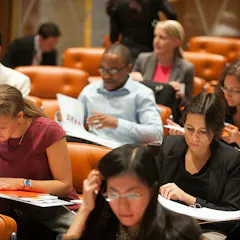
A highly educated workforce is for everyone’s benefit, but only if the graduates have broad skills.

Competition has transformed universities, and as demand for places slows the fight for students will increase.

Universities are public in nature but don’t represent a cross-section of the public. So who do they serve?

We value the boosted career and wealth outcomes for graduates and what that does for our economy, but university has more value than that.

Knowledge for the sake of knowledge is important, but universities, as public institutions, have a responsibility to fulfil their public role too.

When universities began expanding, they became more inclusive. While this is a good thing, scholars often look at their large class sizes and lament that half of the students won’t set foot in the lecture theatres or libraries thanks to technology.

Currently universities have a vast array of measures they use to gauge how successful they are. Most of the measures have a lot to do with prestige and not much to do with the outcomes of their graduates or the quality of the education their students receive.

In 1970 there were 269 male university students per 100 female university students. However females overtook males in 1987 and now there are 80 males for every 100 females.
Top contributors
-

Director, LH Martin Institute, The University of Melbourne
-
Vice-chancellor, Federation University Australia
-
Associate Professor, Social & Political Sciences, University of Technology Sydney
-
University Historian and Principal Research Fellow, History, University of Sydney
-
Adjunct Associate Professor in History, University of New England
-
Professor of Higher Education Policy, Monash University
-
Adjunct Professor, Department of Leadership, Higher and Adult Education, OISE, University of Toronto
-
Honorary Professor of Demography, Macquarie University
-
Vice President Global Strategy & Carlson Professor in the Humanities, Rice University