

The focus on reducing welfare dependency among young carers, parents and students may deter them from seeking any help.
Articles on Welfare
Displaying 181 - 200 of 336 articles

The proof of whether an investment approach to welfare actually does improve outcomes for the disadvantaged is still some years down the track.

The prevailing political fights over control of state-owned enterprises in South Africa has the potential to have a deep impact on the economy, and the quality and direction of the development state.

The lack of service integration and the paucity of welfare services make poor people’s task of caring for their familes much harder. A small monthly cash transfer can’t solve all their challenges.

The Asylum Seeker Resource Centre’s Kon Karapanagiotidis said that what a politician can claim for a one night stay in Canberra is equivalent to an entire week on Newstart. Is that true?

On the 20th anniversary of Bill Clinton’s promise to “end welfare as we know it,” a social work scholar asks why child poverty is still such a problem in the U.S. and what race has to do with it.

Is the Coalition right to say that, at any one time, there is around $3.5 billion of debt to the Commonwealth due to fraud, non-compliance or misreporting in the welfare system?

Dispensing cash to ensure healthy care for vulnerable children is critical, but it must be supplemented by other interventions to maximise well-being.

Australia should learn from the failings of New Zealand’s investment approach to welfare.

New research shows that a third of UK families fall below a minimum standard of living – many are hardworking but still struggle to make ends meet.

What did the Coalition promise during the campaign in 11 key policy areas, from health to infrastructure to jobs?

Society hasn’t always seen people with disabilities as having the same rights at everyone else. So how did we get to the NDIS, which offers people with disabilities with choice and control?

The election has plunged the country into uncertainty and has placed a possible question mark over Australia for companies looking to invest.

A $2 billion welfare crackdown is the main contributor to new savings announced by the government to improve the budget by $1.1 billion across the forward estimates.

By continuing to see policies that affect women in economic rather than social terms, both major parties are offering little in the way of improved gender equity.

Neither major party seems to understand the structural causes of unemployment, or how to adapt welfare policy to meet those needs.

The ruling signals part of a wider trend restricting access to welfare for EU migrants.

Individual cases that seem on the outside to be morally problematic are difficult to assess, and shouldn’t also be held up as the norm.

New report shows millions in the UK are denied essential financial services because of disability, disease and age.
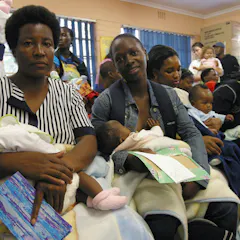
The gendered nature of social welfare is invisible and taken for granted – particularly in development contexts.It’s time to debate a more gender-sensitive and equitable welfare agenda in the South.
Top contributors
-

Professor, Crawford School of Public Policy, Australian National University
-
Professorial Fellow, Jumbunna IHL, University of Technology Sydney
-
Professorial Fellow, University of Canberra
-
Research Associate, School of Social Sciences, Monash University
-
Professor, College of Business, Government & Law, Flinders University
-
Associate Professor, POLIS@ANU Centre for Social Policy Research, Australian National University
-
Visiting Academic, The Open University
-
Professor in Social Policy, University of Glasgow
-
Associate Professor of Public Policy, Crawford School of Public Policy, Australian National University
-
Adjunct Research Fellow, School of Government, Te Herenga Waka — Victoria University of Wellington
-
Professor of Social Development Studies, University of Johannesburg
-
Professor & Director, Jeff Bleich Centre for Democracy and Disruptive Technologies, Flinders University
-
Professor of Economics, Queen's University Belfast
-
Associate Professor in International Macroeconomics, Cambridge Judge Business School
-
Professor of Social Policy, Loughborough University