

There is increasing evidence that voters have lost their faith in politicians and politics. But the way to restore faith is by implementing policies that make economic and social sense.
Articles on Welfare
Displaying 201 - 220 of 336 articles

Cities don’t have much control over national policies – but that doesn’t mean there’s nothing they can do.

What aspects of the government’s reforms succeeded in assisting people into employment? And did the reforms improve the population’s economic well-being? Or have they left some groups worse off?

Giving poor people a lot of money or a new asset won’t turn them into entrepreneurs overnight.

Low-income families will actually end up worse off, if Osborne’s cuts to welfare continue.
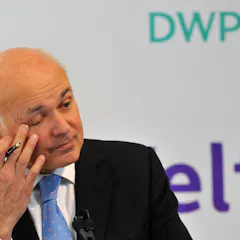
Cuts to disability benefits were the latest in a series of unpopular and unsuccessful attempts to reform welfare.

A closer look at the terms and conditions of the budget’s flagship scheme for savers shows it won’t benefit everyone.
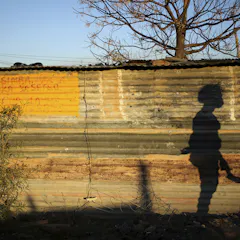
Progress in South Africa’s welfare system is being hindered by corruption, labour disputes and a lack of research and innovation in the field.

A new study on inequality analyzes the impact of fiscal policy, dramatically altering the standard view of rich and poor in America. It may also change how voters and candidates think about the issue.

Radio broadcaster Neil Mitchell told the Q&A audience that refugees are costing $100 million a year in welfare payments and have a 97% unemployment rate. Is that accurate?

David Cameron hopes to please eurosceptics by applying a mechanism to suspend welfare payments to EU migrants. Here’s how it works.

The British PM thinks he has a deal to avert a Brexit? The rest of the union has far more pressing problems to think about.

Providing citizens with a basic income has shown signs of success in lifting people out of poverty, but more importantly the idea is transforming the way we think about inequality.
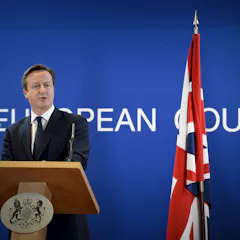
New research shows that the government’s welfare proposal is out of step with reality.
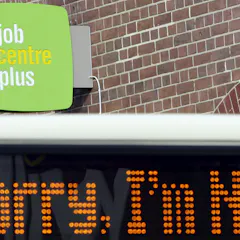
The welfare state increases the number of children born at risk of developing personality profiles that make them less likely to get a job.

The Conservative government want to make £4.4 billion in savings by cutting tax credits. But what exactly are they?
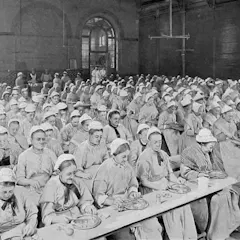
The policies and rhetoric around the drive to cut the welfare bill show the persistence of a 19th century approach to relieving poverty.
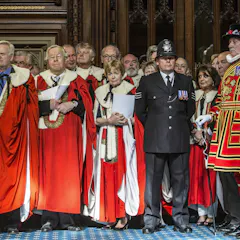
The upper house has humiliated the government, and now there’ll be hell to pay – or will there?

Might the lessons of Australia’s super-efficient welfare system offer a potential way forward for the development of a basic income – a universal, low but adequate payment?

How can it be determined whether any improvements that may occur as part of the 12-month “cashless debit card” trial are the result of the card or increased funding for services, or a mix of both?
Top contributors
-

Professor, Crawford School of Public Policy, Australian National University
-
Professorial Fellow, Jumbunna IHL, University of Technology Sydney
-
Professorial Fellow, University of Canberra
-
Research Associate, School of Social Sciences, Monash University
-
Professor, College of Business, Government & Law, Flinders University
-
Associate Professor, POLIS@ANU Centre for Social Policy Research, Australian National University
-
Visiting Academic, The Open University
-
Professor in Social Policy, University of Glasgow
-
Associate Professor of Public Policy, Crawford School of Public Policy, Australian National University
-
Adjunct Research Fellow, School of Government, Te Herenga Waka — Victoria University of Wellington
-
Professor of Social Development Studies, University of Johannesburg
-
Professor & Director, Jeff Bleich Centre for Democracy and Disruptive Technologies, Flinders University
-
Professor of Economics, Queen's University Belfast
-
Associate Professor in International Macroeconomics, Cambridge Judge Business School
-
Professor of Social Policy, Loughborough University