
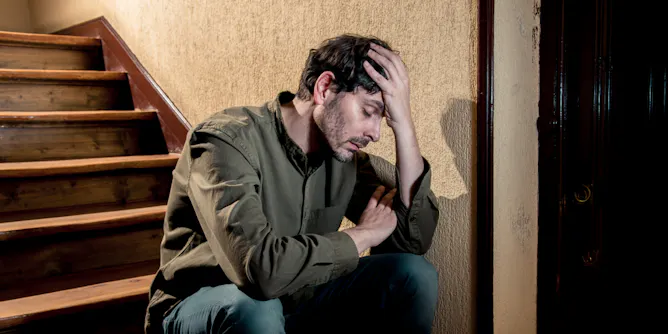
A new study has highlighted the damaging psychological impact of welfare conditionality on disabled people.
Articles on Welfare
Displaying 101 - 120 of 336 articles

This shift in focus on social care funding could inject some honesty into the system.

Its extremely common, everywhere, for large numbers of people to pay no net tax. It tells us nothing about the size of the welfare state or about whether it bribes people to keep tax high.
Self-help books can help us get through difficult times by telling us we have the agency to take control. But this method can also ignore structural inequities and negatively influence public policy.

Both before, during and after conflict, wars have shaped the creation of welfare states.
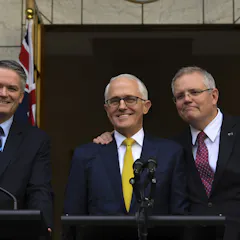
The government is also dropping its attempt to scrap the energy supplement for new welfare entrants.

The universal basic income movement has a major problem: both critics and even many supporters don’t understand how much it would really cost.

Increasing numbers of parents are being accused of child abuse.

An April 2017 survey explored Americans’ opinions about government intervention and welfare policies. It found that on average, they want more from their government, but are highly polarised.

Social housing is important in the fight against homelessness. But we don’t actually know that it helps vulnerable people in any other areas of life.

Social Security will have to dip into its trust fund to pay benefits this year for the first time since 1982. Should we be worried?
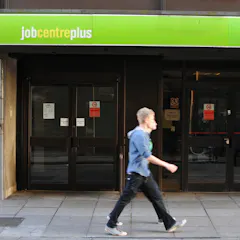
A long read on the decimation of British jobcentres – and why it puts the rollout of Universal Credit at risk.

The modelling shows that Coalition governments tend to be much more fiscally conservative in their tax and welfare policies than Labor governments.

Chris Bowen on the budget and Labor’s policies
Shadow treasurer Chris Bowen tells The Conversation he accepts that big business will "lobby on their own path".

Despite a public focus on punitive approaches to welfare fraud, the number of social security fraud prosecutions has fallen in recent years.

Increasingly insecure pathways to home ownership are not just a problem for property markets. The fallout is likely to hit retirement incomes, the welfare base, gender equity and the broader economy.
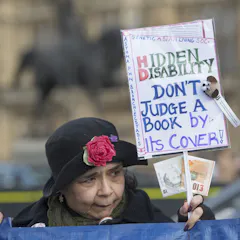
Perpetual uncertainty and changes to the way disability benefits work take a heavy toll on claimants.

By contrast, poor maternity pay leads to an under-representation of women in higher positions and lower salaries.

GDP has many flaws. We need a better way to measure economic progress.
We increasingly celebrate entrepreneurial self-reliance, but for disadvantaged people, the certainty of an adequate income is a fundamental foundation. It may not be sufficient, but it is necessary.
Top contributors
-

Professor, Crawford School of Public Policy, Australian National University
-
Professorial Fellow, Jumbunna IHL, University of Technology Sydney
-
Professorial Fellow, University of Canberra
-
Research Associate, School of Social Sciences, Monash University
-
Professor, College of Business, Government & Law, Flinders University
-
Associate Professor, POLIS@ANU Centre for Social Policy Research, Australian National University
-
Visiting Academic, The Open University
-
Professor in Social Policy, University of Glasgow
-
Associate Professor of Public Policy, Crawford School of Public Policy, Australian National University
-
Adjunct Research Fellow, School of Government, Te Herenga Waka — Victoria University of Wellington
-
Professor of Social Development Studies, University of Johannesburg
-
Professor & Director, Jeff Bleich Centre for Democracy and Disruptive Technologies, Flinders University
-
Professor of Economics, Queen's University Belfast
-
Associate Professor in International Macroeconomics, Cambridge Judge Business School
-
Professor of Social Policy, Loughborough University