

For six decades, politicians have blurred the distinction between protecting Medicaid from abuse and using abuse to discredit Medicaid itself.
Articles on Welfare reform
Displaying 1 - 20 of 80 articles

The bill passed without its major changes to personal independence payments.

Social security policies have long been used as part of political strategising.

Mental ill health is rarely the sole factor preventing people from finding and keeping a job.

The UK economy has bigger problems than welfare payments.

Recent data shows 13.4% of young people aged 16-24 are not in education, employment or training.

Labour has vowed to end divisive discourse demonising out-of-work people as ‘scroungers’ - but how does this fit with its tough warnings about people who don’t ‘engage’?

Beware those who offer ‘cultural’ fixes and non-binding reassurances. The government shouldn’t fall back on the very institutions that never fully acted until a royal commission.

The plan to increase all income support payments to a minimum of $88 a day is the first major economic proposal of the federal election campaign.
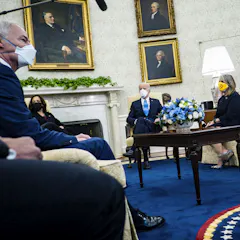
People can die when the federal government doesn’t work well with state and local governments – the COVID-19 crisis showed that. But the Biden administration has signaled an openness to collaboration.

Findings show that income transfer programmes must operate in deliberate coordination with ancillary social service institutions to deliver the maximum benefits for women’s empowerment.

As debate grows over what should happen to JobSeeker Payment, a ‘liveable income guarantee’ turns the idea of an unemployment benefit on its head.

Ardern’s coalition government promised to overhaul New Zealand’s welfare system, but its response to a comprehensive report by an expert advisory group has been disappointing at best.

Food banks should not be “normal” and yet they are rapidly becoming an accepted substitute for welfare in the UK.
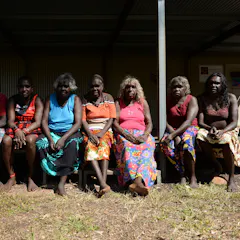
We decided to dig into the statistics and compare the experience of financial stress in Indigenous and non-Indigenous households.
Our findings surprised us.

Despite a public focus on punitive approaches to welfare fraud, the number of social security fraud prosecutions has fallen in recent years.

Millions of older Australians live in houses that don’t safely meet their needs, but they’re not ready for a nursing home. Lack of suitable housing and the moving costs leave them with nowhere to go.
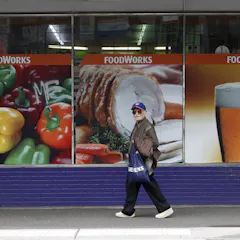
Despite Australia being considered the ‘lucky country’, 15% of us still experience food insecurity. Meanwhile, 40% of edible food is thrown away before it even reaches the market.

Bill Clinton and Donald Trump share an awkward anniversary.

The rollout of the new benefit system will not be paused – but it is causing real hardship.
Top contributors
-

Professor, Crawford School of Public Policy, Australian National University
-
Professorial Fellow, Jumbunna IHL, University of Technology Sydney
-
Professor & Director, Jeff Bleich Centre for Democracy and Disruptive Technologies, Flinders University
-
Professor, College of Business, Government & Law, Flinders University
-
Professorial Fellow, University of Canberra
-
Adjunct Research Fellow, School of Government, Te Herenga Waka — Victoria University of Wellington
-
Professor of Social Development Studies, University of Johannesburg
-
Professor of Social Policy, University of Kent
-
Professor of Citizen Participation, University of East Anglia
-
Professor of Electrical and Electronic Engineering and Deputy Dean Research at Faculty of Engineering and Information Technology, The University of Melbourne
-
Research Associate, School of Social Sciences, Monash University
-
Director, Institute for Governance and Policy Studies, Te Herenga Waka — Victoria University of Wellington
-
Professor of Urban Policy and Director, Urban Futures Enabling Impact Platform, RMIT University
-
Chair, The Conversation Media Group
-
Honorary associate professor of economy and society, Macquarie University