

Money may not buy you happiness, but a favourite keepsake can boost happiness and wellbeing.
Articles on Wealth gap
Displaying 21 - 40 of 49 articles
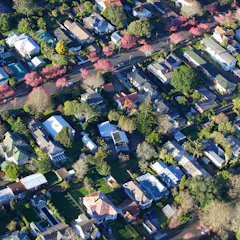
Forget wealth or capital gains taxes, a straight tax on housing equity – exempting most homeowners – would be a simple and efficient way to break the circuit of inequality.
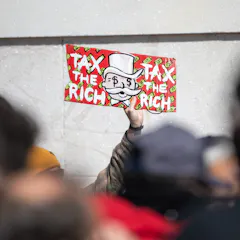
The costs of high taxes on the rich are likely only to be moderate. But the democratic, environmental, and health benefits are truly enormous and could transform society and dramatically.

Psychological and social perspectives on economy that were developed by 19th-century philosophers can help us re-imagine economics with a human face.

As the year ends, how has New Zealand fared on global and domestic measurements, from social and economic freedoms to tackling poverty and homelessness?
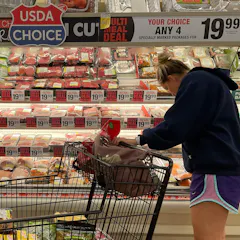
Soaring inflation in the US has been driven in part by large increases in the price of groceries – a burden that falls disproportionately on lower-income families.

As the year ends, New Zealand has done well in important global measures of success. But closer to home, the numbers often told a different story.

The number of New Zealanders with ‘negative net wealth’ is large and growing – reflecting widening economic inequality that remains an urgent political priority.

Teaching kids better budgeting won’t fix post-pandemic inequalities. A more robust social safety net, less hoarding and squandering of wealth and more equitable tax policies might.
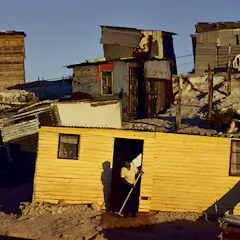
Rethinking capitalism requires that the primary focus should be on the distribution of economic power as the potential leading causal factor driving inequality.

Companies being required to go public with information about executive and workers pay packets is increasingly becoming the norm.

The snail’s pace of action in this year’s federal budget on climate is out of step with the urgency of the climate and income inequality crises.

You might be surprised to find yourself in the company of Elon Musk and Jeff Bezos in the world’s richest 1%. This has big implications for planetary survival.

It was a campaign like no other, and while there were missed opportunities and lapses of judgement, the fact New Zealanders are voting in a safe and fair election is reason enough to celebrate.
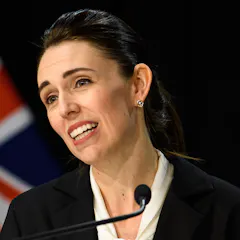
From policy to performance, a panel of five political experts analyses the first televised leaders’ debate of the 2020 New Zealand election campaign.
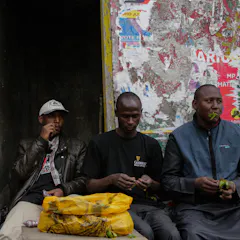
Diaries of young Kenyans in Nairobi reveal lives of joblessness and endless searching for money, all punctuated by substance use.
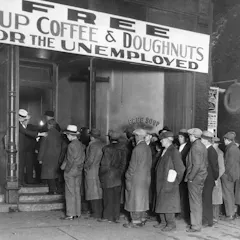
While the Great Depression reduced inequality and closed the racial wealth gap, the Great Recession of 2009 did the opposite.
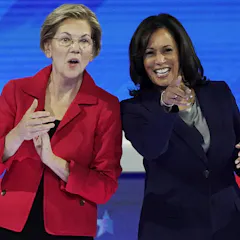
Several presidential hopefuls have offered proposals to close the racial wealth gap, from baby bonds to reparations. A simulation suggests policies short of direct aid to blacks won’t do the trick.
Better data would tell us more about the ultrawealthy, but they really do seem to be growing more wealthy, more quickly, than the rest of us.
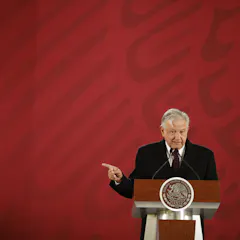
Mexico’s new president has reduced his own salary and demanded that all federal workers
– including lawmakers and judges – take a massive pay cut, too. That may be illegal.
Top contributors
-

Professor of Politics, University of Canterbury
-
Research Associate, Public Policy Institute, University of Auckland, Waipapa Taumata Rau
-
Professor of Politics, Te Kunenga ki Pūrehuroa – Massey University
-
Visiting Fellow, School of Policy Studies, University of Bristol
-
Professor of Law, University of Waikato
-
Research Professor in Contemporary British History, King's College London
-
Professor, University of Auckland, Waipapa Taumata Rau
-
Senior Lecturer in Human Rights, Constitutional Law and Legal Theory, University of Wollongong
-
Distinguished Reserach Professor, Southern Centre for Inequality Studies, University of the Witwatersrand
-
Professor of Sociology, School of Social Sciences, Monash University
-
Economics PhD Candidate, Stellenbosch University
-
Professor, College of Business Administration, Ajou University
-
President, University of Oregon
-
Lecturer in Marketing, City St George's, University of London
-
Senior researcher, SMERU Research Institute