
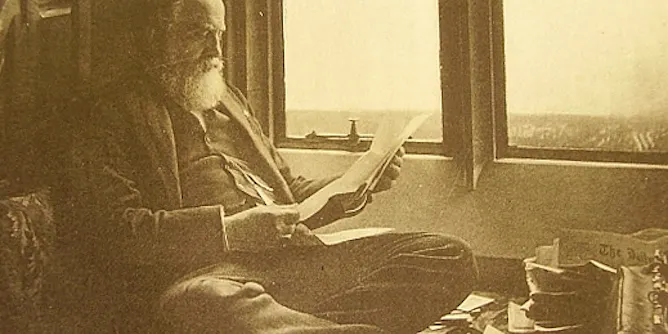
W.T. Stead’s 1885 account of the process by which wealthy Londoners procured teenagers for sex became a global news story, but the police refused to investigate.
Articles on Wealth
Displaying 101 - 120 of 179 articles
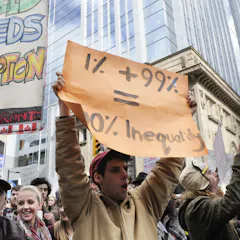
High levels of inequality damage our health, harm social cohesion and act as a brake on economic performance.

Inherited wealth matters less among Australia’s super rich, fresh ideas matter more.
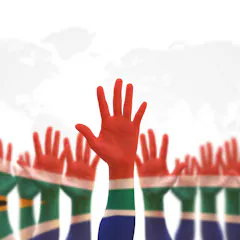
Inequality persists in post-apartheid South Africa, reflecting the distribution of power. Reversing this will require changing the social processes and relations that underpin it.
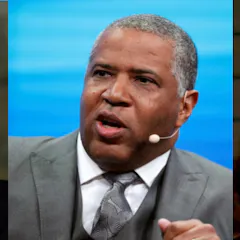
As the debate over what ails philanthropy heats up, the questions are going beyond whether massive charitable donations help or hurt society.

What do earthquakes, wealthy Italian families and your circulatory system have in common? Scientists use fractals, self-similarity and power laws to translate from local to global scales.

As millennials flock to certain parts of the US, home prices in those areas are surging.

Retirees with superannuation balances of $1. pay and pay no tax and get annual imputation cheques of $63,000.

Wealth inequality in South Africa is not only intolerably high, its also not reducing.

A century ago, a three-minute call from New York City to San Francisco on a landline cost $500. Today, you can make the same call on a cellphone for a few cents.

Thanks to a long history of exclusionary government programs, the typical black family now has only 10 cents for every dollar held by the typical white family.

Human capital is a key contributor to a country’s economy. Here’s how families and the state can nurture this asset.

A wealth tax would put a price on past emissions and could be used to mitigate the negative effects of poverty, including vulnerability to climate change.

For a nation in the grips of a housing crisis, you’d expect high-rise developments to be good news – unfortunately not.

From wealth, to the natural world, to genes and intelligence, a podcast exploring the theme of inheritance.

South Africans debating the zero rating of certain products for VAT purposes must realise it isn’t a panacea for poor people and should be accompanied by other policies.

Several companies are trying to develop life extension methods that could enable some people to live far longer. There are some ethical dilemmas.
The universal basic income movement has a major problem: both critics and even many supporters don’t understand how much it would really cost.

Economists, politicians and the media watch GDP closely. But it isn’t the best way to measure the health of the US economy.

London’s super rich are building thousands of subterranean palaces.
Top contributors
-

Pro Vice-Chancellor, Climate, Sustainability and Inequality and Director, Southern Centre for Inequality Studies, University of the Witwatersrand
-
Halford Mackinder Professor of Geography, University of Oxford
-
Visiting Senior Fellow in History, UNSW
-
Emeritus Professor, Department of Political Economy, University of Sydney
-
Professorial Fellow and Co-Director, HILDA Survey, Melbourne Institute of Applied Economic and Social Research, The University of Melbourne
-
Professor of Public Administration, Binghamton University, State University of New York
-
Associate Professor of Engineering, Georgia Institute of Technology
-
Professor, Crawford School of Public Policy, Australian National University
-
Assistant Professor, Goethe University Frankfurt am Main
-
Professor and Research Chair in Inclusive Societies, University of Sheffield
-
Adjunct Professor, Curtin Law School and Curtin Business School, Curtin University
-
Emeritus Professor of Finance and Financial History, The Open University
-
Associate Professor of Business, Boston University
-
Associate professor of Sociology, Boston University
-
Senior Researcher, Southern Centre for Inequality Studies, University of the Witwatersrand