

A taxation expert explains why South Dakota has become a favorite state for the ultra-rich when it comes to squirreling away their wealth.
Articles on Wealth
Displaying 81 - 100 of 179 articles

In 1950, the top 0.01% of earners paid almost 70% of their income in taxes. By 2018, the super-rich paid proportionately less than the average for all other Americans.
News about how little income tax some of the richest Americans reportedly pay is adding to questions about the value to society of their massive charitable donations.

Student loan debt can affect not only the financial health of recent grads but also their mental and emotional health. Three scholars weigh in on the greater costs student loans can have on borrowers.

You might be surprised to find yourself in the company of Elon Musk and Jeff Bezos in the world’s richest 1%. This has big implications for planetary survival.
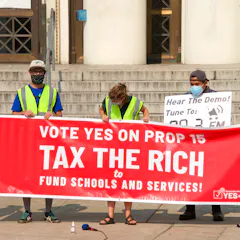
We find low taxes on the rich bring economies little benefit. This suggests there is a strong economic case for raising taxes on the rich to help repair public finances following the pandemic.
The government has done a good job so far, but it will have to direct future support to the Australians most likely to spend.

Elder economic insecurity is a problem for all races, but it’s far more common for people of color, particularly in certain states.

Knowing precisely how society rewards effort is key for how voters think about taxes. Only brute luck is seen as an undeserved reason for riches.
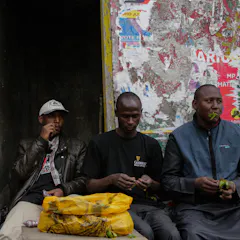
Diaries of young Kenyans in Nairobi reveal lives of joblessness and endless searching for money, all punctuated by substance use.

Fears of great wealth and the need for economic equality go back to the country’s origins.
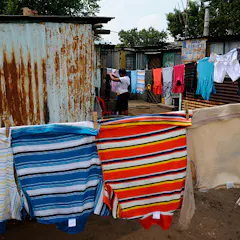
More financial services should target low-income households in South Africa.
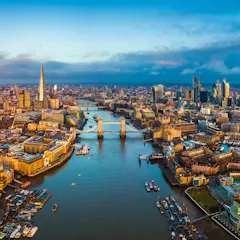
London is an alpha city – home to 100 billionaires. But does wealth bring social costs?
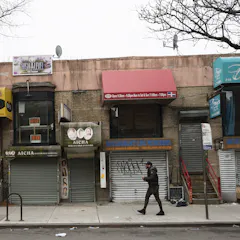
The pandemic magnifies existing imbalances in wealth, access to health care and workplace rights.

Then – as now – the wealthy fled to the countryside, while the urban poor were forced to work on the front lines.

The Trump administration has proposed a new category that they say will save US$200 million in terminated benefits.

Pineapple and celery were the precursors of today’s obsession with kale and avocado toast.
Recent experimental results suggest that distortions in the perception of wealth are linked to fast, inattentive thinking.

As more people of color move to the suburbs, they might not find the full range of opportunities that white European ethnic groups did for most of the previous century.
Better data would tell us more about the ultrawealthy, but they really do seem to be growing more wealthy, more quickly, than the rest of us.
Top contributors
-

Pro Vice-Chancellor, Climate, Sustainability and Inequality and Director, Southern Centre for Inequality Studies, University of the Witwatersrand
-
Halford Mackinder Professor of Geography, University of Oxford
-
Visiting Senior Fellow in History, UNSW
-
Emeritus Professor, Department of Political Economy, University of Sydney
-
Professorial Fellow and Co-Director, HILDA Survey, Melbourne Institute of Applied Economic and Social Research, The University of Melbourne
-
Professor of Public Administration, Binghamton University, State University of New York
-
Associate Professor of Engineering, Georgia Institute of Technology
-
Professor, Crawford School of Public Policy, Australian National University
-
Assistant Professor, Goethe University Frankfurt am Main
-
Professor and Research Chair in Inclusive Societies, University of Sheffield
-
Adjunct Professor, Curtin Law School and Curtin Business School, Curtin University
-
Emeritus Professor of Finance and Financial History, The Open University
-
Associate Professor of Business, Boston University
-
Associate professor of Sociology, Boston University
-
Senior Researcher, Southern Centre for Inequality Studies, University of the Witwatersrand