

The proportion of a watershed that is logged isn’t the only factor that determines flood risk. The landscape and climate matter too.
Articles on Watersheds
Displaying all articles
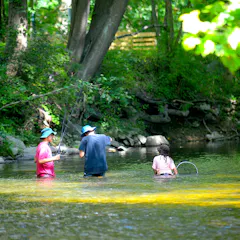
An environmental engineer who mapped microplastic pollution in three of Pennsylvania’s watersheds explains what it means for our health.

Wildfires can cause contaminants to seep into waterways, polluting the drinking water that communities rely on.

Research shows that wildfires are causing more debris, sediment and chemicals to enter waterways, harming fish and other aquatic life.
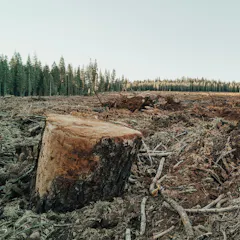
The way we manage forests can undermine their ability to retain water, leading to excess runoff.
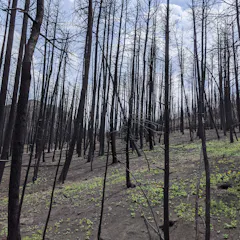
Scientists analyzed water quality in 145 watersheds after wildfires and found dramatic spikes in contaminants.

A lake or river is not an isolated entity but one of the most visible facets of a much larger, and more dynamic, watershed. The health of these entire systems should be an utmost priority.
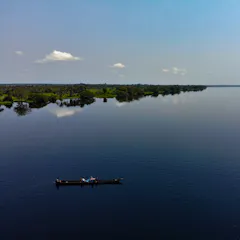
The Ruki River supplies dissolved carbon from forest vegetation and soils to the Congo River.
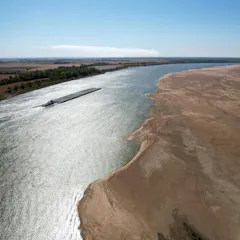
Record low water levels on the Mississippi and other major rivers, as seen in 2022, could become more common, threatening transportation of many key goods and raising prices.
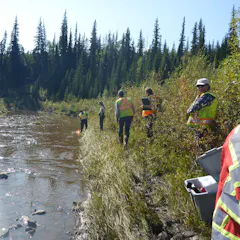
In Canada, watersheds are vast and often inaccessible, making it difficult to monitor the health of these ecosystems. A new tool helps communities collect data to assess the state of Canada’s rivers.
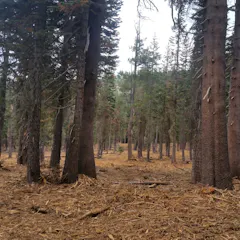
Restoring western forests – thinning out small trees and dead wood – is an important strategy for reducing the risk of massive wildfires. But these projects aren’t fast, easy or cheap.
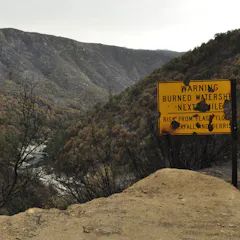
Wildfires reduce the reliability of city water supplies in North America. But active forest management provides a key to the solution.
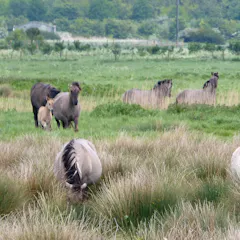
The Toolkit for Ecosystem Service Site-based Assessment (TESSA) allows NGOs to quantify the economic advantages of maintaining ecosystems, helping preserve biodiversity by putting a value on it.

The prices households pay for drinking water and wastewater services have been rising faster than the rate of inflation.
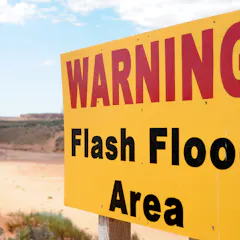
To lessen the impacts of flash flooding in dry regions like Jordan, we need to educate local authorities on how best to manage their water.

Much of the country depends on water stored and filtered in forests. Fire-scarred watersheds highlight our need for a national wildfire strategy.

A new project takes a different look at the role of oceans.
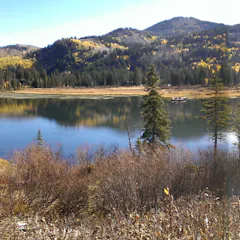
With a future of droughts looming for the US West, Utah’s Wasatch watershed offers a good model that combines conservation with nature-based recreation.
Top contributors
-

Professor of Political Economy at the Department of Geography and Fellow of Fitzwilliam College., University of Cambridge
-
Postdoctoral research associate, Wilkes Center for Climate Science & Policy, University of Utah, University of Cambridge
-
Fellow, Queen's Institute for Energy and Environmental Policy, School of Policy Studies, Queen's University, Ontario
-
Professor of African Literature, University of the Witwatersrand
-
Associate Professor of Conservation Science, University of Southampton
-
Postdoctoral fellow in Environmental Geography, University of Alberta
-
Assistant Professor, Oregon State University
-
Assistant Professor of Earth Sciences, University of Memphis
-
Postdoctoral Researcher, ETH Zurich
-
Associate Professor of Atmospheric Science, University of Memphis
-
Associate professor, Department of integrative biology, University of Guelph
-
University of California, Merced
-
Professor of Engineering, University of California, Merced
-
Associate Professor of Earth Sciences, University of Memphis
-
Reader / Associate Professor in Environmental Geoscience, Sheffield Hallam University