
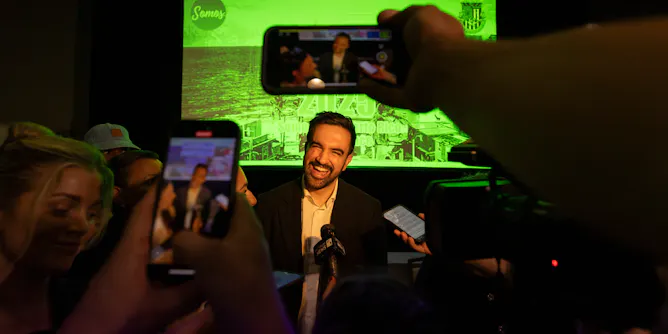
When a politician addresses issues such as Islamophobia, immigration or housing in multiple languages, they’re engaging with a wider world of shared experiences that migration has woven together.
Articles on Voting patterns
Displaying 1 - 20 of 22 articles

Would lowering the voting age to 16 enhance young people’s participation in the political processes that affect their lives?
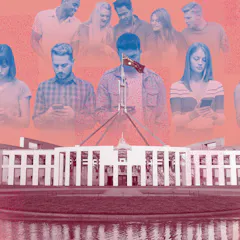
While Gen Z and Millennials combined are the biggest voting bloc in Australia, their votes show a quiet divergence between the two generations.
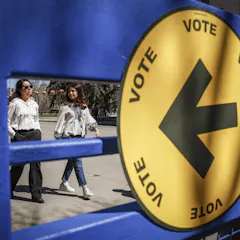
Canada’s voter gender gap is not just about party preference — it reflects deeper ideological divides shaped by cultural values, policy priorities and gender identities.
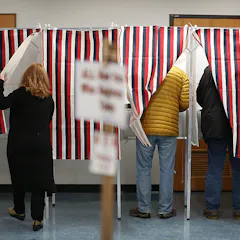
Winning elections isn’t just a matter of how many players you have. It’s how engaged they are.

When people fail to exercise their right to vote, it increases the likelihood of political extremism and the pursuit of narrow interests.
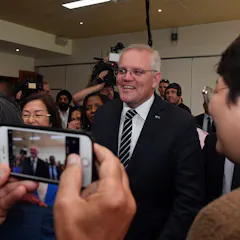
Past elections show how multicultural Australia can play a critical role in the outcome. Ethnicity may also present itself in some significant new ways on May 21.

Ontario goes to the polls in a month, and Doug Ford will likely win again. Why? Because the Liberal and NDP leaders have failed to connect with the people of Ontario the way Ford has.
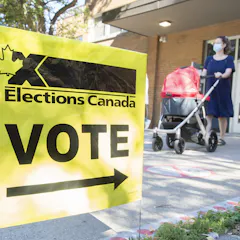
Many factors affect the decision of whether or not to vote in an election: the decision is mostly about motivation, interest in politics and sense of duty.
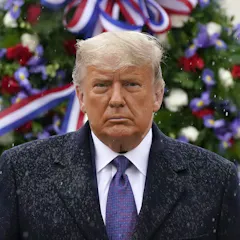
A look at the forces at work in the 2020 presidential election in which Donald Trump defied pollsters again even though he lost to Joe Biden.
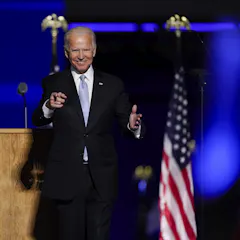
President-elect Joe Biden has successfully enticed the young into politics. As he approaches his 78th birthday, will he also serve their interests?

Voters who own housing are strongly invested in increasing the value of their wealth-generating assets. And they strongly favour the Coalition, which knows to protect their interests.

Women are swinging elections in the US and Australia in ways analysts have struggled to predict. Two recent studies can help explain.

The idea that a small payment could motivate more people to vote resurfaces regularly, but this ignores evidence that monetary incentives to induce pro-social behaviour can be counterproductive.

Encouraging people to vote involves changing the discourse. Guilt trips are ineffective.
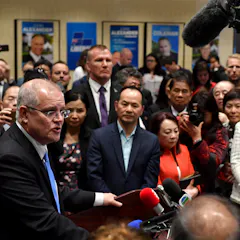
While there has been talk of a “religious vote” or an “ethnic vote” holding sway at this election, particularly in Sydney’s western suburbs, new research does not bear that out.
South African voters felt that mobile political campaigns were intrusive, violated their privacy and made them feel disillusioned with the political process.
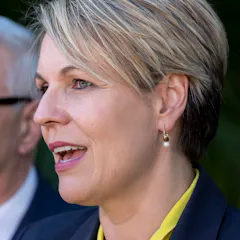
Ahead of Saturday’s crucial byelections, senior Labor Party figures have described a vote for Pauline Hanson’s One Nation party as a vote for the Coalition. What do the records show?
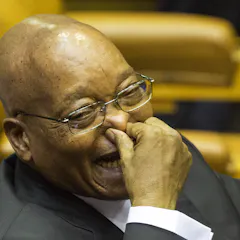
South African President Jacob Zuma’s follies cost the ANC dearly during last year’s election. Is it too late for the party to save itself come 2019?

Not voting can have serious consequences regarding the kind of society we end up living in. Disengagement can mean a lowering of quality of life.
Top contributors
-

Emeritus Professor of Sociology, University of Technology Sydney
-
Associate Professor of Sociology, Oregon State University
-
Associate Professor of Political Science, University of California, Berkeley
-
Research Fellow (Henry Jackson Society - Centre on Radicalisation & Terrorism), Royal Holloway, University of London
-
Professor of Urban Governance, University of the Witwatersrand
-
Election Analyst (Psephologist) at The Conversation; and Honorary Associate, School of Mathematics and Statistics, The University of Melbourne
-
Professor of Sociology and Founding Director of The Future of Work Lab, Podcast at MissPerceived, The University of Melbourne
-
Research fellow, Global Institute for Women's Leadership, Australian National University
-
Senior Lecturer in Philosophy and Education; Curriculum Director, UQ Critical Thinking Project, The University of Queensland
-
Professor, School of Public Policy and Administration, York University, Canada
-
Senior Lecturer in Political Economy, University of Sydney
-
Professor of History, Toronto Metropolitan University
-
Full Professor, Department of Political Science, Université de Montréal
-
Professor of Practice, Danforth Center on Religion and Politics, Washington University in St. Louis
-
Associate Professor in Politics and International Relations, School of Social Sciences, Monash University