
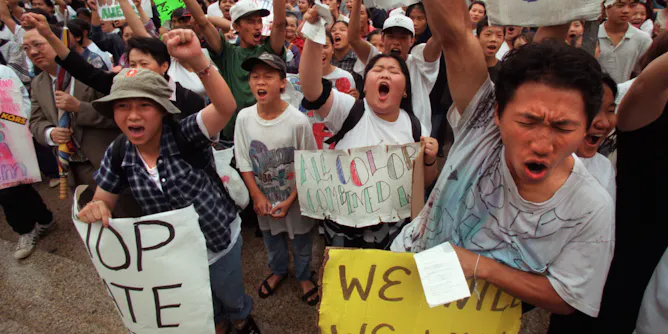
While Americans like to think of themselves as kind, generous people, many refugees would beg to differ.
Articles on Vietnam War
Displaying 41 - 60 of 177 articles

A study of images of soldiers from the Crimean to the Iraq War examined how images may be just as significant for what they leave out as for what they reveal about soldiers as individuals.
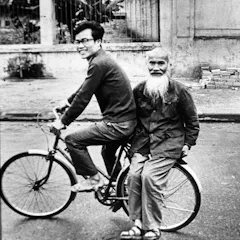
A study of parent-child pairs from Montréal’s Vietnamese diaspora found different paths to preserving language shaped by political and economic experiences.
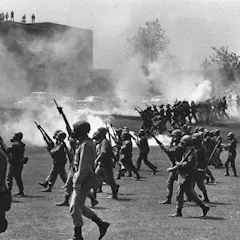
The author of a new book about the 1970 shootings at Kent State University explains why using armed troops to respond to protests is a risky strategy.
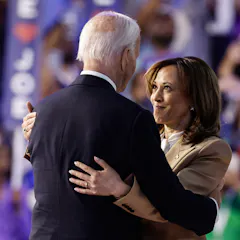
The best an opposing party can hope for during convention week is some sort of misfire. But those are rare in this era of scripted conventions designed to minimize controversy.
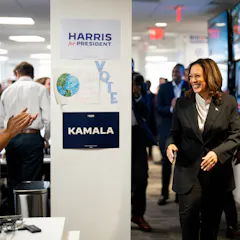
With the huge task of a late presidential run against Donald Trump, Kamala Harris faces challenges distinct from those faced by Vice President Hubert Humphrey after LBJ decided not to seek reelection.
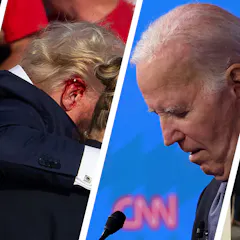
You think 2024 has been packed with a ceaseless and exhausting stream of consequential events? So did Americans in 1940, 1968 and 1973.
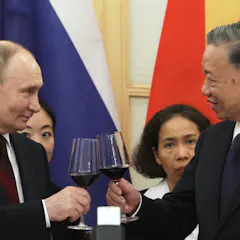
Russia and Vietnam pledge to strengthen ties as Vladimir Putin visits Hanoi.
The secret recordings of two Supreme Court justices reveal dramatic differences in how they see American political life.
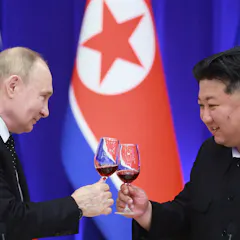
A selection of our coverage of the war in Ukraine from the past fortnight.

Unions speaking out on issues as contentious as Israel-Palestine is nothing new. They have a long history of staking international positions on everything from apartheid to the Vietnam War.

At least one positive came out of the racial protests during the Vietnam War era – the emergence of Black studies programs on college campuses.
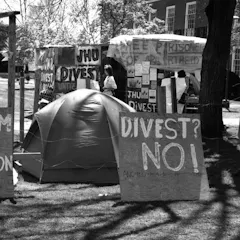
In the 1980s, university administrators called the police on anti-apartheid protesters, threatened to revoke their scholarships and ordered staff to demolish encampments.

Student-led protests in response to US engagement in the Vietnam War mounted in the 1960s and led to a group called the Weather Underground that believed in direct confrontation with the state.
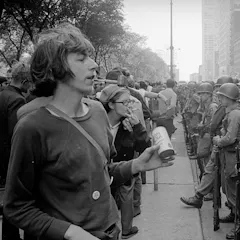
There are many parallels between 1968 and today: an unpopular war, a vulnerable Democratic presidential candidate and a divided America.
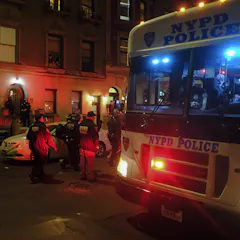
Almost 56 years to the day after the anti-war protests in 1968, New York City police evicted Columbia University students from an on-campus occupation.
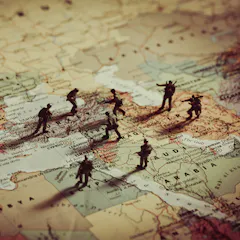
Maps can shape how we see conflict.
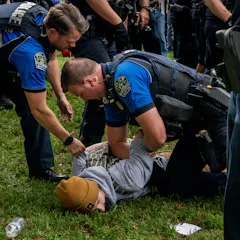
Throughout the 1960s and 1970s, conservative activists led a counterattack against campus antiwar and civil rights demonstrators by demanding action from college presidents, the courts and the police.

There is a long history of self-immolation being used as a protest in the US – but that doesn’t stop such protests being regularly dismissed.
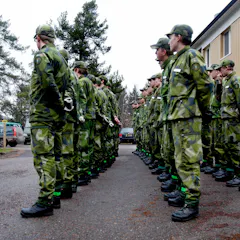
As some Nato member countries extend conscription, history shows that it can sometimes create more equality in society.
Top contributors
-

Professor of Law, University of Waikato
-
Emeritus Professor of History, University of Toronto
-
Professor of Communication and Journalism, University of Maine
-
Research Fellow and Historian of War and Conflict, Deakin University
-
Associate Professor of Legal Studies and Political Science, UMass Amherst
-
Senior Lecturer in History, Australian Catholic University
-
Emeritus Professor of Politics, Monash University
-
James S. Sherman Professor of Government, Hamilton College
-
Lecturer in Modern US History, University of Essex
-
Honorary Fellow, School of Historical and Philosophical Studies, The University of Melbourne
-
Professor of Political Science, Macalester College
-
Professor of History, Vanderbilt University
-
Professor of Film Studies, Bangor University
-
Senior Lecturer in History, University of Newcastle
-
Professor of History and Law Faculty, The Ohio State University