
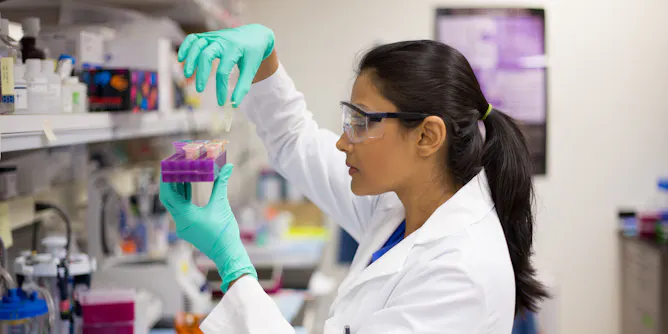
Cancer vaccines are an emerging personalised treatment for cancer. Using the same mRNA technology as COVID vaccines, they stimulate the immune system to destroy cancer cells.
Articles on Vaccines
Displaying 201 - 220 of 930 articles

Here’s why it’s taken so long to develop a vaccine for respiratory syncytial virus and what we can expect next.
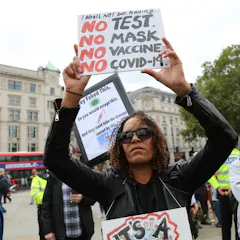
You’d be surprised how far back the roots of anti-vaccine arguments stretch.

Middle age means staying a step ahead on both the medical and financial fronts.
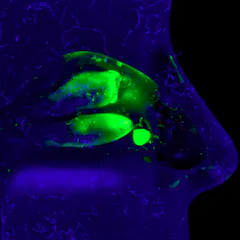
Vaccination is often combined with an injection. It can also take the form of a nasal spray: an approach that is still rare, but which could be effective against Covid. Here’s why.
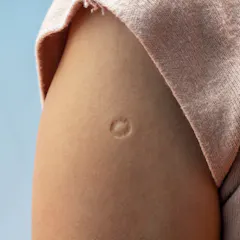
BCG has been around for a century, but it’s still being studied for its ‘non-specific effects’.

Annual flu vaccines are in a constant race against a rapidly mutating virus that may one day cause the next pandemic. A one-time vaccine protecting against all variants could give humanity a leg up.
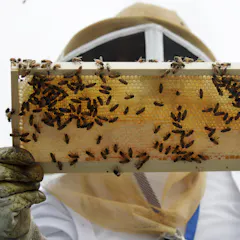
A vaccine for bees may evoke images of teeny hypodermic needles, but this product works in a sophisticated way that reflects the social structure of honeybee colonies.
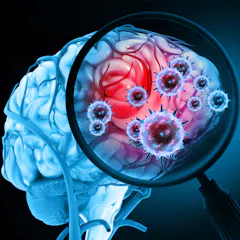
Inflammation and damage to the olfactory system from shingles, COVID-19 and herpes infections may contribute to Alzheimer’s disease.

Preventive and therapeutic vaccines both train the immune system to fight disease, but they are used in different ways.
Suspended MP Andrew Bridgen’s comments are a prime example.
People with an active case of shingles have up to an 80% higher risk of stroke than those without. The increased risk is highest for patients under 40.
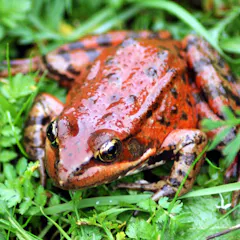
Amphibians have been devastated by a chytrid fungus pandemic. Researchers immunized California red-legged frogs in Yosemite to give them a fighting chance at survival, with surprising results.

An effective nasal vaccine could stop the virus that causes COVID-19 right at its point of entry. But devising one that works has been a challenge for researchers.
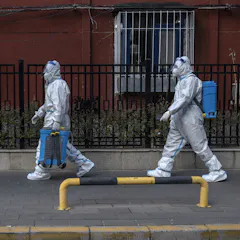
Strict lockdowns, quarantines and testing have prevented many people in China from catching COVID-19. With concerns over Chinese vaccine efficacy and uptake, China may be facing a looming COVID-19 surge.

Systemic social issues affect vaccine access and acceptability. Yet, the term ‘vaccine hesitancy’ overlooks this, reducing the multiple factors that affect vaccine uptake to individual-level choices.
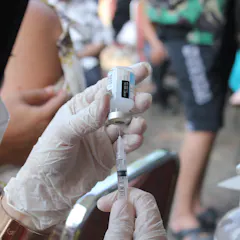
LGBT+ people have been eligible to receive COVID vaccines, but lack of ID cards, discrimination, accessibility issues and misinformation have emerged as challenges to do so.
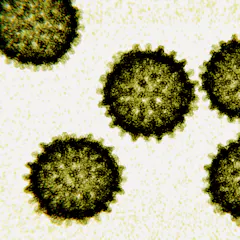
Using a Nobel Prize-winning technique called cryo-EM, researchers were able to identify potential areas on the hepatitis C virus that a vaccine could target.
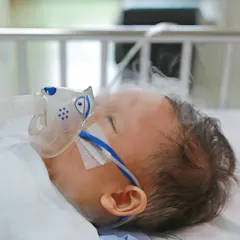
Respiratory viruses are hitting young children and infants particularly hard this fall and winter season, and experts don’t yet know exactly why.
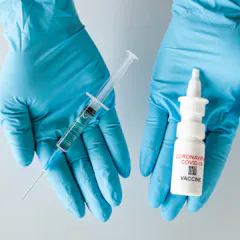
These types of vaccines could offer certain advantages over conventional COVID shots. But we need more data to show us they’re effective.
Top contributors
-

Professorial Fellow, University of Canberra
-
Vice-Chancellor's Research Fellow, School of Health and Biomedical Sciences, RMIT University
-
Professor of Medicine, University of Virginia
-
Research associate, Warren Alpert Medical School, Brown University, Brown University
-
Associate Professor of Health Law, Policy and Management, Boston University
-
Dean Faculty of Health Sciences and Professor of Vaccinology at University of the Witwatersrand; and Director of the SAMRC Vaccines and Infectious Diseases Analytics Research Unit, University of the Witwatersrand
-
Professor, The Children's Hospital at Westmead Clinical School and Sydney Infectious Diseases Institute, University of Sydney
-
Professor of Microbiology, School of Medicine, University of Washington
-
Professor, School of Social Sciences, The University of Western Australia
-
Professor, School of Public Health, University of Sydney
-
Lecturer in Virology, Queen's University Belfast
-
Associate Professor of Biology, Rochester Institute of Technology
-
Distinguished Professor, Professor of Immunology, RMIT University
-
Associate Professor and ARC Future Fellow, The University of Western Australia
-
Associate professor, Department of Family and Community Medicine, University of Toronto; York University, Canada; University of Sydney