
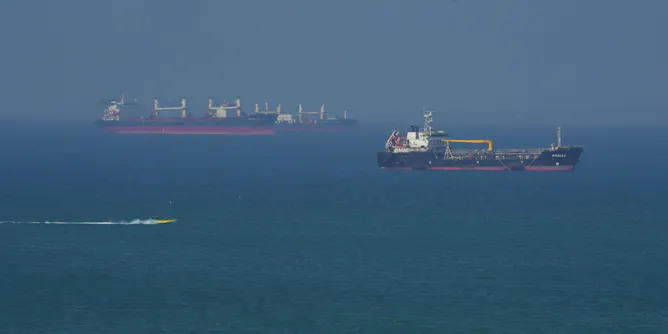
US sanctions on foreign nations have lost some of their power to influence the behavior of other nations – with increasing costs for the US to boot.
Articles on US-Iran
Displaying 21 - 40 of 242 articles
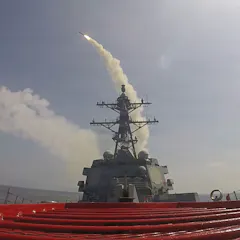
Measuring US weapons stockpiles sheds light on future constraints and what Russia and China may learn from the Iran war.
Bureaucratic hurdles mean the US military typically has to wait a decade between the time it sees a new threat and the employment of a new system to defend against it.

NATO members have been divided before. But the war in Iran could prove particularly troublesome for an alliance founded at the beginning of the Cold War.
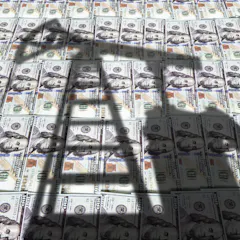
Who gets all that cash, and what do they do with it?
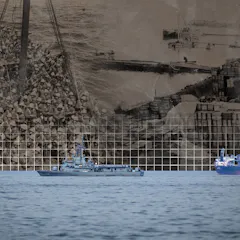
Gallipoli was a hastily launched military campaign over a maritime choke point – and has parallels with the Strait of Hormuz.
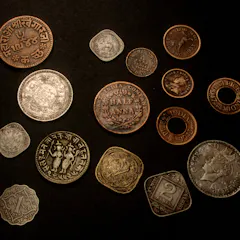
Iran is drawing on a characteristic of money that has been around since at least the bronze age: enabling trade between strangers and across political boundaries.
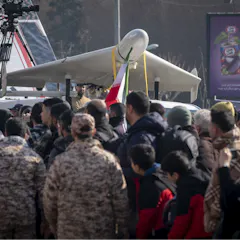
Knowing what comes next in Operation Epic Fury is better understood by grasping the evolution of Iran’s military structure and capabilities.

Switching to solar power could help save money, but it is not just about installing panels.

Tehran and Washington look to different rules to govern their conduct in the key choke point.
A lack of trust, failure to agree to the grounds on which discussion is taking place and Israel’s de facto veto provide insurmountable barriers.

Rising oil and fertilizer costs linked to Middle East tensions could affect food prices, but the effects will vary across products and may take time to fully emerge.

An archaeologist examines the cultural obliteration Iran has incurred as a result of strikes in the US-Israel-Iran conflict. How can such damage be compensated and which global organisations can the country turn to?

And a US blockade of the strait of Hormuz is unlikely to ease the situation.
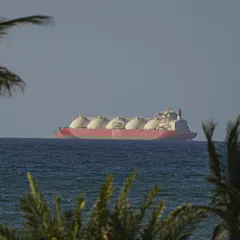
China stands to be impacted first, as the main buyer of Iran’s crude oil. But if the blockade drags on, its knock-on effects could impact the whole world.
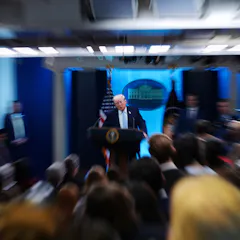
China and Russia view the latest Washington intervention in the Middle East as a further decline of the United States’ global power.
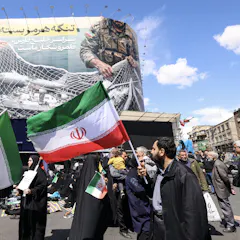
Both countries seem tired of the costs of war and ongoing risks, but successful negotiations will have to overcome deep distrust by both sides.

A decade of shifting regional alliances, continuous conflict and outside interventions have narrowed the path for diplomacy.
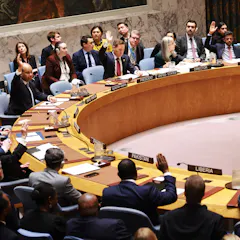
Once again, in a crisis, the UN and the EU seem to pale into insignificance. Multilateralism may not be dead, but it’s currently at an all-time low…
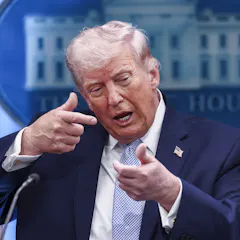
Donald Trump’s pre-ceasefire social media post was unprecedented, immoral, and a diplomatic blunder for the US’s standing in the world.
Top contributors
-

Professor of International Politics, Clinton Institute, University College Dublin
-
Fellow for the Middle East at the Baker Institute, Rice University
-
Senior Lecturer in International Relations, University of Pennsylvania
-
Honorary Research Fellow, Department of International Politics, City St George's, University of London
-
Assistant Professor of International Relations, American University
-
Associate Professor of Practice of Public Policy, University of Michigan
-
Professor in the Department of Government, University of Essex
-
Professor of the Practice of Political Science and International Relations, USC Dornsife College of Letters, Arts and Sciences
-
Professor of Practice in International Relations, USC Dornsife College of Letters, Arts and Sciences
-
Lecturer in Energy Systems, University of Oxford
-
Associate Professor of Politics and International Relations, Florida International University
-
Tony Walker AM is a Friend of The Conversation.
Director, La Trobe University
-
Professor of History and Peace Studies, University of Notre Dame
-
Lecturer in International Relations, University of East London
-
Graduate Teaching Associate, School of Politics and Global Studies, Arizona State University