
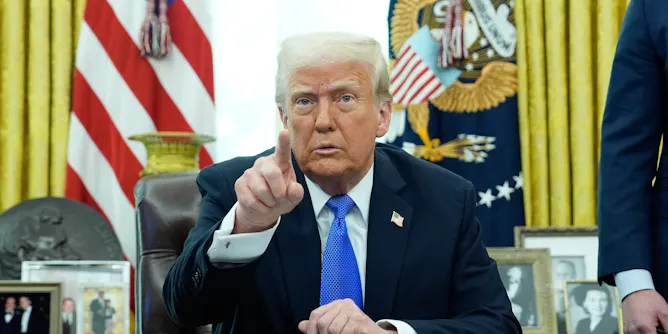
Attacks on the judiciary, the press and universities are all part of a concerted attempt to stifle dissent in America.
Articles on US Constitution
Displaying 101 - 120 of 431 articles

Military personnel at all levels are now facing the question of whether they will stand up for the military’s independent role in maintaining the integrity and stability of American democracy.

Democracy is fragile. As a federal election approaches in Canada, it’s important to know the warning signs of extremism and anti-democratic practices that are now routine in the U.S.
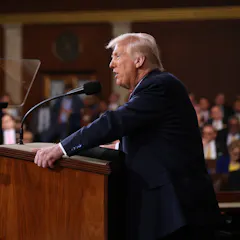
Power is increasingly being wielded by Trump and his executive branch, which the lawmakers in Congress are either compliant or powerless.
John Adams signed the Sedition Act in an attempt to silence dissent. Some other Founding Fathers thought that muzzling the press would mean the end of the republic.
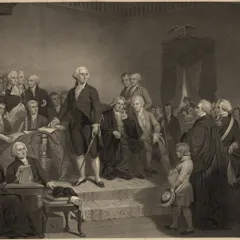
The first president realized that working with Congress – not alone or against it – was the best way to actually create an efficient federal government.
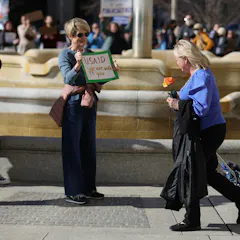
A US district judge says that the Trump administration has to pay USAID the billions it owes in already completed work. The Supreme Court agrees − for now.
New Zealand’s trademark statute still rejects swear words or other terms “likely to offend”. So how did “THIS IS THE F#$%ING NEWS” win approval?
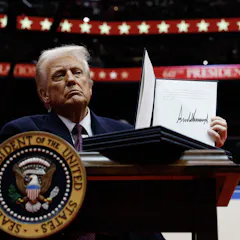
If it comes into force, President Donald Trump’s executive order ending birthright citizenship could have consequences for people and processes in the US and abroad.
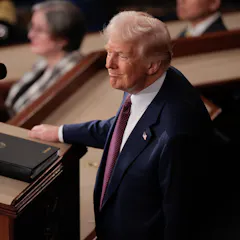
When the US Constitution was written, many people − from those who wrote the document to those on the outside who read it − believed that endowing the president with kinglike powers was dangerous.

Legal experts are concerned that President Donald Trump is expanding executive powers beyond the law – creating what they call a constitutional crisis.
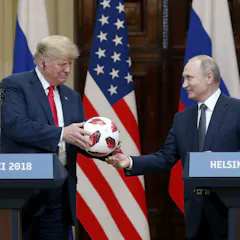
Constitutions define the legitimacy of a state. But they have long been at the mercy of international power politics.

The Supreme Court will hear arguments about the Oklahoma school in April.
A letter from the Trump administration warns educational institutions that they’ll lose federal funding if they don’t abandon so-called DEI programs. That could change education in the US.
Donald Trump claims that Article 2 of the Constitution gives him the right ‘to do whatever I want as President.’ A constitutional law scholar says ‘Not so.’
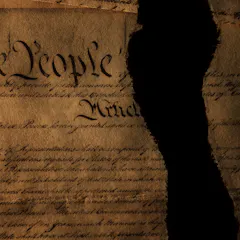
The Trump administration has asserted a new balance of power among the three formerly coequal branches of government. In its version, the president has almost kinglike powers.
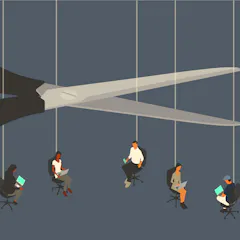
It might sound right that if you do what your boss says, you’re doing a good job. But it’s different if your obligations are to the public interest and the Constitution.
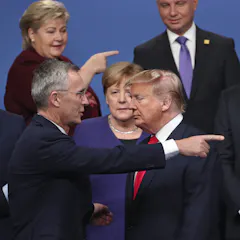
Any unilateral termination of the North Atlantic Treaty by Donald Trump would likely end up in the U.S. Supreme Court, and would litigate the president’s power to reshape international world order.

Congress has the authority to control government expenditures. Donald Trump is the latest president to try to get around that power, as he slashes government programs and staff.
The problem goes beyond the political leanings of judges to the speed of change and the administration’s apparent willingness to ignore court rulings it dislikes.
Top contributors
-

Professor of American Civics, University of Tennessee
-
Associate Professor of Law, Arizona State University
-
William Nelson Cromwell Professor of Jurisprudence and Political Science, Amherst College
-
Professor Emeritus of Government, Wesleyan University
-
Foundation Professor of Law and Political Science, Arizona State University
-
Joseph Panzer Chair in Education and Research Professor of Law, University of Dayton
-
Professor of Law and Director of the Center for Professional Ethics, Case Western Reserve University
-
Associate Professor of Political Science, Westminster College
-
Professor of Law and Adjunct Professor of Political Science, Wayne State University
-
Associate Professor of Political Science, Rochester Institute of Technology; Institute for Humane Studies
-
Associate Professor of Political Science, Boise State University
-
Spécialiste de la politique américaine, Sciences Po
-
Professor of law and ethics, Georgia State University
-
Professor of American History, Università di Torino
-
Professor Emeritus of Communication and Rhetorical Studies, Syracuse University